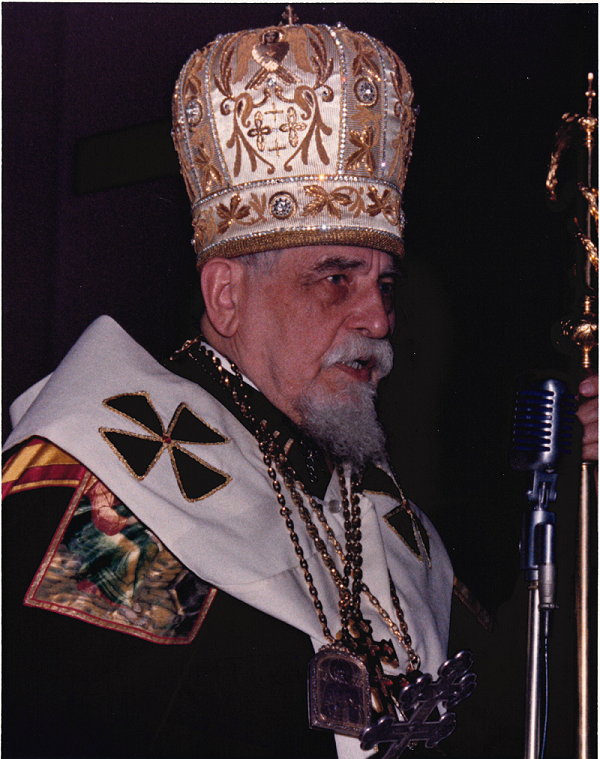
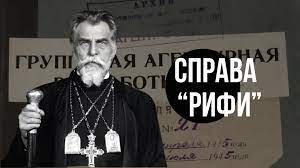
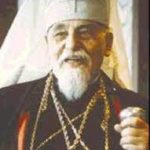
(Українська) ДІЯЛЬНІСТЬ ПАТРІАРХА ЙОСИФА СЛІПОГО ЩОДО ЛЕГАЛІЗАЦІЇ УГКЦ У СВІТЛІ РАДЯНСЬКИХ ДОКУМЕНТІВ (1960–1980і роки)

Sorry, this entry is only available in Українська.

Наукові праці історичного факультету
Запорізького національного університету, 2013, вип. XXXVII
152
УДК 271.4-726.1 Й.Сліпий: 2-85(47+57)

Т. Т. Бублик

ДІЯЛЬНІСТЬ ПАТРІАРХА ЙОСИФА СЛІПОГО ЩОДО ЛЕГАЛІЗАЦІЇ
УГКЦ У СВІТЛІ РАДЯНСЬКИХ ДОКУМЕНТІВ (1960–1980-і роки)
У статті розглянуто діяльність глави УГКЦ патріарха Йосифа Сліпого після його звільнення з
радянських таборів в 1963 р. в середовищі української діаспори. Автор проаналізував основні кроки
патріарха у справі повернення прав на легальне існування греко-католиків у СРСР, а також простежив
залежність між заходами української католицької діаспори у справі легалізації УГКЦ, використанням
ними політичної кон’юнктури, і змін в церковно-державних стосунках та контрзаходами радянських
органів влади в 1960-1980-х рр.
Ключові слова: греко-католики, Йосиф Сліпий, легалізація, українська діаспора.
Друга половина XX століття була для Української Греко-Католицької Церкви (УГКЦ) періодом важких
випробувань, коли тоталітарний комуністичний режим спробував позбавити її найважливішого – права на
існування. Атеїстична радянська держава не бажала толерувати Церкву, котра була «українською
католицькою духовною спільнотою» [1, с. ix], однак її ієрархія, духовенство і вірні не змирилися із насиллям
влади. Протягом чотирьох, найдраматичніших і найтрагічніших у минулому столітті, десятиліть очолював
УГКЦ Йосиф Сліпий (1944-1984 рр.), довголітній ректор Духовної семінарії та Богословської академії у
Львові, який обійняв митрополичий престол у важкий для Церкви та України воєнний час. Згодом були 18
років сталінських таборів і виїзд на Захід без можливості повернутися в Україну. Від 1963 р. митрополит
Йосиф, отримавши згодом титул верховного архиєпископа і кардинала, прагнув здобути для своєї Церкви
статус патріархату (почав використовувати титул патріарх в 1975 р.), який би об’єднав всіх українцівкатоликів в Україні й діаспорі. Його життя і діяльність на Заході була сповнена турботою про віруючих в
Україні. Тому дослідження греко-католицького підпілля і боротьби за права своєї Церкви в Радянському
Союзу не буде повноцінним без представлення ролі та участі української діаспори, а особливо – патріарха
Йосифа, у легалізаційних процесах.
Постать Йосифа Сліпого достатньо широко досліджена в історіографії. Уваги заслуговують дослідження
присвячені «діаспорному» періоду його життя (1963-1984 рр.), серед яких слід згадати праці Василя Ленцика
[2], Ярослава Пелікана [3], Мілени Рудницької [4], о. Івана Хоми [5] та ін. Серед сучасних науковців, які
аналізують життя Катакомбної Церкви крізь призму діяльності патріарха Йосифа Сліпого і української
діаспори на загал, слід згадати о. Івана Дацька [6] та Ю. Недужко [7]. Вказана проблематика також
розглядається в працях таких науковців, як Б. Боцюрків [8, с. 123-164], В. Пащенко [9], Я. Стоцький [10] та ін.
Важливою джерельною базою для висвітлення проблематики, яка аналізується у статті, є документи з
архівів радянських органів влади Української РСР: фонд уповноваженого по Львівській області (ФР-1332) і
документи партійного архіву (ФП-3) з Державного архіву Львівської області, також архівні матеріали з фонду
Компартії України з Центрального державного архіву громадських об’єднань України (Ф. 1).
Багатотисячна українська діаспора на Заході, яка збільшилася в час і після ІІ Світової війни як кількісно,
так і якісно (серед емігрантів велику частку складали представники інтелігенції, духовенства, молоді),
постійно тримала в полі зору події в Україні. Однак, за словами о. Івана Дацька, її не оминула «солодка
спокуса» вигідного зматеріалізованого життя і стрімкої асиміляції. Звільнення зі сталінських таборів і приїзд
до Риму 9 лютого 1963 р. митрополита Йосифа Сліпого уможливили великий поштовх до розвитку релігійноцерковного життя українців. Постать ісповідника віри стала об’єднуючим фактором, голосом «мовчазної
Церкви» у вільному світі і її речником перед авторитетними міжнародними інституціями [7, с. 14]. Важливо,
що для Заходу патріарх Йосиф став символом Церкви-мучениці, вірні якої терплять за прив’язаність до
Римського апостольського престолу. Таку думку проголосив хорватський кардинал Франьо Шепер, префект
конгрегації доктрини віри, на святкуваннях з нагоди 50-ліття священства Йосифа Сліпого [9, с. 258].
В роки ІІ Світової війни радянський уряд на чолі з Й. Сталіним дещо змінив своє ставлення до релігії
загалом, що особливо стосувалося Російської Православної Церкви (РПЦ), яка в час «богоборства» 1920-
1930-х рр. зазнала нищівних втрат. Радянські комуністи почали розглядати лояльні конфесії як один з
важливих елементів внутрішньої і зовнішньої політики. Один з чиновників Ради у справах РПЦ ще у 1957 р.
наголошував, що: «Імперіалісти релігійні організації в СРСР розглядають як легальні організації, які можна
використовувати у своїх цілях…Саме тому необхідна наша праця з духовенством, щоб імперіалісти не
могли використовувати церкву у своїх цілях» [11, арк. 201].
У 1960-х рр. радянський уряд і Ватикан вперше у своїй історії зуміли налагодити дипломатичні стосунки.
Однак серед невирішених питань залишалося «уніатське». З іншого боку, українська греко-католицька
діаспора з болем спостерігала за «потеплінням» взаємин між Римським престолом і СРСР та РПЦ,
звинувачуючи ватиканську дипломатію у замовчуванні проблеми переслідування греко-католиків [12, с. 54].
Саме своєю активною діяльністю патріарх Йосиф Сліпий не давав можливості оминати ватиканським
дипломатам питання УГКЦ. За словами о. Івана Дацька, приїзд до Риму в’язня сталінських таборів зумовив
на Заході розмови не лише про особу Йосифа Сліпого, але й про цілу Церкву [6, с. 14].
У 1964 р. голова Ради у справах релігійних культів при Раді Міністрів СРСР О. Пузин у доповіді «Про
політику папи Павла VI» представив зрушення у відносинах між Ватиканом і СРСР та наголосив на певному
прогресі у ставленні католицьких єпископів до комунізму. Він, зокрема, вказав на відсутність
Наукові праці історичного факультету
Запорізького національного університету, 2013, вип. XXXVII
153
антикомуністичних заяв у доповідях на засіданнях ІІ Ватиканського собору. Однак О. Пузин принагідно
зауважив, що важливою проблемою для радянського керівництва залишилося т. зв. «уніатське питання» в
середині держави, а на Заході – «Українська Католицька Церква» (УКЦ), яку підживлює активна діяльність
української діаспори на чолі з верховним архиєпископом Йосифом Сліпим. За словами радянського
чиновника, «антирадянщик Сліпий» поставив собі за ціль відродити УГКЦ і добитися проголошення
Київського патріархату з визнанням за ним титулу патріарха, а також він не покинув надії на повернення в
УРСР, про що свідчать його щоденні відвідини радянського посольства. У своїй доповіді О. Пузин
критикував «толерантне» ставлення папи Павла VI до антирадянської діяльності представників української
діаспори і УКЦ. Тому як відповідь на таку позицію папи римського радянській стороні слід, по-перше,
призупинити налагодження дипломатичних взаємовідносин з Ватиканом, а по-друге, провести потужну
кампанію релігійної контрпропаганди, яка полягатиме в контролі за «главарями» української діаспори та
розвінчанні міфу про т. зв. «Мовчазну Церкву» завдяки книгам і матеріалам про релігійне становище в
СРСР. «Уніатську» проблему він підсумував однозначно: «Це питання не може бут предметом для
переговорів» [13, арк. 110-117].
У середині 1960-х рр., одразу після приїзду митрополита Йосифа Сліпого до Риму, особливий вплив на
УГКЦ в СРСР мали надії на його повернення в Україну. У своїх звітах уповноважений Ради у справах РПЦ по
Львівській області М. Винниченко доповідав республіканському керівництву, що в середовищі греко-католиків
ширилися чутки про повернення Йосифа Сліпого. Так, у звіті від 2 квітня 1964 р. він стверджував про
виявлення пересилки листів з Риму однодумцям з обіцянками швидкого приїзду в Україну [14, арк. 93]. Згодом
він писав, що туристи зі Заходу, а найчастіше – духовні особи, шукають контактів з підпільними грекокатоликами, поширюючи чутки про повернення Йосифа Сліпого і тим самим даючи їм надії на відродження
«уніатської Церкви». М. Винниченко відзначив активну діяльність «лідера уніатів Величковського», який
зустрічався з предстоятелем УГКЦ у Москві перед виїздом останнього закордон [15, арк. 27].
Ідея кир Йосифа Сліпого повернутися в Україну ніколи не залишалася поза увагою радянських органів
влади. Після поїздки делегації Українського екзархату РПЦ в США і Канаду в грудні 1968 р. митрополит
Філарет (Денисенко) у звіті стверджував, що кардинал Сліпий в час перебування у Північній Америці не
допускав у своїх промовах антирадянських заяв. За свідченням православного ієрарха, «уніатський
предстоятель» спростовував викривлення журналістами його промов і проповідей в антирадянському дусі,
мабуть, прагнучи тим самим зберегти шанс на повернення в СРСР і відродження УГКЦ [9, с. 277].
Слід зауважити, що контакт між греко-католиками в СРСР і в діаспорі практично ніколи не переривався.
Наприклад, підпільний владика Василь Величковський та інші таємні греко-католицькі єпископи
підтримували зв’язок з патріархом Йосифом Сліпим через монахинь (сестру Володимиру зі Згромадження
сестер милосердя св. Вінкентія, сестер-василіянок Анастасію Пітку і Тересу Сапун) [6, с. 14-15], через
Польщу (о. Мирослава Ріпецького, о. Василя Гриника) та Прибалтику (о. Альфонсаса Сваринскаса) [6,
с. 18]. Такі «туристичні візити» духовенства і монашества з «вільного світу» продовжувалися практично до
виходу Церкви з катакомб, про що писали у своїх звітах партійні чиновники [16, арк. 44], і мали важливе для
греко-католиків молитовне, канонічно-церковне, інформаційне та фінансово-матеріальне значення.
Приїзд митрополита Йосифа на Захід співпав із хрущовською антирелігійною кампанією, яка найбільше
позначилася на становищі РПЦ в Західній Україні. «Возз’єднане» духовенство (греко-католицькі священики,
які після «Львівського собору 1946 р.» перейшли в юрисдикцію РПЦ) опинилося в складній ситуації, оскільки
нівелювалася надія зберегти церковні структури в Західній Україні. В таких умовах підпільне духовенство
отримало нагоду активізувати свою діяльність. Поряд з цим православні священики, прагнучи не втратити
свого впливу на населення, почали шукати можливі і допустимі форми діяльності [15, арк. 1-2]. Зокрема,
ієрархія РПЦ пропонувала допомогу у вирішенні «уніатської проблеми» в Західній Україні, взамін на
лояльність держави. Представники Московського Патріархату мали зосередитися над усуненням грекокатолицьких обрядових традицій в парафіях та активно працювати в населених пунктах, в яких діяли
«уніати» [10, с. 298-300]. Таку «взаємовигідну» співпрацю описував уповноважений Ради у справах РПЦ по
Львівській області у доповідній записці від 7 вересня 1965 р. обкому Компартії стосовно скорочення кількості
громад РПЦ в області. Незважаючи на хвилю закриття храмів, чиновник пропонував у місцях зосередження
«уніатів» не тільки не закривати культові споруди, але за відсутності в селі священика, туди їх призначати
[15, арк. 119-120]. Слід зауважити, що радянська влада, пропагуючи атеїстичну ідеологію в суспільстві, всетаки в західноукраїнському регіоні для подолання «уніатських пережитків» використовувала православне
духовенство практично до кінця 1980-х рр. [17, арк. 19-21].
Перевага греко-католицького духовенства над православним у 1960-х рр., на думку радянських
чиновників, була, знову ж таки, пов’язана з особою митрополита Йосифа Сліпого. Саме його «надзвичайні
права»1 стосовно душпастирства в умовах переслідування, які отримали священики ще у 1939 р.,
дозволяли працювати ефективно на нелегальному становищі [18, арк. 69-71]. Також зміни у релігійній
політиці СРСР, чутки про можливу легалізацію УГКЦ і повернення Йосифа Сліпого приводили до замішання
в середовищі «возз’єднаних», абсолютна більшість з яких пішли в лоно РПЦ не з власного переконання.
Тому греко-католицькі активісти на чолі з владикою Величковським почали пропонувати їм повернення в
1 Тут, очевидно, йшлося про «Головні правила сучасного душпастирства», автором яких був Блаженніший
Йосиф. «Правила» були видані в 1941 р. з метою визначити душпастирську діяльність священиків в умовах
заборони церковної діяльності, переслідування, ув’язнення, за відсутності єпископа, не можливості
контактувати з Римським Архиєреєм тощо (авт.)
Наукові праці історичного факультету
Запорізького національного університету, 2013, вип. XXXVII
154
УГКЦ через особисте покаяння, декому навіть дозволяючи і надалі душпастирювати в православних
парафіях [19, арк. 24].
Легалізація ГКЦ в Чехословаччині (1968 р.) також мала великий вплив на життя Церкви в катакомбах.
Митрополит Філарет (Денисенко) у листі до уповноваженого Ради у справах РПЦ К. Литвина, говорячи про
релігійний контекст подій в ЧССР, а саме відновлення греко-католицьких структур, застерігав про можливий
занепад православ’я в країні. Такий поворот подій, на думку представника РПЦ, впливав на підвищення
«проуніатських» настроїв віруючих Західної України. З огляду на це митрополит Філарет пропонував владі
ще активніше боротися з «рештками унії» і підтримати православ’я в регіоні [9, с. 258-259]. Слід зауважити,
що легалізація ГКЦ в Чехословаччині викликала велике піднесення серед греко-католиків в УРСР. За
спостереженнями уповноваженого М. Винниченко, уніати протягом 1968 р. почали частіше використовувати
закриті храми для відправляння своїх богослужінь, подавати заяви на реєстрацію греко-католицьких громад,
переконувати православних священиків до зміни церковної юрисдикції [20, арк. 33-34].
Очевидно, що патріарх Йосиф Сліпий, який ніколи не втрачав надії на легалізацію УГКЦ, намагався
використати події в ЧСФР з користю для своєї Церкви. Так, у своєму листі до Голови Президії Верховної
Ради УРСР Д. Коротченка він, апелюючи до чехословацьких подій, просив про відновлення структур УГКЦ в
УРСР, оскільки її ліквідація була виключно адміністративним актом. На його думку, якщо навіть і була вина
окремих священиків перед радянською владою, то за це не можуть відповідати всі, а відмова у легалізації
УГКЦ – порушення прав українців на свободу віросповідання [9, с. 277].
Православне духовенство в Західній Україні відзначало відчутність впливу греко-католицької діаспори
на чолі з патріархом Йосифом на життя і діяльність УГКЦ в СРСР. «Возз’єднаний» священик о. Іван
Миронюк у своїй аналітичній записці «Еволюція уніатської церкви в роки радянської влади» з кін. 1960-х рр.
наголосив, що фактично для «уніатів єдиним авторитетом залишився Сліпий», який стоїть на твердих
позиціях відновлення УГКЦ в СРСР і не сприймає нових віянь у Ватикані. За його спостереженнями,
діяльність пап Івана XXIII і Павла IV викликала чимало запитань в середовищі греко-католиків, зокрема,
переговори з Московським патріархатом, налагодження дипломатичних взаємин з країнами соцтабору.
Поворот у політиці Римського престолу зумовив нові хвилі протистоянь і конфліктів у їхньому середовищі.
Так, наприклад, радикально настроєні віруючі, які не сприйняли рішень ІІ Ватиканського собору та змін у
Католицькій Церкві, відійшли до секти покутників. З іншого боку, в Сліпого, незважаючи на його «образ
мученика», є чимало опонентів – василіяни і частина єпископів у діаспорі. Його противники, особливо з
діаспорних, натякали, що Йосиф Сліпий «відстав від життя політичного і церковного», і так поводиться ніби
не помічає всіх тих змін, які сталися навколо тощо. Автор аналітичної записки підкреслював, що з огляду на
таку ситуацію (в діаспорі і в Україні) можна було говорити про протистояння в середовищі греко-католиків.
Але необхідно брати до уваги той факт, що Ватикан підтримує Сліпого і про це свідчить надання титулів
верховного архиєпископа і кардинала. У своїх висновках о. Миронюк наполягав на близькому «кінці»
уніатства в Радянському Союзі, що, на його думку, відчули самі греко-католики і тому стали дуже
небезпечними. Цей колишній студент ректора Йосифа Сліпого як протидію «уніатській загрозі» пропонував
радянській владі традиційний засіб – ефективніше підтримувати православних у регіоні, відкриваючи храми
в місцях активності уніатів [19, арк. 35-41].
З приїздом митрополита Йосифа Сліпого до Риму українці в діаспорі активізували свою інформаційну
діяльність. Слід зауважити, що для греко-католиків в Україні було важливо отримувати інформацію про події
у «вільному світі». Релігійні новини віруючі Катакомбної Церкви черпали в основному через західні
радіостанції, зокрема, «Радіо Ватикан», «Радіо Свобода», «Голос Америки» та ін. У звіті для союзної і
республіканської Рад у справах релігій про діяльність «уніатів» від 9 грудня 1969 р. М. Винниченко зауважив,
що більшість греко-католиків регулярно слухає радіопередачі української служби «Радіо Ватикан», в
окремих селах роблячи це навіть організованими групами. Чимало ефірного часу у цих передачах
присвячується діяльності кардинала Йосифа Сліпого: пропагуються плани про створення Українського
Католицького Університету та відкриття собору Св. Софії в Римі [20, арк. 261-265]. Ці «ворожі голоси»
залишалися ефективним способом інформування віруючих у цілком інформаційно-контрольованому
суспільстві за «залізною завісою». Наприклад, Л. Кравчук, керівник відділу ідеології та агітації ЦК Компартії
України, в аналітичній записці від 26 грудня 1984 р. інформував партійних керівників про 14 «клерикальнобуржуазних» радіостанцій, які транслюються в Україні і мають своїх постійних слухачів [21, арк. 60-61].
Митрополит Йосиф від початку свого перебування в Римі звернув особливу увагу на видавництво
української релігійної літератури, завжди залишаючи частину виданих книг для Церкви в Україні. Очевидно, що
в умовах радянського режиму не йшлося про розповсюдження літератури в УРСР, але окремі видання
потрапляли за «залізну завісу». Партійні чиновники у Львівській області згадували про поширення в
середовищі підпільних греко-католиків брошури про «Мовчазну Церкву». У звіті про релігійну ситуацію на
Львівщині М. Винниченко наголосив на важливості постійно відстежувати канали потрапляння «уніатської
літератури і атрибутики» в СРСР, відзначаючи невтомну працю радянських прикордонників з «релігійними
контрабандистами» [18, арк. 10]. Слід зауважити, що боротьба з релігійною літературою і атрибутикою,
виданою нелегально в Україні чи закордоном велася практично до кінця 1980-х рр. і була важливою підставою
для адміністративного і навіть кримінального покарання видавців і поширювачів. Справа «уніатської
літератури» була пов’язана також із прагненням радянських чиновників і вищого православного духовенства в
регіоні вилучити з обігу як привезену із-закордону, так і видану в Галичині до 1946 р. Тому актуальним
завданням для РПЦ в регіоні стало видання православних богослужбових книг, зокрема, молитвослова. Навіть
М. Винниченко в 1969 р. давав схвальні пропозиції щодо видання православного молитвослова, оскільки це,
на його думку, дозволить зменшити вплив уніатської літератури [20, арк. 259-260].
Наукові праці історичного факультету
Запорізького національного університету, 2013, вип. XXXVII
155
Згідно з дослідженням українського науковця Ю. Недужко, вже у 1970-1980-х рр. діаспора все активніше
намагалася привернути увагу країн Заходу до проблеми недотримання релігійної свободи в СРСР та
активізувати з цією метою українську громаду в світі [7, с. 270]. Основою для критики радянського
керівництва було питання права людини на свободу віросповідання. Генеральний секретар ЦК КПРС
Л. Брежнєв 1 серпня 1975 р. підписав «Заключний акт Наради з безпеки і співробітництва у Європі», відомий
як Гельсінкські угоди. Підписання цього юридичного акту для Радянського Союзу де-юре означало усунення
усіх порушень в гуманітарній сфері. Після підписання Гельсінкських угод радянська влада опинилася у
вкрай суперечливій ситуації: з одного боку, нові обставини вимагали розширення свободи в діях релігійних
організацій, а з іншого – комуністична ідеологія була спрямована на боротьбу з релігією (засуджувалося
«інакомисліє», в освітніх закладах пропагувався атеїзм, численні групи віруючих перебували поза законом).
Тому українська діаспора, оперуючи новинами і фактами отриманими з України, представляла в засобах
масової інформації радянську владу як порушника міжнародних угод.
Партійні аналітики після підписання міжнародних угод підкреслювали, що антирадянська пропаганда
«клерикалів з УКЦ» базується на тезі про порушення СРСР міжнародних договорів про права людини на
свободу віросповідання [21, арк. 88-92]. Ю. Недужко цілком слушно виокремив дві великомасштабні
інформаційні кампанії української діаспори в 1970-1980-х рр. Перша мала місце після підписання
Гельсінкських угод (1975-1978 рр.), а друга була пов’язана зі святкуванням 1000-ліття Хрещення РусиУкраїни (кін. 1970-х – 1990 рр.) [7, с. 270-271].
Церква в діаспорі устами Блаженнішого Йосифа наголошувала на важливості «постійної пам’яті» про
братів і сестер у катакомбах. Греко-католицька ієрархія в діаспорі неодноразово стверджувала, що
допомога Церкві в Україні – пріоритетне завдання [5, с. 132-139]. За переконанням патріарха і його
однодумців інформування світової спільноти та політикуму про правдивий стан УГКЦ в СРСР було
необхідне, оскільки на Заході все частіше чулися голоси радянської пропаганди про добровільність рішень
т.зв. «Львівського собору 1946 р.», звинувачення єпископів і священиків у колабораціонізмі в роки ІІ Світової
війни, безпідставність звинувачень стосовно релігійних переслідувань у Радянському Союзі тощо [9, с. 283].
Патріарх Йосиф, окрім інформаційної підтримки, зумів налагодити матеріальну допомогу для
підпільного духовенства і мирян в Україні. Так, у 1978 р. на його прохання засновник організації «Церква в
потребі» о. Веренфрід ван Страатен виділив окремий фонд для висилання посилок в Україну [6, с. 24].
Також у систему фінансової і матеріальної допомоги були включені численні релігійні і мирянські організації
української діаспори та католицького світу. Зокрема, предстоятель УГКЦ у 1970 р. заснував Товариство
Св. Софії з метою об’єднати мирянський рух і надати йому відповідальності за долю Церкви в Україні і на
поселеннях [22].
З кінця 1970-х рр. розпочалася підготовка до святкування 1000-ліття Хрещення України-Русі. Ювілей
був використаний українською діаспорою для розгортання великомасштабної кампанії з нагоди цієї важливої
історичної події, спрямованої, разом з тим, на консолідацію в середовищі української еміграції, підвищення
рівня національної самосвідомості її членів, пропаганду і поширення серед громадськості й офіційних осіб
країн Заходу інформації про історію і культуру України, прагнення її народу до волі й незалежності та
боротьбу за свободу совісті [7, с. 270].
Святкування 1000-ліття Хрещення було тісно пов’язане з обранням 17 жовтня 1978 р. на папський
престол польського кардинала Кароля Войтили (Іван Павло ІІ). Греко-католики, а особливо патріарх Йосиф,
покладали особливу надію на папу-слов’янина, який на особистому досвіді знав, що таке «безбожний
комунізм» [6, с. 22]. Свою позицію щодо УГКЦ новий понтифік представив у двох листах до патріарха
Йосифа Сліпого в березні 1979 р., в яких підкреслив необхідність «забезпечити право існування,
громадянство, українцям католикам у їх батьківській землі» [23, с. 1-2]; за його словами, «мовчазна Церква
промовлятиме устами Петра» [6, с. 32]. І справді, Іван Павло ІІ дозволив скликати синоди єпископів УГКЦ на
поселеннях, що не зробили до нього Іван XXIII та Павло VI. Ці кроки папи викликали негативну реакцію
Московського патріархату: в листі від 22 грудня 1980 р. патріарх Пімен (Ізвєков) пригрозив зупинити
екуменічні переговори [24, арк. 1-2]. Проте Іван Павло ІІ і надалі намагався дбати про два важливих для
Католицької Церкви аспекти: продовження діалогу з Православними Церквами та захист прав католиків
(обох обрядів) у Східній Європі [24, арк. 3-4, 8-10]. У посланні з нагоди 1000-ліття Хрещення Русі-України
(лист «Euntes in mundum» від 25 січня 1988 р. і послання «Magnum baptismi donum» від 14 лютого 1988 р.)
він наголосив на важливості цієї дати в історії християнства Східної Європи, тим ще раз підкреслюючи свою
підтримку греко-католицькій спільноті в діаспорі і Україні [24, с. 7-11].
Радянські чиновники в 1979 р. відзначали, що в середовищі уніатів «відчувалася атмосфера
вичікування якихось змін, надії на те, що новий Папа допоможе їм відновити ГКЦ» [9, с. 338-339]. Особливо
таку активізацію вони пов’язували з посланням папи до патріарха Йосифа Сліпого і тому рекомендували
органам влади в Західній Україні зосередитися на боротьбі з «рештками уніатства», вивчаючи вплив
Ватикану і діаспори на їхню діяльність [9, с. 340-341].
Наприкінці 1979 р. інспектор республіканської Ради у справах релігій М. Божко в результаті поїздки в
західноукраїнський регіон підготував доповідну записку про діяльність уніатів. Він стверджував, що
наприкінці 1970-х рр. зі стихійної і неорганізованої маси тепер сформувалася організаційна структура, яка
веде планомірну роботу, єпископи підтримують зв’язок з Йосифом Сліпим через його емісарів, отримуючи
значну матеріальну підтримку [9, с. 341-342].
7 вересня 1984 р. патріарх Йосиф Сліпий відійшов у вічність. Його смерть стала важкою втратою для
греко-католиків у цілому світі. Однак, його наступник – Мирослав Іван Любачівський активно продовжував
кампанію за повернення прав греко-католикам в Україні. Смерть знакової особи для греко-католиків
Наукові праці історичного факультету
Запорізького національного університету, 2013, вип. XXXVII
156
знайшла відгук в документах партійних органів влади. Так наприкінці 1984 р. на постанову «Про протидію
антикомуністичним акціям Ватикану, його підривної роботи проти соціалістичних країн, національновизвольного і антивоєнного рухів» міжреспубліканський філіал Інституту наукового атеїзму при ЦК КПРС
видав орієнтування, в якому звернув увагу на «Заповіт патріарха Йосифа Сліпого». На думку професійних
атеїстів, головною метою документу стало вболівання за відродження греко-католицизму і «бредова» ідея
Києво-Галицького патріархату. У своєму творі «запеклий антирадянщик» залишився вірний своїм поглядам,
засуджуючи комуністичні і атеїстичні погляди та соціалістичний устрій правління. Сліпий у «Заповіті» ще раз
згадав т. зв. «екуменізм переслідуваних», тобто, за радянським трактуванням – об’єднання всіх
«отщепенцев» проти радянської влади, та наголосив на «боговибраності» українського народу,
протиставляючи його тим самим іншим, а особливо російському [21, арк. 79-86].
За «оглядом основних напрямків зарубіжної католицьких і уніатських радіопрограм українською мовою
за липень-вересень 1984 р.» смерть Сліпого, хоч і сприймалася як велика втрата для української діаспори,
але послужила ще одним потужним інформаційним приводом для антирадянської кампанії під гаслом «за
права Українських Церков у СРСР» [20, арк. 39-44]. Таким чином навіть смерть патріарха Йосифа стала
приводом для ще однієї хвилі антирелігійної і антиуніатської демагогії радянських очільників.
Головний напрям діяльності патріарха Йосифа Сліпого після його приїзду до Риму в 1963 р. був
зосереджений на проблемі відродження УГКЦ в СРСР. Від перших днів свого перебування у «вільному
світі» він декларував свою єдність з «братами і сестрами, які терплять» і робив усі можливі заходи для
полегшення їхньої долі у співпраці з українцями у діаспорі, представниками Католицької Церкви і світового
політикуму. У відповідь радянська влада прагнула у будь-який спосіб обмежити вплив патріарха і діаспори
на віруючих у Західній Україні, вбачаючи в цьому одну з важливих перепон до подолання «уніатства» в
регіоні. На жаль, кир Йосифу не судилося побачити відродження Церкви в Україні, але його невтомна і
жертвенна праця стала основою для легалізації і розвитку УГКЦ в незалежній українській державі.
Джерела та література
1. Боцюрків Б. Українська Греко-Католицька Церква і Радянська держава (1939-1950) / Б. Боцюрків. – Львів, 2005. – 265 с.
2. Ленцик В. Визначні постаті Української Церкви: Митрополит Андрей Шептицький і Патріярх Йосиф Сліпий / В. Ленцик. –
Львів: Свічадо, 2001. – 608 с.
3. Пелікан Я. Ісповідник віри між Сходом і Заходом: портрет українського кардинала Йосифа Сліпого / Я. Пелікан. – К.:
Варта, 1994. – 304 с.
4. Рудницька М. Невидимі стигмати / М. Рудницька. – Рим, 1971. – 538 с.
5. Хома І. Патріярх Йосиф / І. Хома. – Львів: Вид-во «Дон Боско», 2009. – 171 с.
6. Дацько І. Передмова / І. Дацько // Християнський голос. Збірник пам’яток самвидаву Комітету захисту Української
Католицької Церкви. – Львів: в-во УКУ, 2007. – С. 11-51.
7. Недужко Ю. Боротьба української діаспори за релігійну свободу в Україні (друга половина 70-х – 80-ті рр. XX ст.) /
Ю. Недужко // Історія України. Маловідомі імена, події, факти (збірник наукових статтей). – К.: Ін-т історії України НАН
України, 2008. – Вип. 35. – С. 264-287: Режим доступу до журн.: http://histans.com/JournALL/histname/35/19.pdf
8. Боцюрків Б. Українська Греко-Католицька Церква в катакомбах (1946-1989) / Б. Боцюрків // Ковчег. Збірник статей з
церковної історії. – Львів, 1993. – № 1. – С. 123-164.
9. Пащенко В. Греко-католики в Україні (від 40-х років XX століття до наших днів) / В. Пащенко – Полтава, 2002. – 616 с.
10. Стоцький Я. Держава і релігії в Західних областях України: конфесійні трансформації в контексті державної політики
1944-1964 років / Я. Стоцький. – К.: ФАДА, ЛТД, 2008. – 510 с.
11. Державний архів Львівської області (ДАЛО). – Ф Р-1332. – Оп. 2. – Спр. 25. – Арк. 195-230.
12. Sorokovsky A. Vatican diplomacy and Ukrainian Greek Catholic Church / A. Sorokovsky // Logos: A Journal of Eastern
Christian Studies. – Ottava, 1995. – № 36. – С. 47-66.
13. ДАЛО – Ф Р-1332. – Оп. 2. – Спр. 36. – Арк. 107-128.
14. ДАЛО. – Ф Р-1332. – Оп. 2. – Спр. 24. – Арк. 92-95
15. ДАЛО. – Ф Р-1332. – Оп. 2. – Спр. 35. – Арк. 3-35
16. Центральний державний архів громадських об’єднань України (ЦДАГО України). – Ф. 1. – Оп. 25. – Спр. 3143. – Арк. 40-45.
17. ЦДАГО України. – Ф. 1. – Оп. 25. – Спр. 3330. – Арк. 19-21.
18. ДАЛО. – ФР-1332. – Оп. 2. – Спр. 34. – Арк. 64-78.
19. ДАЛО. – ФР-1332. – Оп. 2. – Спр. 41. – Арк. 15-34.
20. ДАЛО. – ФР-1332. – Оп. 2. – Спр. 42. – Арк. 20-42.
21. ЦДАГО України. – Ф. 1. – Оп. 25. – Спр. 2720. – Арк. 60-67.
22. Рудницький Л. До історії товариств «Свята Софія» / Л. Рудницький. – Режим доступу:
http://stsophia.us/St_Sophia/Istorija.htm
23. Вісті з Риму. – 1987. – № 2. – С. 1-2.
24. ДАЛО. – ФП-3. – Оп. 59. – Спр. 539. – Арк. 3-4, 8-10.
25. Слово Святішого Отця Івана Павла ІІ до України. – Львів: «Свічадо», 2001. – 204 с.
Бублик Т. Т. Деятельность Патриарха Иосифа Слипого в отношении легализации УГКЦ в
свете советских документов (1960-е – 1980-е годы)
В статье представляется деятельность Главы УГКЦ патриарха Иосифа Слепого после его
освобождения из советских лагерей в 1963 г. в среде украинской диаспоры. Автор проанализировал
основные шаги патриарха в деле возвращения прав на легальное существование греко-католиков в
СССР. Также проследил зависимость между принятыми мерами украинской католической диаспоры в
деле легализации УГКЦ, использовании ими политической конъюнктуры, а также перемен в церковногосударственных отношениях и контрмерами советских органов власти в 1960-1980-х гг.
Ключевые слова: греко-католики, легализация, Иосиф Слипый, украинская диаспора
Наукові праці історичного факультету
Запорізького національного університету, 2013, вип. XXXVII
157
Bublyk T. T. The activities of Patriarch Josyph Slipyi concerning the legalization of UGCC in the light of
Soviet documents (1960-th – 1980-th)
This paper presents the activities of the UGCC’s leader, the Patriarch Joseph Slypy, within the Ukrainian
diaspora, after his releasing from the Soviet camps in 1963. The author has analyzed the patriarch’s basic
actions in restoring the rights of a legal existence of the Greek Catholics in the USSR. Also, the relationship of
the measures of the Ukrainian Catholic diaspora in the case of UGCC’s legalization has been traced, how they
used the political situation and changes in the church – state relations and countermeasures of the Soviet
authorities in 1960-1980’s
Keywords: Greek Catholics, legalization, Josyph Slipyi, Ukrainian Diaspora .

(Українська) Тюремна хронологія і географія Митрополита Йосифа Сліпого

Sorry, this entry is only available in Українська.

70 років тому, 11 квітня 1945 року, офіційно розпочалася репресивна кампанія совєтського режиму проти Української Греко-Католицької Церкви: заарештовано її очільника Митрополита Йосифа Сліпого та усіх єрархів Церкви.

До 70-ліття арешту Патріярха Йосифа Сліпого та єрархів УГКЦ

70 років тому, 11 квітня 1945 року, офіційно розпочалася репресивна кампанія совєтського режиму проти Української Греко-Католицької Церкви: заарештовано її очільника Митрополита Йосифа Сліпого та усіх єрархів Церкви. Небагато однак знаємо про ті роки каторжних робіт, поневірянь, тортур та переслідувань. Лише останніми часами почали з’являтись публікації, які відкривають архівні матеріяли, пов’язані із цим періодом життя Блаженнішого, як наприклад двотомне видання за редакцією проф. Володимира Сергійчука “Патріарх Йосиф Сліпий у документах радянських органів державної безпеки 1939— 1987” (Київ, 2012). Проте найбільшу цінність завжди мають спогади самих учасників подій: «Спомини», що їх Патріярх Йосиф Сліпий написав під час відпочинку 1963-64 рр. у монастирі Отців Пасіоністів в Неттуно, вийшли друком восени 2014 року у Львові. Відстежуючи пресові повідомлення 1968-1970 рр. про пастирські подорожі Блаженнішого до українських громад на поселеннях, що їх зібрала Ольга Вітошинська у книзі “Подорожі Блаженнішого Кир Йосифа VII 1968-1970” (Праці Українського Богословського Наукового Товариства, Том ХХ, Рим-Париж, 1972) та вибравши окремі фрагменти із копії його “Спогминів”, яка зберігається у файлах Товариства “Свята Софія”, подаємо тут хронологію ув’язнення цього великого Ісповідника Віри. Ця спроба створити принаймні загальний фон поневірянь Блаженнішого впродовж 1945-1963 рр. є лише мізерним вкладом у змалювання трагедії Глави Катакомбної Церк ви, який — завдяки непохитній вірі та нескореності духа — золотими літерами вписав своє ім’я в історію мартирології Христової Церкви.

Патріярх неохоче говорив привселюдно про цей тернистий шлях. Однак навіть скупі свідчення вражають читача глибиною страждання: «Тридцять сім разів був я засуджений большевиками на смерть і це нервозне чекання на екзекуцію було часом таке велике, що коли я клав руку на голову, то жмутками рвав волосся» («ТheCatholicStandardandTimes», Філядельфія, 26 липня 1968 р.).

«Та хоч які жорстокі були умовини життя у совєтських тюрмах, — кардинал згадує понад 100 великих хворіб, які перебув у час ув’язнення у таборах Сибіру – то все ж був здатний правити кожного дня Службу Божу. З того часу знає молитви Служби Божої напам’ять і потребував тільки малого куска хліба та кілька крапель «медицини» у бляшаній чаші, щоб правити Богослужбу без ніяких приготувань. Не зважаючи на те, що самотність була неможлива від коли був часто ув’язнений у бараках із більш як 30 особами і мусів спати в один бік скорченим учетверо, — то його ще постійно переносили з однієї тюрми в іншу, бо вони не хотіли, щоб він заприязнився з іншими в’язнями або з’єднав собі сторожу. І так, як ніколи не знав про перенесення, так і не знав про час своєї екзекуції. «У тюрмі я був часткою з іншими в’язнями – від різання дров до чищення лятрин. Зазначую, що я був часто предметом піклування збоку ближніх — в’язнів, але ніколи з боку наставників табору» («ТheCatholicStandardandTimes», Філядельфія, 26 липня 1968 р.).

Отож, 22 грудня 1939 р., з благословення Папи Пія ХІІ і на прохання митрополита Андрея (Шептицького), о.ректор Йосиф Сліпий був хіротонізований архиєпископом з правами наслідства. Хіротонія відбувалася таємно: “… B час гоніння свячення не є честю, а в першій мірі тягарем”, – згадував він згодом. Відтак, 1 листопада 1944 р. він вступив у права митрополита після смерти свого великого попередника. Слід зазначити, що навіть у воєнний час, 1941-1944 рр., Йосиф Сліпий відновив працю Богословської Академії у Львові.

11 квітня в 1945 р. — арештований НКВД. «Мене арештовано 11-го квітня 1945р., приблизно о год. 19-тій вечером. Була це середа. Вже зрана св. Юра кругом обставлено стійками. Наглядали, чи нема яких рухів і чи чого не виноситься. Наїхало дуже багато авт з поліцією. Полковник Мельников приніс мені рішення від прокурора про арешт. Мене обшукали та забрали в авто і відвезли на Лонцкого. Пригадую собі, яка то була прикра річ почути на собі розбишацькі руки. Після мого арешту настала страшна паніка і НКВД почало акцію переведення на православіє. Під проводом о. Костельника зорґанізовано “Ініціятивну Ґрупу”, яка зачала приготовляти т.зв. “Львівський Собор”. Арештовані опісля священики, учасники того т.зв. “Собору”, оповідали про жахливий терор. По “Соборі”, Горюн радісно кричав переді мною: “Але ми вкропили Папі”. На то я сказав, що 7 мільйонів — невелика кількість, щоби потрясти Католицькою Церквою, “а ви терором тільки себе компромітуєте» (Спогади, ст. 110).

11 квітня 1945 – 10 травня 1946 р. — слідство в тюрмі на вулиці Лонцького у Львові, Київська Лук’янівська тюрма, Московська Луб’янка. «Київ виглядав досить знищений, а було це 12-го квітня 1945 р., рано. Зі стації мене привезли до найтяжчої слідчої тюрми в Києві, при вулиці Короленка ч.33. По дуже довгих мучачих обшуках мене запроваджено спершу до «одиночки», а опісля до келії (…) Я вже був перед арештом дуже змучений і виснажений, а в київській тюрмі я почував себе прямо недужим. (….) Мене виводили на слідство день і ніч так, що я буквально падав з ніг і мене мусіли підтримувати, ведучи до слідчого судді (…) Моє слідство провадив Горюн, пізніший начальний КҐБ у Львові, людина страшенно груба і простакувата. (…) По кількох днях, коли я вже був вимучений допитами до краю, мене привели до кількох полковників і зачали тероризувати, давали до підпису, щоб я відрікся Папи, а за те дадуть мені Київську Митрополію (…) Але я рішучо відмовився. Почалися дальші наступи, але це до нічого не довело, бо я вже млів з обезсилення. Впрочім це ослаблення зроблено умисно: вдень не давали спати, а їсти трошки зупи і 300 грамів хліба на цілий день, в якому було все, тільки не було муки. (….) Також за слідчого Горюна мене викликали на 2-3 години до двох інших слідчих, до великої темної салі. Один з них сидів у куті при затемненій лямпі, а старший з них зачав мене намовляти до апостазії. Опісля підійшли до мене від бюрка і при засвіченій лямпі зачали дальше настирливо мучити мене і намовляти відректися Катол[ицької] Церкви. Я не відповідав їм нічого, тільки подумав собі, що я ще Богу дякувати з розуму не зійшов. Тоді молодший слідчий зачав голосно виявляти мої думки. Я припускав, що це якийсь гіпнотизер або ясновидючий, бо колись я таких здибав у Франції. Я зрефлектувався сейчас і перестав думати і тоді вже над ранком мене відіслано назад до келії. Голодування, безсонниця і допити можуть допровадити до безумія. І тоді я переконався, що не можна дивуватися нікому, якщо він підписує всякі ложні зізнання та наклепи або пристає до шпіонажу і тому подібне. То була велика ласка Божа, що я видержав ті всі муки» (Спогади, ст. 128).

Вирок військового трибуналу за закритими дверима – 8 років Сиблагу. Етапи: Новосибірськ “…їдуть на заслання..то триває місяцями. Заки каторжник приїде, то такий вимучений; при різних нагодах пересадки, різні сторожі, голод, холод… Приїде на етап страшно худий, виснажений, змучений і до рапавих дощок, зимних як лід, прикутий. Вже, крім самого вигнання, та фізична мука добиває людину…“ – Й. Сліпий в гомілії про заслання св. Климентія, папи.

Маріїнське Кемеровської області — тут мав запалення легенів і дизентерію. «В Маріїнську мене призначили до найбільш бандитського бараку, але там був фельдшером якийсь білорусин-учитель і якийсь фельчер-литовець, які мене берегли як могли перед бандитами і давали найконечніші лікарства. Мене знову обікрали, але на то не було ради. (…) По місяці, коли я трохи обзнайомився в ляґрі, при помочі кравця і інших, мене перевели до робочого бараку, де вже були ліпші люди. Лікар навіть призначив мені трохи дієтичного харчу, але «опер» заборонив мені давати. Мене призначили до трикотажного відділу. Хлопці помагали мені виконувати норму, а я їм знова робив інші прислуги» (Спогади, ст. 130).

Лютий 1947 року — Боїми – тут зламав собі руку: “Іншим ламають ребра, а вам зломили тільки руку”, – сказав лікар. (…) Мене відвели до шпиталя. Там мені зв’язали руку і вона якось загоїлася» (Спогади, ст. 135).

м. Кіров у Росії: «По кількох днях нас знову кинули на етап. Серед зливного дощу ми йшли під гору на стацію залізничну з 3— 5 км, а потім «заквагонами» дальше на Печору. В дорозі дали мені тільки горячої води (…) Етапи – це найбільш мучачі, просто вбивчі переходи. З такими самими пригодами нас привезено вкінці на Печору. Цілу дорогу від Вятки до Інти по одній і другій стороні рейок було видно лягри» (Спогади, ст. 139). В групі на етап нараховувалось до 40 чоловік, серед них три священики і два єпископи – Сліпий та Чарнецький.

1947 р. — лагер в Печорі, Інті: «Печора це найгірший лагер після Колими і Норильська. Полярія, вічна мерзлота, пів року день, а пів року ніч» (Спогади, ст. 138).“Митрополит сидів втомлений на своєму наплечнику… Несподівано до кімнати ввірвалися два парубійки, очима розглянулись по присутніх. В одну мить прискочили до митрополита і знову щезли. Разом з ними щез багаж владики. Князь Церкви лежав на підлозі, з його уст і носа сочилася кров”, – спогади проф. Гробауера, австрійського громадянина.

Лагер в Косью Комі АРСР, Потьма – “Майже місяць добирались до цього лагеру, Блаженніший був страшний – хворий, в гарячці,“ – згадує Фердінанд Цеппіхаль.

Серпень 1948 р. – 1949 р. — табір № 23 в Темяковському районі Мордовії. “Я там лежав в шпиталі, як недужий на легені з +38С горячки, хоч мене кілька разів викидали з нього на приказ “опер-а”, але була добра начальниця шпиталя і вона скликала на консіліюм 7-8 лікарів, які спільно рішили, щоби мене положити назад до шпиталя, так що начальниця була крита, і “опер” мусів уступити. Десь всюди траплялися добрі люди. Мене положили до туберколів і я там пролежав цілу зиму 1948-1949 р. Але не знати чому мене перевели до другого лагеря, до того самого назад, задля підозрінь, що мені помагає “надзор” пересилати листи” (Спогади, ст. 146— 147).

1950 р. — відправляють етапом свідчити в суді в Києві, згодом повертають знову в Потьму, а потім у 14 лагпункт.

15 травня 1953 р. — виклик до Комісії, де знову пропонують приєднатися до православ’я, обіцяють відновлення титулів і можливе надання найвищих духовних посад у Російській Православній Церкві. Митрополит Йосиф рішуче відмовився, після чого його відправляють у будинок інвалідів.

Червень 1953 р. — виклик до Москви в справі налагодження контактів з Ватиканом. Зустріч з маршалом Жуковим. Запропоновано написати працю про історію УГКЦ в СРСР. «Генерал прохав, щоби я дав начерк історії нашої Церкви, я сказав, що це довша робота і я мусів би ходити до бібліотек. Він дав позволення і я дійсно там працював. Там я бачив, що різні осібняки наглядали за мною, і в науковім світі повно шпіонів і «стукачів». Поводилися дуже чемно, але коли я зажадав історії Грушевського, то урядничка усміхнулася і сказала, що нема. Мабуть, вона питалася, чи можна дати і заборонили. Все ж таки, я мав змогу трохи зорієнтуватися в большевицькій літературі від 1940-1953 р. і ходив там майже щодня. У відділі журналістів я провірив, що не було жодного закону заборонюючого нашу Церкву, а лише була адміністративна заборона з боку НКВД». (Спогади, ст. 168)

Slipyj_archiv3.jpg

1954— 1956 рр. — після ліквідації Берії знову відправляють на поселення в с. Маклаково біля Єнісейська (Сибір) до будинку інвалідів. «Був це найгірший дім, найдальше віддалений від наукового і культурного осередку. Там мав я жити, відметений і відтятий від всякого доступу з дому, 6000 км. віддалі» (Спогади, ст. 173). Писав з пам’яті історію Вселенської Церкви і Пастирські послання, котрі передавав через довірених людей в Україну. КДБ перехопило рукопис “Історії“. «Життя було там справді дуже тяжке, морози доходили до 45. Треба було собі самому зварити, підлогу помити, постаратися про опал. КҐБ заборонило мені прати білля. Літом знова страшно дошкулювали комарі і мушка, маленька, що залізала всіма шпарами і пекла. Без сітки не можна була вийти, а на руки треба було затягати якісь ґумові операційні рукавиці, бо не годен було обігнатися від них» (Спогади, ст. 181).

Slipyj_archiv2.jpg

1957 р. — з нагоди 40— ліття священства Папа Пій ХІІ надіслав привітання митрополитові на заслання. Лист не дійшов, але він і конфіскований рукопис “Історії“ стали причиною нового арешту. Блаженнішого відвезли до Єнісейська, згодом до Красноярська, потім до Києва. «1957 р. прийшов з Ватикану лист Папи Пія ХІІ з приводу 40— вих роковин священства Й. Сліпого. Листа перехопила московська поліція і зразу засудила нанового за «важку зраду». Про його терпіння з цього приводу говорить уривок з листа зпоза залізної заслони: «Дядя Йосифа важко переслуховували впродовж трьох днів у Києві. Він жахливо страждав. Засудили його на нових сім років тюрми, за виконування таємно релігійних практик Мовчазної Церкви. Сильно побитий, він посивів: його волосся і борода зовсім білі…» («Норте», Резістенція –Чако, Арґентіна, 13 вересня 1968 р.)

Червень 1959 р. — чергове ув’язнення на 7 років. Етапом відправили на Камчатку, згодом в Тайшетські табори. “Коли переїжджав через Сибір американський віцепрезидент Рідчард Ніксон з своїм почотом, то мене тримали приблизно місяць у Новосибірську, бо не відсилали до лаґрів жодного заг— вагону, щоби американці не бачили і мали добре вражіння. На тих пересилках в часі етапу я нераз голодував і прямо гинув” (Спогади, ст. 188).

1960 р. — Потьма: “Переїзд – це худоб’ячі вагони, набиті в’язнями, обставлені вартовими вежами, кулеметами, освітлені прожекторами. Крізь маленьке заґратоване вікно розміром 10х10 см видно безкраї простори Сибіру”. – Авраам Шифрін, Мюнхен). Пересильні пункти Свердловська, Чуни, Новочунки.

Грудень 1960 р. — етапований до Києва. Запитували про його вимоги “максимум і мінімум“ до уряду. Намовляли виступити з відозвою проти Папи і проти націоналістів за кордоном. – “Ви знущаєтесь наді мною і над моєю Церквою, нищите, руйнуєте все, що є, і ще хочете, щоб я виступав проти тих, які всі чувають зі мною і бороняться, “ – відповідь Блаженнішого.

Жовтень 1961 р. — Верховний суд визнав Йосифа Сліпого за особливо небезпечного злочинця— рецидивіста і відправив до Мордовії. Табір у Мордовії, пос. Явас. Туди прибув хворий на запалення легенів. «Тоді кинули мене на найстрашніший етап, дванадцять жахливих пересилок до Мордовії з найгіршими бандитами, в голоді і в холоді, зокрема в ночі. Десь над Волгою, в одній камері було нас 60 осіб, повно диму, смороду, сварки, бійки і крадежі. Я сів коло “параші” і гадав, що вже там згину, але підійшли якісь незнакомі і взяли мене ближче вікна. Тоді якраз везли тих всіх на Сибір, що не мали сталого заняття. Пригадую собі, що недужих на ношах вивозили примусово на Сибір. І там серед жахливих умовин пропадав елемент неприхильний для КҐБ, а бандити між собою сміялися і з кпинами питали: “Сколько лет ви работали туніядцем (дармоїдом)? (…) Пів мертвий приїхав я до Мордовії. Було це в грудні 1961 р.» (Спогади, ст. 195). «У 1962-му році я був в одному з мордовських таборів уже такий ослаблений, що думав: швидко помру. Одного разу, коли я лежав на столі, який служив рівночасно і за постелю, підійшов до мене наглядач і запитав майже чемно:

— Діду, як чуєтеся, як маєтеся?

Тон його голосу і саме запитання було таке неймовірне і незвичне за весь час мойого 18-річного побуту в таборах, що воно викликало у мене глибоке враження. Все ж таки я здобувся на байдужу відповідь:

— Так, як може бути у тюрмі…

— Добре, діду, — відповів він – швидко все це минеться…

Після цього принесли мені миску юшки, але справжньої теплої юшки. Ніколи у житті не видалася мені юшка більше смаковита! А далі перенесли до іншого бараку, дали мені ліжко з сінником. Чи уявляєте собі? Ліжко з сінником! Справжнє ліжко!…Дозволили мені відпочивати і віддали моє давне священиче убрання. А тому, що моє здоров’я все ще було дуже слабе, то мене перенесли до шпиталя. Але не до шпиталя для в’язнів, а для вільних людей. Усі були зі мною чемні й добре мене годували. І так мене вилікували. («Ескю», Буенос— Айрес, 29 вересня 1968 р.) «Дехто з надзору кричав: «Його Римський освобождает». Я навіть дістав по— зволення піти до бібліотеки» (Спогади, ст. 199).

Slipyj_archiv1.jpg

26 січня 1963 р. — звільнений за клопотанням Папи Івана ХХІІІ та президента США Джона Кеннеді.

— І як дізналися про ваше звільнення?

— Зпочатку нічого не знав. Я був ізольований. Думав, що не проживу більше року. І раптом, одного дня, один із таборових наставників запитав мене уперше за 18 років:

— Як маєтеся?

— А як можна матися у тюрмі? – відповів я.

Тоді вони принесли мені ліжко – що було вже великим щастям, а за деякий час звільнили.

Кардинал заявив, що допомогли у його звільненні президенти Айзенгавер і Кеннеді, за посередництвом п. Казенса «одного американського ліберала, але чудової людини, лицаря» (видавець “Saturday Review”).

— І як відбулося це звільнення?

— О, це рідкісна історія. Одного дня Хрущов запитав його:

— Який жест доброї волі міг би я виконати для Папи? (тоді Івана ХХІІІ).

А Казенс відповів:

— Є один український митрополит, ув’язнений від 18-ти років. Звільніть його!

— Але ж він уже напевно помер! – відповів Хрущов.

— Ні, він живе! – ствердив Казенс. Вони обговорили цю справу і Хрущов вислав наказ, щоб його повідомити чи я живий, чи помер. Виявилося, що я був живий, і Хрущов особисто зажадав від парляменту моє звільнення. Це був винятковий випадок, бо ж я був засуджений найвищими інстанціями. Очевидно, у цьому моменті я нічого про це не знав. Тільки запитання «Як маєтеся?» та ліжко, — вказували мені, що щось діється» («Ля насіон» Буенос-Айрес, неділя 8 вересня 1968 р.) “Тоді переслали мене до Москви і залишили на короткий час у палаті московського патріярха. А звідтам перейшов я до готелю, де мене чекав монс. Вілебрандс, спеціяльний висланник Папи Івана ХХІІІ. Він сказав мені, що приїхав, щоб мене завезти до Риму. Зпочатку я відповів йому, що я волів би залишитися між своїми вірними в УРСР, але коли він вияснив мені, що це було бажання Св. Отця, щоб я був присутний на Ватиканському Соборі, то ж я мусів погодитися». («Ескю», Буенос— Айрес, 29 вересня 1968 р.)

У Москві, перед висилкою до Риму, вимагає дозволу попрощатися з родиною. Під виглядом родини приїхав ігумен ЧНІ, настоятель монастиря в Тернополі о. Василь Всеволод Величковський. У готельному номері Йосиф (Сліпий) висвятив його на єпископа Луцького і назначив своїм місцеблюстителем. «Я написав по о. Василя Величковського, він приїхав забрав мої річи і 4 січня 1963 р. я висвятив його на єпископа. В міжчасі приїхав монс. Іван Віллебрандс і якийсь урядник припровадив його до готелю, до мене. Я предложив йому свої сумніви щодо положення нашої Церкви. Ми так дебатували цілий день, він думав не спавши цілу ніч, і остаточно переконав мене, щоби їхати до Риму, бо таке є бажання Папи і в тій справі він вручив мені автограф папи Івана ХХІІІ.

На другий день прийшов протоєрей Боровой, який супроводжав нас на залізничний двірець. Шеф протоколу приніс паспорт і візи, а передтим протоєрей Боровой остерігав перед всякими підслухуваннями. При переїзді кордону до Польщі нас основно перевірило КҐБ, хоч монс. Віллебрандс запевнював, що ніякої провірки не буде» (Спогади, ст. 200).

9 лютого 1963 р. — прибув до василіянського монастиря Ґротаферрата в Італії. Зустріч з Папою Іваном ХХІІІ. Дарує Папі карту СРСР з позначенням тих концтаборів, в яких він перебував.

Slipyj_archiv4.jpg

Ірина Іванкович,

д-р, Товариство Свята Софія

Ecumenical Activity of Metropolitan Archbishop Andrey Sheptytsky and Patriarch Josyf Slipyj

By Father Andrij Soletsky

Before addressing the topic, ecumenical thought and ecumenical activity of the two leaders of the Ukrainian Church, Metropolitan Sheptytsky and Patriarch Slipyj, we shall attempt to answer the basic question: what is ecumenism? Generally speaking, the definition can be the following: ecumenism is a movement toward a greater understanding among Christians of various confessions, the final goal of which is the renewal of unity of Christ’s Church while retaining the autonomy and individuality of each Christian denomination.


According to this definition, ecumenism is a phenomenon of the XX century. Its beginnings reach back to the year 1910, when in the Scottish metropolis of Edinburgh a world missionary conference took place during which ecumenical ideas were espoused. Inasmuch as this conference was organized by the Anglican Church, it is assumed that the Protestants gave birth to ecumenism. Indeed, during the first half of the XX century, the advocators of ecumenism, at least in the West, were as a rule, Protestant theologians and preachers. Regarding the Catholic Church, it actively joined this movement only at the end of the Second Vatican Council (1962 – 1965).


However, as it was convincingly demonstrated by Cardinal Lubomyr Husar, one of the Eastern branches of the Catholic Church, specifically the Ukrainian Greek Catholic Church, began to develop the idea of ecumenism at the beginning of the XX century, well before the conference in Edinburgh in 1910, which was manifested most clearly in the ecumenical activities of the primate of that time, Servant of God, Metropolitan Andrey Sheptytsky.[1]


The topic Sheptytsky and ecumenism is complex and multi-faceted. It touches on a broad spectrum of not only theological and dogmatic ecclesiastical questions, but also on the social and political aspects. In analyzing the genesis of Sheptytsky’s views on Church unity, Husar does not hesitate in calling them ecumenical and in calling the Metropolitan a forerunner of contemporary ecumenism. On the other hand, other scholars in analyzing the activities of the Metropolitan’s contemporaries use other terminology, as for example, “The Pre-Ecumenical Approach to Christian Unity.”[2]  In pointing out the parallels between the teachings of the Metropolitan in the first half of the XX century and the resolutions of the Second Vatican Council as manifested in the documents concerning the Eastern Catholic Churches and ecumenism, Husar points out the beginnings of these ideas in the letter works of the Metropolitan.


Immediately after occupying the Metropolitan See of the Greek Catholic Church, Archbishop Andrew began his ecumenical work and marshalled all his energies and efforts on the unity of the Churches. His ecumenical, or as it was known at that time ‘Uniate’ work, was performed specially authorized by Pope Pius X. It is in this matter that he went incognito to Belarus and the Russian Empire where he developed contacts with supporters of unity and helped them to make contacts with the Apostolic See. For example, he sent Belarusian students to study in Lviv, Rome and Innsbruck[3].


Metropolitan Andrew formed his ecumenical plans based on a real historical need for the consolidation of the Ukrainian people. He considered the unity of Churches in East and West Ukraine a basic condition for the unification of the people, and the very idea of unity he saw within the context of the unity of all Christian Churches. It is important to note here that the Metropolitan did not use the term ‘ecumenism,’ but simply the word “РУХ”[4] – (movement). In the years 1905 and 1907, Metropolitan Andrew went clandestinely to Russia; he visited Moscow and St. Petersburg as well as Kyiv and attempted to come to terms with the perspectives of union activities on the territory of the Empire while making contacts with Orthodox Ukrainians and Russians who leaned toward the unity of Churches.[5]


It is important to note that while defending the rights of Ukrainian citizens in various parts of the Russian Empire, the Metropolitan did not discriminate between Western and Eastern Ukrainians, although he understood very well that they had different Church affiliations. His work toward the unity of Churches was focused on the Orthodox as well as on the Catholics. He made his position concerning the ecumenical process very clear: “The essence of any kind of activity for Church unity must be as follows: it must do everything to change the thinking of our brothers, the eastern Christians, in such a manner that they themselves would, of their own free will, seek a unity with the center of the Catholic Church.”[6]


Long ago, in the year 1907, in his pastoral letter to the clergy, Andrey Sheptytsky wrote the following prophetic words, “the times are nigh in which we, without doubt, shall be called to a most important, but also most difficult task – the unity of the Eastern Churches. This work is a real idealistic goal and it is the answer to our most fervent prayer. According to prevalent thought, the clergy of our province, in response to divine Providence, is able and should place this matter under the protection of the Universal Church of Christ. Our position between East and West demands this. United with the West in our faith and with the East in our rite, more than anyone else, we shall be able to work on the great renewal of Church unity….”[7]


These words of Andrey Sheptytsky are an eloquent testimony to his profound understanding of the historical mission of the Greek-Catholic Church in the matter of mutual understanding and the eventual unity of the Christian East and the Christian West. This mission of the Greek-Catholic Church, according to the great Metropolitan, is also determined by a geopolitical factor. From the very beginnings of acceptance and spread of Christianity in Rus’-Ukraine, Ukraine quite naturally became a bridge between the East and the West. The great achievement of the Metropolitan is the fact that he focused the attention on this phenomenon, crystallized and documented the idea regarding the historic mission of the Ukrainian Church which is not only to unite within itself the spiritual riches of these two Christian civilizations and be at the same time a passive object of their influences and interests, but also, and most of all, to become an active factor in ecclesiastical relations between them.


But the geopolitical condition is not the only factor that determines the character of Ukrainian Greek-Catholicism. As a natural mediator between the Orthodox East and the Catholic West, there was another factor which inspired Andrey Sheptytsky to seek ways toward peace and eventual unity for Catholics and Orthodox.  That factor was the Ukrainian people’s lack of statehood and the growth of the national liberation movement. The great Metropolitan knew well that in the battle for the renewal of independence of the Ukrainian state there was first and foremost a necessity for brotherly unity of the Catholics and the Orthodox – to put it bluntly, the liquidation of the historic Kyivan Church. He wrote as follows, “The matter of unity of the churches is of great importance for the Ukrainian people. The unity of religion is perhaps the essential condition for a national solidarity and can become the basis of a moral unity and profound foundation for all people who believe themselves to be Ukrainian.” The achievement of unity of religion in “our native home,” according to Andrey Sheptytsky, might point the way to the realization of the ecumenical idea within the framework of the Universal Church. Championing these two great ideas was the Servant of God, Metropolitan Andrey Sheptytsky, dedicating his theoretical, theological and practical activity.


As an ecumenist, Andrey Sheptytsky desired to maintain contact with the Orthodox: he studied their history, their theology, their canon law, their rite and he also maintained personal contacts with them. From these contacts, the Metropolitan learned several valuable lessons: how the Orthodox could receive the Union, but not in the form of the Union of Brest. The first lesson was the understanding that for the union to be effective for ecumenical activity, it had to be reformed in such a manner so that it could agree with its original purpose. Then Sheptytsky fought against so called “Uniatism,” which insisted that to be Catholic the faithful had, at least partially, to take some elements from the Latin rite. With the passing of time, Sheptytsky’s views developed and perfected themselves through a dialogue with the Orthodox and he came to the conclusion that the idea of the Union as Uniatism had to be rejected in favor of a better, more ecumenical, process. And this is exactly what he did with the Russian Catholic Church, not being limited as he was in his own Church. In the years 1941-1942, he continued this dialogue with the Orthodox clergy and intelligentsia and with considerable diplomatic talent, he clearly spoke about the possibility of seeking another solution[8].


In speaking about the ecumenical activities of the great Metropolitan we should not omit the mention of the Visegrád Congress. He was their real inspiration and their first chairman. The first of these congresses took place in 1907 and it continued to take place every two years until the First World War. These congresses documented the theses about the equality of rites in the Universal Church, created a strong nucleus of the ecumenical movement, one that sincerely desired Church unity, and placed this movement on a solid theological/dogmatic foundation.

It should be mentioned that in the spirit of ecumenism, the Metropolitan always turned to the Orthodox hierarchy and intelligentsia in matters of Church unity, stressing that he was not a candidate for Patriarch of Ukraine and that the Patriarch had to be someone from Eastern Ukraine who recognizes the jurisdiction of the Roman Pontiff.[9] This kind of unity did not mean that the person needed to be under the Pope as Patriarch of the West, it rather means, “the recognition of the highest authority as a father and pastor of the Universal Church.”[10]


Already in his first pastoral letter in 1901, the Metropolitan calls on the clergy, “to be ready to sacrifice blood for holy faith.”  This very sacrificial life of the Metropolitan for the sake of Church unity, his readiness to sacrifice himself for the sake of Christ and his people, became the reasons to open the process of his beatification.


In order to show how fervently the Metropolitan desired and dedicated himself to the matter of Church unity, we are quoting a part of his letter (December 26, 1939) to Cardinal Tisseran:

“I repeat once more my plea, which I send to the Holy Father through the good offices of Your Eminence. And I asked again that the Holy Father, by means of his Apostolic and Paternal Blessing, would allow, appoint and authorize me to die for the sake of faith and unity of the Church.”[11]


The Ecumenical Activity of Patriarch Josyf Slipyj


A great disciple of the great teacher was Josyf Slipyj. One could possibly have the impression that in questions of ecumenism Slipyj was in the shadow of Sheptytsky as indicated by Jaroslav Pelikan. Nevertheless, when Slipyj came to Rome in 1963, in his words to Pope John XXIII (today a saint,) one could hear a certain attitude of peace between the Church of the East and the Church of the West. A profound knowledge of the question of unity brought Slipyj to the conclusion that both sides (East and West) must shoulder historical responsibility for the division of Christianity. This attitude was not without its criticisms to ecumenism Catholic style (which wants to arrive at unity, but does not want to conduct a dialogue.) Patriarch Josyf cited John XXIII as a man of “heroic humility” who accused the West of the Schism between East and West. The responsibility for the Schism rests on our shoulders. In order to change the situation, according to Pope John XXIII, “it is necessary to carry on a dialogue with them” instead of judging and rejecting them. This is a new attitude and new approach of Josyf Slipyj after coming to Rome from captivity.


Ecumenism as the work for the unity of churches, just as with his predecessor Sheptytsky, becomes the spiritus movens as priest and hierarch. Although the academic background of Slipyj was scholasticism, nonetheless ecumenical, or as it was known at that time, the question of union was of perpetual interest to him. While studying in Rome at the Pontifical Gregorian University in 1922, he traveled to Visegrád and wrote an article for the clergy in the monthly journal Nyva. This work is important for us for in it, on the basis of the observations made my Dr. Josyf Slipyj, we are able to see how the ecumenical movement was born.[12]  He wrote that in Visegrád, in this capital of the once powerful Moravian state, on the territory of the Slavic apostles Cyril and Methodius, reigned a friendly atmosphere and “a peaceful and ideal co-existence of both rites.” During the process of writing, his psychology and thinking changed and a new world opened to him regarding church unity. One can boldly assert that the Visegrád Congresses approached these problems which were later studied at the Second Vatican Council.[13] Also, in his articles on the Congresses, Fr. Josyf did not ignore the various confrontational moments that took place in them.[14]


In 1924 (7/31 – 8/3) Fr. Slipyj took part in the Fourth Union Congress in Visegrád. He delivered a paper entitled “The Meaning of St. Thomas for the Cause of Unity.” In this work he posed the question concerning theological/ideological divergencies between East and West. In addition to this union congress, he also participated in other congresses in Prague and Pinsk[15].


Just like Metropolitan Andrey, Josyf Slipyj did not espouse the view that the unity between Orthodox and Catholic Churches must come at any price, he considered both churches to have equal rights. He analyzed the ecumenical problems in his salient work, “Byzantism yak forma kultura” [Byzantism as a form of culture] the tenets of which were approved during the Fourth Papal Conference which dealt with that topic. Slipyj revealed both the strong and the weak sides of the two confessions and evaluated Eastern Byzantism and Western Scholasticism.[16]


In the conclusion of this work the author formulated his own ecumenical principle. “Neither a single thing nor any creative activity can fully reveal the power, the beauty and the glory of God’s wisdom and the unfathomable depths of divine revelation. The more there are diverse forms and cultures, the better and more complete is the expression of the activities of the Church. From this point of view, the Byzantine culture has the right to exist and to flower within the Catholic Church.”[17]


In 1936, on the occasion of the three hundredth anniversary of the death Metropolitan Josyf Rutsky, Fr. Josyf on behalf of Metropolitan Andrey organized in Lviv a union congress.[18] Over two hundred people attended and twelve papers were delivered. His Beatitude read a paper entitled “Views on United and Non-United Churches of the East and the Dogmatical Differences Among Them.”


In addition to interesting thoughts, the ecumenical movement in the entire Church, the author also offered a projection of a program of union which was supposed to be realized by the Ukrainian Church, a living witness of the struggle for union of Christ’s Church throughout the centuries of its history. The author wanted the Ukrainian Church as a creation of the union movement of the past to cease being an object, or an experimental model of all kinds of changing conceptions, but rather that she be complete in her own right and discipline in further ecumenical struggles and that this Church should attain its autonomous rights enjoyed legitimately by other churches of the Christian East.[19]


Here are the titles of the papers delivered by His Beatitude during various sessions of the congresses:


  1. De valore S. Thomae Aquinatis eiusque influx in theologiam orientalem – 1924;
  2. De septenario numero sacramentorum apud Orientales uti vincula Unionis et conservationis fidei – 1933 ;
  3. De cultu SS. Cyrilli et Methodii in Ucraina – 1936.


In speaking about Patriarch Josyf, Father Ivan Dacko voiced the following observations:


“His knowledge of theology acquired and formed in Lviv, Innsbruck and Rome was neo-scholasticism which dominated the theology in the first decades of the twentieth century. Written in the same spirit were his theological studies and his textbook on dogmas concerning sacraments; this is how he viewed the church until 1945, the year of his incarceration. His eighteen year imprisonment and exile, and this does sound rather paradoxical, was for him a time of profound meditation, a re-evaluation of his views and the study of the spirituality, theology and the general understanding of the Church in the East where he lived, suffered and which he studied.”[20]


After eighteen years of exile


On 11 October 1963 during the fifth session of the Second Vatican Council, Cardinal Agajanyan, who was the chair of this session, recognized the Metropolitan who was met by the fathers of the council with spontaneous applause. They were all eager to hear what the Metropolitan had to say about contemporary problems of Church life after having spent eighteen years isolated from the world of culture. At the council it was made clear that each presentation be limited to ten minutes, yet the speech of the Metropolitan/Confessor lasted twenty minutes and was listened to with rapt attention. The speech was characterized by a clarity of thought, profound theological arguments and a sonorous voice. The fathers of the Council saw before them not only a heroic confessor of faith, but also a profound theological thinker and great pastor who understood all the problems of Christ’s Church and who shed light on them, the Church of martyrs’ and all those who suffered with her. At the end of his speech, Metropolitan Josyf presented the fathers of the Council with a project for the creation of a Kyivan-Halych Patriarchate.[21] Metropolitan Josyf’s second speech was delivered at the Third Session of the Council; it was a defense of the Eastern Churches from Latinization. There he spoke in the name of all Ukrainian hierarchs and in his speech it was felt that the Confessor of Faith, “speaks of something of extreme importance for the entire Church and at the same time about something that is most painful for the Eastern Church: ‘it is a question of whether to be or not to be for the Eastern Church,’ referring to the Latinization of the Christian East.”[22]


Ukrainian hierarchs noted with joy that the Second Vatican Council had representatives from the Ukrainian Orthodox communities of the United States. Also, the hierarchs from the Ukrainian Catholic Church sent from the Second Vatican Council a greeting to the Ukrainian Orthodox Church. This greeting contained the following words: “Following the example of the hierarchs of the Orthodox and Catholic Churches who, on the occasion of the ecumenical council, rid themselves of the relics of painful memories of the past, let us too rid ourselves of painful memories from the history of our two Ukrainian Churches and in a new ecumenical spirit let us begin a new relationship in Christian love and brotherhood.”[23] His Beatitude expressed his unease concerning the fact that Eastern Catholics are losing the individual characteristics of their rite, their discipline and their theology and take over almost mechanically all kinds of Latin elements which have a detrimental effect on their rite.


Just like the great Metropolitan Andrey, His Beatitude Josyf used all his strength to move the Christian East closer to the Catholic Church, first of all with our not yet united brethren on Ukrainian lands. He stressed that nations which were in union with the Apostolic See retained their rite and their discipline. There was a quest to regain the ancient core of the Church, when both Churches adhered to the same doctrines of faith, recognized the parity of rites and each developed autonomously and equally[24].


In working toward the renewal of Eastern tradition, Josyf Slipyj places first and foremost not the differences and elements of alienation between the two, but rather elements of commonality, respect and love; after all we should not forget that the influences from both Eastern and Western Churches on the world were the same. Differentiation between Eastern and Western theology would seem to be detrimental on the former as well as on the latter. The basis of Eastern theology on its traditions had to take into account the achievements of the West. At the same time, he believed in the need for liturgical identity. He was worried that even in the Galician lands there was a variety of rights present even though the Ukrainian Church demands as a whole one identity comprised of two parts (the Catholic and the non-United). The ritual identity is intimately united with the desire of national aspiration and exerts a positive influence on it. The desire to have a liturgical identity was affirmed by the Union congress of 1936 and it corresponds to the needs of many classes of people. But Josyf Slipyj warns against the attempts to forcefully spread the Galician rite to the whole of Ukraine. The basis of this we see in the beginning of the XVII century, that is the first period of the union, “and according to this, take from later neologisms that which is viable and essential and that which corresponds with its content or at least to its form to the spirit of the rite.” This kind of approach can be explained by the fact that the Ukrainians received the face of Christ from Byzantium and never lost contact with it. During the first decades of the XVII century the Ukrainian rite, “at first in the Catholic faith and then in that of the non-United was very little effected by foreign influences and developed in an independent manner;” “it was completely ours and a natural creation of the Church.”[25]


The scholarly heritage of Josyf Slipyj contains a number of works dedicated to the famous names of the Christian Church. Among is the first called Apostle Andrew, the patron of the Ukrainian Catholic University of St. Clement Pope, with whom Christianity on Ukrainian lands identifies its mission. Another preacher of Church unity in the lands of our forebears was Pope Martin I who, after his exile from Rome, was martyred in Constantinople and condemned to death but eventually sent to Crimea, where he suffered a martyr’s death in 655. With these Popes, Josyf Slipyj links the name of Maksym the Confessor who, following the Lateran Synod, was exiled to the coast of the Black Sea, to Lazika. His Beatitude stressed, “this trinity maintained an ecclesiastical unity which grew and developed later under Volodymyr (Vladimir).”[26]


He also writes about St. Josaphat, Metropolitan Josyf (Rutsky), his great predecessor the Righteous Metropolitan Andrey, who all their lives worked toward the unity of the Church. “The work about St. Josaphat ends with the words, ‘just like the union bore witness with the works of St. Josaphat that it was not alien to our nation and our history and that it is based on our tradition and our culture, in the same manner it also testifies that it wholeheartedly embraces the autonomy of Ukraine.’” The Ukrainian people will always be grateful to the merciful God that He chose from our people one great and untiring warrior for the realization of Christ’s wish that “all be one.”[27]


On the thirtieth anniversary of the death of Metropolitan Andrey, His Beatitude Josyf said the following words:


“Today we glorify the memory of the Great Metropolitan, a Confessor of Faith and a person of aristocratic blood and dynamic spirit. We glorify a man of prayer and profound thought who is also held in high esteem by the Orthodox faithful as a pioneer of dialogue between our Orthodox and Anglican brethren. He was the spirit of unlimited greatness and sensitivity. His humble and holy life, his dedication in the struggle against enemies became the reason for his beatification which has already been accomplished.”


His Beatitude wrote a separate article about Metropolitan Andrey in the spread of the Catholic Church in Russia. Immediately after his liberation in 1917, the Metropolitan convoked a synod in St. Petersburg which was called the Eparchial Synod of the Greek-Catholic Church in Russia. The participants of this synod recognized the primacy of the Roman Pontiff while maintaining their Greek-Eastern rite. This synod duty-bound the priests “to stress the positive side of Catholic teachings and avoid polemics.”[28]

As a counselor of Metropolitan Andrey and the continuator of his cause, His Beatitude Josyf followed in his footsteps. He dedicated all his energies to bring closer the Christian East with the Catholic Church. Because of this, he did many things to achieve that: “he reformed the curriculum of the Theological Academy in accordance with the newest models and demands of our Church; wrote many scholarly treatises, etc.”[29] In his spiritual Testament, Patriarch Josyf, a passionate adherent to universal ecumenism, urged the people first of all to pray, to work and to struggle for the preservation of “the Christian soul of each human being of the Ukrainian nation and for all the Ukrainian people” and beseech the Almighty God that He “help us to fulfill our yearning to be united and complete our struggle for ecclesiastical unity in the creation of the Patriarchate of the Ukrainian Catholic Church.[30]

[1] Див.: Гузар. Л.  Андрей Шептицький – Митрополит Галицький (1901-1944) провісник екуменізму. – Вид. Друге. – Жовква: Місіонер, 2015. 496 с.

[2] Tretjakewitsch L. Bishop Michel d’Herbigny SJ and Russia. A Pre-Ecumenical Approach to Christian Unity// Das Östliche Christentum. – Bd. 39. – Würzburg, 1990.

[3] В. Ленцик, Нарис історії Української Церкви. Львів, 2003, с. 450.

[4] Л. Гузар, Митрополит Андрей Шептицький та екуменізм//Богословія. Том 65. Книги 1-4,  Львів 2001, с. 47.

[5] Г. Гладка, Екуменічні пошуки патріарха Йосифа Сліпого в контексті релігійної і суспільно-політичної діялності митрополита Андрея Шептицького//Кардинал Йосиф Сліпий і сучасність. Івано-Франківськ 2002, с. 78; Я. Москалик, Ідея об’єднання церкви за вченням митрополита Андрея Шептицького//Богословія. Том 67. Книги 1-2, Львів 2003, с. 92-93.

[6] Л. Гузар, Митрополит Андрей Шептицький та екуменізм//Богословія. Том 65. Книги 1-4, Львів 2001, с. 34; Г. Гладка, Екуменічні пошуки патріарха Йосифа Сліпого в контексті релігійної і суспільно-політичної діялності митрополита Андрея Шептицького//Кардинал Йосиф Сліпий і сучасність. Івано-Франківськ 2002, с. 79.

[7] Цит. За : Шептицький А. Пастирське послання до духовенства «Зближаються часи …» від 26. ХІ, 1907 р. // Шептицький А. Пастирські послання 1899-1914 рр. – Львів: АРТОС, 2007. – Т. 1. – С. 64.

[8] Див.: Гузар Л. Андрей Шептицький – Митрополит Галицький (1901-1944) провісник екуменізму. – Вид. друге. – Жовква: Місіонер, 2015. – С. 481.

[9] В. Ленцик, Нарис історії Української Церкви, Львів 2003, с. 453.

[10] Я. Москалик, Ідея обєднання церкви за вченням митрополита Андрея  Шептицького// Богословія. Том 67. Книги 1-2, Львів 2003, с. 92-93.

[11] Л. Гузар, Митрополит Андрей Шептицький та екуменізм//Богословія. Том 65. Книги 1-4, Львів 2001, с. 39.

[12] Біографічний нарис Патпіарха Йосифа Слипого, підготовлений з нагоди 40-ліття (1.11.1944) його вступлення на Галицький митрополичий престіл у Львові єпископом Іваном Хомою та о. Д-ром Іваном Музичкою// Слово Патпіарха Йосифа. Документи. Матеріали. Світлини. 1917-1984, Львів 2003, с. 24.

[13] О. ГРИНІВ. Йосиф Сліпий як історик; філософ, педагог, Львів 1994, с. 27.

[14] Там само, с. 27.

[15] О. МИШАНИЧ, Митрополит Йосиф Слипий перед «судом» КГБ (За архівними джерелами), Київ 1993, с. 5.

[16] Г. Галадка, Екуменічні пошуки патріарха Йосифа Сліпого в контексті релігійної і суспільно-політичної діяльності митрополита Андрея Шептицького// Кардинал Йосиф Слипий і сучасність, Івано-Франквіськ 2002, с. 80.

[17] Там само.

[18] Унійний З’їзд у Львові, Львів 1937; Унійний З’їзд у Львові// Твори Кир Йосифа Верховного Архиєпископа і Кардинала (Opera Omnia Kyr Josephi Slipyj-Kobernyckyj-Dyčkovskyj Archiepiscopi Maioris et Cardinalis). Зібрали о. Проф. Д-р. Іван Хома і о. Д-р. Юриі Федорів (Collegerunt Presb. Prof. Dr. Joannes Choma et. Choma Presb. Dr. Georgius Fedoriw). Том V. Vol. Рим 1971 Romae, c. 95-106.

[19] Біографічний нарис Патпіарха Йосифа Слипого, підготовлений з нагоди 40-ліття (1.11.1944) його вступлення на Галицький митрополичий престіл у Львові єпископом Іваном Хомою та о. Д-ром Іваном Музичкою// Слово Патпіарха Йосифа. Документи. Матеріали. Світлини. 1917-1984, Львів 2003, с. 25.

[20] І. Дацько, Екуменічна й еклезіологічна мисль Патріярха Йосифа // http://www.ecumenicalstudies.org.ua/sites/default/files/docs/Ekklesiologia_Slipoho.pdf.

[21] W. Dushnyk, The Ukrainian-Rite Catholic Church at the Ecumenical Council, 1962-1965. A collection of articles, book reviews, editorials, reports, and commentaries with special emphasis on Ukrainian-Rite and other Eastern Churches, New York-Winnipeg-Paris 1967, pp. 46-47; А. Сапеляк, Київська Церква на Слов’янському Сході, с. 196-197; Андрій Сапеляк (ЄПИСКОП), Спогади владики-місіонера, с. 99; The Second Vatican Council Diaries of Met. Maxim Hermaniuk, C.SS.R. (1960-1965). Translated by Jaroslav Z. Skira; annotated by Karim Schelkens, Leuven-Paris-Walpole, MA 2012, pp. 131-132.

[22] За рідну Церкву. Офіційний Бюлетень Централі Комітетів оборони Обрядів, традицій і мови Української Католицької Церкви у США і Канади.Рік ІІІ. 1968. Ч. 3-4 (21-22). Маємо Блеженнішого Верховного Архиєпископа. Частина третя. З нагоди приїзду їх Блаженства Блаженнішого Верговного Архиєпископа і Кардинала Кир Йосифа до Канади в червні Р.Б. 1968, Торонто 1968, с. 5; А. Сапеляк, Київська Церква на Слов’янському Сході, с. 195; Андрій Сапеляк (ЄПИСКОП), Спогади владики-місіонера, с. 98; Білше про Митрополита Йосифа та питання Східних Церков на ІІ Ватиканському Соборі див. у: Л. Геник, Митрополит Й.Сліпий і проблемий Східних Церков на ІІ Ватиканському Соборі // Кардинал Йосиф Сліпий і сучасність. Збірник матеріалів Всеукраїнської наукової конференції на пошанування 110-ї річниці від дня народження Глави Української Греко-Католицької Церкви, Кардинала Йосифа Сліпого (11-12 жовтня 2002 р.), Івано-Франківськ 2002, сс. 72-76.

[23] О. Гринів, Йосиф Сліпий як історик, філософ, редагог, Львів 1994, с. 64.

[24] Там само, с. 21.

[25] О. Гринів, Йосиф Сліпий як історик, філософ, педагог, Львів 1994, с. 24.

[26] Там само, с. 35, 37.

[27] Там само, с. 48, 52.

[28] О. Гринів, Йосиф Сліпий як історик, філософ, педагог, Львів 1994, с. 60.

[29] Г. Гладка, Екуменічні пошуки патпіарха Андрея Шептицького // Кардинал Йосиф Сліпий і сучасність, Івано-Франківськ 2002, с. 79.

[30] Заповіт для духовенства та вірних Патріарха Йосифа Сліпого // Слово Патріарха Йосифа. Документи. Матеріали. Світлини. 1917 – 1984, Львів 2003, с. 163-182.

From One Exile to Another Metropolitan Josyf Slipyj at Vatican II

Dr. Karim Schelkens

Introduction


Upon my arrival in Moskwa Hotel, sixth floor, I identified Slipyj, who was coming from the opposite corridor, by his stature, the look of his eyes. I went to meet him and said : ‘Are you Archbishop Slipyj ?’ He answered : ‘Are you coming from Rome ? I said yes. He continued : ‘I waited eighteen years for you’.[1]


These words were written down by John Cardinal Willebrands in the early 1990’s, reminiscing one of the most impressive moments in his long career. Today, the moment in early february 1963, where Willebrands travelled to Moscow has its place among the list of memorable moments in twentieth century church history. This moment also marks the starting point of my contribution to the present Symposium, celebrating the 120 anniversary of Cardinal Slipyj’s birth. As a non-ukrainian, I consider myself an “amateur” of contemporary Ukrainian church history. An amateur in the best sense of the word, as one who has gradually discovered the richness, the complexity and … the often painful story of the Ukrainian Greek Catholic Church (UGCC) throughout the late 19th and 20th centuries. It is with some feelings of awe, therefore, that I present this modest contribution, and with a sharp awarenes of its limited scope. Studying the role of Metropolitan Slipyj at Vatican II is not an easy task. First of all, other and better scholars before me – and I am naturally thinking of Jaroslav Pelikan[2] here ‑ have devoted time and pages to this, and I have no intention to challenge or redo their work. So I decided to choose a particular perspective or approach for my talk, departing from the field I am most confident with : Sources on Vatican II history, and more in particular : Diaries of Council participants. In the past decade, a vast number of council diaries have been made available to the public, and most recently, I have had the chance to be involved in two edition projects that proved to be very relevant as a background for my current contribution : first, the edition of the diaries of Card. John Willebrands[3], who played a key role in Slipyj’s departure from the USSR in early 1963 ; and second, the council notes of Ukrainian Greek Catholic Metropolitan Hermaniuk, from the Winnipeg Metropolia[4]. The combination of these two sources, with other diaries and archive documents offers one an interesting account of Slipyj’s role and activities at the Council. From there, I depart, all the while making use of other existing sources and literature. The contribution is necessarily partial therefore, and I am always open for additions and comments that may enrich the scope of this modest study.


A Balance Yet to Be Found : the First Intersession


Returning to the notes jotted down by the late Cardinal Willebrands we find ourselves already in the middle of the conciliar event of Vatican II. Vatican II, for Metropolitan Josyf Slipyj, spans a period of a mere two and a half year, between early spring of 1963 until the winter of 1965. For the Ukrainian Greek Catholic Community, however, the event had started already in 1960, and in particular as of October 1962 it was not void of painful moments[5]. Besides the absence of Slipyj himself – clearly mentioned in the Ukrainian Episcopate’s 1962 Pastoral Letter, under the header “Our Joy is Mixed with Sorrow”[6] –, the Ukrainian hierarchy had to cope with the ecumenically motivated presence of Russian Orthodox representatives at the Council – Vitali Borovoi and Vladimir Kotliarov. Their presence alone had marked the first council period strongly, but added to it was the change of direction taken in the Vatican Ostpolitik. These issues deserve a study of themselves, but I will not go into them in the limited framework of this contributions.

Josyf Slipyj, travelling from Moscow, via Vienna, and ultimately to the Grottaferrata Abbey near Rome, arrives there during the first intersession[7]: An “in-between” moment at which many of the fifteen Ukrainian diaspora bishops had returned home to their flock, in the US, Canada, England, Brazil, … Moreover, this early in 1963, even most of the Conciliar Commissions were not very active, its members spread over the globe to pick up what they had left behind before they come to the eternal city. So, even when the moment of “liberation” was filled with deep emotions[8], as is so well described by Fr. Stransky CSP. Even when an already very ill Pope John XXIII personnally rejoiced in the Metropolitan’s release, and had him picked up upon his arrival by his personal driver in the Pope’s car[9], the atmosphere surrounding this major moment had something awkward. Quickly the news of Slipyj’s release spread, and Ukrainian Catholics in the free world were thrilled with enthousiasm. At the same time many were surprised by the overall silence surrounding this joyful event. No front pages in Catholic newspapers, a minor article in L’Osservatore Romano. It took a while before many come to realize that the background of this silence lay in a officious agreement between the Vatican State Secretariat and Moscow’s Department for Foreign Affairs: no media coverage was be given to the event, an agreement arranged by Willebrands and Norman Cousins, and stressed by Khruthchev[10]. The unofficial diplomacy round that – also due to the help of the Russian Orthodox archpriest Vitali Borovoj[11] – led to Slipyj’s release as a personal favour from Kruthchev to the Pope, was an ungoing one. Cousins would return to Moscow as ‘informal’ envoy again in Early April, 1963[12]. To illustrate the feelings on the Ukrainian side of the story, one has but to read the notes in Met. Hermaniuk’s diary on February 20, 1963 :


Today I received from Ottawa, in a press communiqué of the CCC, in French, news that our Metropolitan Josyf “is resting” in the monastery of Grottaferrata near Rome, and that no one, apart from three Ukrainians from that monastery, can see him (not even anyone from our clergy in Rome). What is this supposed to mean? It’s difficult to know[13].


All of the above indicates the complex situation in which, after eighteen years of imprisonment, the Metropolitan landed into. He was in the free world, but still exiled from his native soil, and a subject of both geo-political stakes[14], and of the tensions between several Roman dicasteries (the Vatican State Secretariat, the Congregation for the Eastern Churches, the Secretariat for Christian Unity). Amidst this turmoil, Josyf Slipyj was to seek and regain his own place[15]. Not to mention the effect of his return on the balances within the Ukrainian Greek Catholic Hierarchy. Very rapidly so, determing the place and role of the Metropolitan became a topic of discussion with a variety of aspects being raised :  What role was the Metropolitan to play as a Council Father, now that the conciliar machinery was already well running ? Would it be thinkable to have him as a Ukrainian respresentative in the Secretariat for Christian Unity ?[16] What was to be his authority within the Ukrainian Conference of Bishops ? Would the Council provide with the momentum for the (re-)establishment of an Ukrainian Greek Catholic Patriarchate ? What attitude will the Metropolitan take in the conciliar discussions on Religious Liberty, and over against the Soviet Union ? All of these issues will come to the fore in the conciliar period, with varying intensity.


Although, as is convincingly shown by Jaroslav Pelikan, the Metropolitan displayed a remarkable range of activities in the first year after his release, much of the matters summed up above would only really come to the forefront by the fall of 1963. On September 26, Slipyj visited a delegation from the Secretariat for Christian Unity[17], discussing with them the conciliar approach to religious freedom. The topic was crucial for the council and engendered stark opposition, also from anti-communist-inspired sources. Slipyj’s attitude was delicate, … and wise. He would not agitate against the new turn taken in the Vatican’s Ostpolitik under John XXIII[18], and adopted by Paul VI, yet he would always remain suspicious regarding the communist authorities as well as the position of the Moscow Patriarchat under Soviet rule. On the side of the Vatican officials, an openly hostile stance against communism was no longer accepted, and the distinction between the ideology rejected and the person holding it would become central in Vatican policy.

In the course of the next days, Slipyj has other important meetings : in the late afternoon of September 27, 1963, together with Metropolitan Hermaniuk, who had led the Ukrainian Bishops Conference in recent years, the Metropolitan discussed the program of his first meeting with the Ukrainian Greek Catholic episcopate scheduled the next day. Whereas initially, Hermaniuk reports, Slipyj showed himself undecided or even reluctant to reassume leadership and act as the head of the Bishop’s conference, ultimately he conceeded. During that first meeting Slipyj immediately sought to strengthen the organization of the Episcopal Conference by imposing on its members an oath of secrecy, and installing as a rule that any decision voted by a two-third majority would henceforth be considered as binding. The concern was to preserve the unity among Ukrainian hierarchs, but at this juncture the complexity of Slipyj’s position as the “returned leader” was suddenly on the table: Metropolitan Senysyn went on to question both the need for secrecy and the binding character of voted decisions[19]. The next day, Slipyj would enter the conciliar realm…


Metropolitan Slipyj Becomes A Council Father


On September 29, a new episode of Vatican II starts with a solemn procession. During its tumultuous opening period, Vatican II had chosen direction in the ecclesiological field, and had been a council ruled by the episcopate.  As of this day the council fathers gathered under the governance of another Pope. For the Ukrainian faithful, the momentum was grand, with Slipyj participating in the procession, surrounded by and reunited with his colleague bishops. Yet, it was also hurtful that the television broadcast of the opening paid ample attention to the presence of Moscow’s observors, but failed to mention the highly symbolic fact of Slipyj’ presence. On the next day, the Metropolitan silently occupied his seat in St. Peter’s Basilica – n° D0022. The heroic confessor Slipyj was now one among over two thousand council fathers… and once again, on this first day of general congregation, chairman Agagianan failed to notify his presence to the fathers[20]. For the Ukrainians, the matter was clear: any utterance that might disturb Moscow was carefully avoided by the Vatican.


It remains difficult to asses the Metropolitan’s precise role at Vatican II. The Council’s second period alone counts a multitude of memorable moments, involving his “active participation”. On need but think of the audience Paul VI granted to some 200 Ukrainians on October 18, 1963[21], where Slipyj held a strong patriotic speech. Nevertheless, at Vatican II, he was not part of any council commission or Secretariat, and therefore did not share in much of the “official” process of drafting and revising council texts. And, having arrived only for the second council period, some of the crucial directions for Vatican II were already taken. The debate on the liturgy, so important for the UGCC was already completed, and as of the second period this already required the local bishops conferences to reflect upon their reception of Sacrosanctum Concilium. I will not go into this in detail, but time and again the Ukrainian Conference of Bishops devotes itself to the revision of the Ukrain Liturgical books and prayers.

Talking about the liturgy, one cannot forget the occasion granted to Slipyj, on October 29, 1963, to concelebrate the “byzantino-ucrainus ritus” – as the Council booklets described it – before the Council, together with Bishops Isidore Borecky and Jaroslav Gabro. And there’s more still: an event worthwile pondering is the placing of the relics of St. Josaphat in St. Peter’s Basilica, with the Pope’s participation. The event was initiated by Slipyj[22]. Met. Hermaniuk noted in his diary on November 25, 1963:


17:00 – the solemnity at the altar of St. Basil the Great in St. Peter’s Basilica on the occasion of the deposition, on the 22nd of this month, of the relics of St. Josafat. The Holy Father Paul VI himself participated in this unique solemnity, modo privato. Eighteen of our bishops, presided by Metropolitan Confessor Most Rev. J. Slipyj, celebrated a Moleben to St. Josafat.[23]


From the outset: the picture is double: many a festive occasion, but as for as influence on council texts or the council’s program is concerned, the image is much less clear. At this juncture, not much more is found than the Metropolitan’s official council speechs. That said, his major occupation during Vatican II was that of streamlining the Ukrainian Greek Catholic Conference of bishops at the Council. In what follows, we will consider both: his role as the head of the episcopal conference, and his council interventions. At the same time, a clear thread runs through the Metropolitan’s activities: his care to prevent his church from latinizing tendencies within an overall Latin Council, all the while underlining its distinct position over against the (Russian) Orthodox. In all of this, one element plays the central role: Slipyj’s hope to see the Metropolitan see raised to the rank of an Ukrainian Greek Catholic Patriarchate.


Leading the Ukrainian Conference of Bishops at Vatican II


The story of the Ukrainian episcopate at the Council is worth a monograph in itself, so I will merely present some points that are of importance here. First and foremost: the question of the patriarchat divided the bishops from the very first day. Metropolitan Senyshyn’s opinion, along with that of other Basilians, was clearly antipatriarchal, and on other occasions too, he was seen representing a more ‘latinizing’ tendency among the diaspora bishops. For instance, during the bishops’ meeting of October 4 1963, the episcopate discussed and rejected a letter by Senysyn contesting the aformentioned secrecy vows[24]. While such occasions already illustrate the tensions, the question of the patriarchate raised most of the objections.


On October 10, 1963, for the first time, Josyf Slipyj was to address the Council fathers. In fact, the Metropolitan, when being called to the speakers stance – and receiving applause even before ever uttering a word – did not have his text with him[25]. Nevertheless, he presented this initial speech on that day to the episcopal conference, which, on that evening, took some interesting decisions: For one, a Joint Pastoral Message was to be prepared, its redaction confided to Met. Hermaniuk; Second, Ukrainian bishops planning to speak on behalf of the Conference of Bishops were required to notify the secretary, Neil Savaryn, beforehand. This would streamline the actions of the episcopate[26].

Metropolitan Slipyj’s speech of October 11, 1963, consisted of four major parts[27]: it opened with an appraisal of the Council’s work, saying grace to God for the occasion of Vatican II, and then went on to sketch the history of the participation of Kyivan Metropolitans at Ecumenical Councils. Third, Slipyj entered the ecclesiological discussions. At that point, he insisted heavily on the papal prerogatives over against the college of bishops, somewhat opposing episcopal collegiality to papal primacy. The intervention, at this point, reveals something of the theological positions of the Metropolitan, linked strongly with his ideas on the identity of the Ukrainian Greek Catholic Church: however a community of its own right within Catholicism, adherence to the pope is at the heart of his church’s identity. The theological tension this causes is resolved somewhat differently by some bishops from the diaspora. In particular Met. Hermaniuk of Winnipeg revealed himself a strong advocate and even one of Vatican II’s pioneers in defining episcopal collegiality, somewhat lessing the centralist ecclesiology that had shaped Catholicism after Vatican I. Hermaniuk made the claim that precisely an emphasis on the role and importance of the bishops is closer to the Eastern tradition of synodality[28], and so ties his ecclesiological position to the identity of the UGCC in quite another way than Slipyj[29]. One is struck to see both the Vatican II minority and majority position with regard to the collegiality doctrine defended within the Ukrainian hierarchy, each with a legitimizing reference to the particular Ukrainian tradition.

Last, but certainly not least, Slipyj made an unequivocal petition to the Council to establish the Kyiv-L’viv Patriarchate[30]. His petition did not go unnoticed: Msgr Willebrands, for instance, indicated to be seeking a mandate from the Vatican to arrange for the Metropolitan to return to L’viv. Willebrands had also noticed the surprise of Russian observers Borovoj and Kotliarov[31], who though it more appropriate instead to speak about the establishment of the L’viv Patriarchate. A patriarchate of Kyiv raised objections, and from the perspective of the Moscow Patriarchate the establishment of a “uniate” patriarchate on its territory was unimaginable. And the obstacles were’nt confined to the Russian Orthodox side side. Msgr Cardinale from the Vatican State Secretariat was also informed of Slipyj’s speech. The State Secretariat made it abundantly clear to the Secretariat for Unity that there should be no more talk of establishing a Greek Catholic Kyiv patriarchate during the council meetings[32]. Clearly, both the Russian observers and the Vatican diplomats were bothered with the political implications of Slipyj’s request. Precisely these tensions gave rise to an increasing contact between the Metropolitan, exiled in Rome, with the Russian observers. It even led to a visit paid by Slipyj, accompanied by Willebrands, to the Russian embassy in Rome on November 7, 1963. Soon, negative reactions would rise from within the Episcopal Conference – reactions that would stretch far beyond the second period of Vatican II.


First, though, other events need to mentioned here. We will briefly mention two: First, Slipyj was also engaged in ecumenical endeavours, which are to be understood against his care for the Ukrainian faithful in a large sens. Given that another contribution at the present symposium is already devoted to the theme of Slipyj and ecumenism, I will not go into this at length. Still, one should point to the fact that hroughout the Council’s Second Period, Slipyj not only had regular contacts with the Russian Orthodox, but also made serious efforts to obtain the presence of Ukrainian Orthodox bishop Mystyslav Skrypnyk as an observer at Vatican II. This proved quite difficult, since Skrypnyk was willing to attend on his own initiative, but could not act as an official delegate from the Ukrainian Orthodox Church. On several occasions one sees Slipyj intervening with Cardinal Bea on behalf of Skrypnyk[33]. A second topic is also quite interesting: Metropolitan Slipyj, in this period of time, starts raising the idea of establishing an Ukrainian Catholic University in Rome[34]. He unfolds his plans during the bishops meeting of October 17, 1963, and there is a sense of urge to it. But here too, the Metropolitan sparked an initiative that would have consequences for the period to come. Slipyj wanted to move fast, and immediately presented the bishops with a charter for the University – much inspired by the foundations he had laid out for the Theological Academy under Szeptyckyj[35]. In all probability, he acted too fast, for upon his request to sign the charter on the spot he was unable to find a majority. Several bishops judged the initiative immature and insufficiently adapted to the notion of a university in the west. Hermaniuk, who most of the time sided with Slipyj’s initiatives, wrote in his diary:


In my modest opinion, the proposed plan does not correspond to the idea of a university in the Western world. Probably the name of Ukrainian Scientific Institute, or Theological Academy would better suit this draft.

I was personally very sorry that we could not fulfil the expectations of our Metropolitan-Confessor. However, I have hope that this issue nevertheless can be solved somehow. The address of Most Rev. Avhustyn Hornjak, O.S.B.M., was rather unpleasant and perhaps impolite[36].


This made it all the more clear that the episcopal conference was far from a monolith. Nevertheless, the Ukrainian Catholic University of Pope St. Clement would be founded in Rome in 1963 with Slipyj as its first rector. This institute was regarded by Slipyj as the continuation of the Ukrainian Catholic Church’s Theological Academy in L’viv, founded in 1928 by Šeptyc’kyj, and closed by the Soviets in 1944.


A Peculiar Council Reception:

The Patriarchate Question and the Decree Orientalium Ecclesiarum


From the moment he returned to the free world, Josyf Slipyj faced opposition from the Basilian Fathers. The opposition was not new, it was grounded in events long before, dating back to the period before his incarceration, and to some extent belonging to the heritage of Andrej Szeptyckyj[37]. In 1963, and partially due to Slipyj’s actions to generate a broad support campaign among the Ukrainian diaspora faithful, as well as his contacts with the Russians, the opposition grew steadily. The Metropolitan’s presence at a reception in the Russian Embassy with ambassador Kozyrev, on November 7, 1963, on the occasion of the celebration of the 1917 Communist Revolution sparked strong reactions. A week after, the Italian periodical Il Borghese reported on his presence there. This gave impetus to an antagonism that went on after the closing of the Second Council Period on December 4, a few weeks only before Slipyj was designated the title of Archbishop Major by the Pope[38].

Slipyj insisted continually on the role he would assume as patriarch, and his authority over all Ukrainian Greek Catholics. Bishops Senysyn, Martynec, and Hornjak disagreed with him over this issue.  In particular Senysyn picked up on the Embassy visit, and in the course of 1964, polarization grew, while  others bishops, such as Bukatko, Sapeljak and Hermaniuk stood behind Slipyj and his dream. To illustrate, in February 1964, upon request of the Metropolitan, Maxim Hermaniuk prepared a letter to the pope, and also approached Cardinal Bea once again on the matter:


Today around 18:00 – in the evening I presented to His Eminence Cardinal Bea (who as chair of the Secretariat for Christian Unity is staying with us), the matter of the necessity of granting, by the Apostolic See, our Metropolitan Confessor J. Slipyj an appropriate dignity in the Church. For example, granting him the dignity of becoming the first Ukrainian Patriarch, simultaneously establishing the Ukrainian Patriarchate. The Cardinal asked me to give him a short memorandum concerning this matter, which he will present to the Holy Father next week. I promised to do this. God grant that this plan become reality[39].


When in mid-September, 1964, most of the bishops have returned to Rome for the opening of the Third Council Period, the agenda of the Bishops Conference is once more determined by the patriarchate issue. The immediate background was an article in the Svoboda-issue of September 11, entitled (English trans.): “Met. Senyšyn, Before Departing for the Council in Rome, Condemned Action on a Church Matter Without the Agreement of Church Authority.[40]”  In the article, Metropolitan Senysyn stressed his deep respect for Slipyj, but also cast doubts as to the origin and true nature of the gathering of signatures for a petition to the Holy Father for the creation of a patriarchate. And more, he and warned the Ukrainian clergy and faithful not to sign such petitions. This caused quite a stir[41]. During the meeting of the bishops of September 14, it eventually came to a secret vote: 13 bishops voted in favour of further actions in view of a patriarchate, 1 voted against, and one indicated that the time was not yet ripe. Later more press statements would follow, on which we will not focus here[42].


All of the above played in the back of Metropolitan Slipyj’s head when, on October 16, 1964, he offered his council speech regarding the schema De ecclesiis orientalibus[43]. I want to focus briefly on this intervention at the Council, since it is more important that what has been thought up until now. It brings together some themes, and is located within a discussion in the council hall that painfully marked the tensions among the Eastern Catholic Churches[44]. Naturally, Slipyj picked up on the Decree’s art. 11, which stated that new patriarchates ought to be established where needed[45]. Next, Slipyj acted preciesly against the coercion of Eastern Catholics into the Latin rite, warning against the risk that the Union of the Greek Catholics with Rome be seen only as a bridge towards latinization, and a river into the Latin Sea…[46] In the back of Slipyj’s head clearly played the latinizing tendencies of the Basilians in the Americas. Finally, he ended his speech with the notorious words ‘Miseremini Patres Conciliares, nobis, quia sumus Orientales[47]. But apart from that, the document on which Slipyj commented here would become very important to him, indeed. On November 21, 1964, the closing day of the third Period, it was promulgated as the Decree Orientalium Ecclesiarum. Soon after the Third Period closed, Slipyj made it known to all the Ukrainian bishops that as of the Feast of Theophany 1965 the Decree would become binding. This rapid reception of the Conciliar Decree is not without a motive: In fact, Slipyj would use precisely its art. 23 as an argument in favour of his cause. Orientalium Ecclesiarum 23, a very concise text, reads:


It belongs to the patriarch with his synod, or to the supreme authority of each church with the council of the hierarchs, to regulate the use of languages in the sacred liturgical functions and, after reference to the Apostolic See, of approving translations of texts into the vernacular[48].


However short, this article conflates, with some vagueness, three elements: the role and jurisdiction of a patriarch, the right of the Eastern Churches to follow its own rite and customs, and the question of the “supreme authority” within the Eastern Churches. All three have their importance for the role Metropolitan Slipyj wished to play within the Ukrainian Greek Catholic Community at large – in particular the question whether the Metropolitan was to govern over metropolitan sees other than his own. Slipyj interpreted this very phrase as conferring equal rights to a “patriarch” as to the “supreme authority of each church”, which for him signified that he in fact had the patriarchal status, and that Rome could not refuse that status. During the third intersession and the Fourth Period of Vatican II, Slipyj would put pressure on the Pope with precisely this reference. He could use it all the more, since in early 1965, the authoritative title of the cardinalate was offered to him by Paul VI. Slipyj would be created cardinal at the consistory of February 22, 1965, and receive the red biretta on February 25, followed by an audience with the Pope, where Slipyj expressed the longing of the Ukrainian Catholics for unity with Rome throughout the centuries. Met. Hermaniuk formulated the importance of the cardinalate for Slipyj as such:


The Almighty has heard the petitions of our people and elevated, in the person of our heroic Confessor of the Faith, our entire Church and particularly that part which together with him has endured in the native lands all suffering, burdens and humiliations. God grant that this joyful event, so significant in the history of our Church, place an end to the disorder […]. This event is the closest step to creating our patriarchate. God grant that this happen rather soon. May there be sincere gratitude to the Almighty for this His new blessing for us.[49]


In fact, this attitude was well reflected in the fact that the Ukrainian bishops decided henceforth to use the title “Blažennišyj / His Beatitude” for Slipyj, a title formally given to Patriarchs. Still, the high hopes raised were not to be met. In the course of May 1965, the assessor of the Congregation for the Oriental Churches, Msgr. Giovannelli, made it known that the interpretation of Orientalium Ecclesiarum offered by Slipyj was invalid. According to the Vatican officials “Cardinal Josyf Slipyj has no jurisdictional authority at all in our Church beyond the borders of the ecclesiastical province of Halyč. In liturgical matters, he probably could, personally or through someone else, have oversight of these matters, but he must refer everything for a decision by the Oriental Congregation[50]”. On top of this restrictive interpretation, another point was made. The Apostolic See strongly demanded the Ukrainian faithful to stop sending petitions to Rome concerning the creation of the patriarchate. On top of this, Slipyj suffered personnally from the news that the Vatican had conferred to Met. Senysyn the rank of Assistant to the Papal Throne[51]. But again, one sees that the problems come from various sides, not just the Basilians, the Vatican State Secretariat or the Oriental Congregation. Msgr. Willebrands from the Secretariat for Unity also notes some doubts, in his agenda on October 20, 1965:


Moi-même j’ai demandé [to Msgr. Dell’Acqua] où en était la question du patriarcat pour le card. Slipyj. Cela ne se fera pas; “sarebbe un disastro”. Le vrai problème c’est que les évêques ukrainiens cherchent un point central de référence pour leur église. Cela dépend d’eux-mêmes. Veulent-ils reconnaître Slipyj en tant que tel?[52]


Towards the End of the Council


In September 1965, Vatican II opened its fourth and final period. By the time the Council entered its last working session, the split within the Ukrainian community went deep, even causing political effects such as a split among the Banderivci fraction of the Organization of Ukrainian Nationalists. On the other hands, when looking at the meetings of the episcopal conference, the bishops sought to collaborate more closely on important topics, devoting much of their time to the introduction of modern ukrainian in the Ukrainian liturgy, thus carrying out the Vatican II liturgical reforms in their own realm. The Metropolitan spent much time discussing the importance of the “Old Calendar”, again a way to preserve unity among his flock both in the Ukrainian home territory and the diaspora.

As a council father, Slipyj held several noted council interventions during this period. On September 16, for instance, the Metropolitan spoke in a rather appreciative way about the text on religious liberty, which was under strong attack by many of the Latin American and Spanish Bishops at Vatican II. This degree of openness from someone who had suffered personnally and deeply from the effects of intolerance and the lack of religious liberty from the side of communism – so feared by precisely the aforementioned bishops – made a deep impression, even if Slipyj speech lasted somewhat too long, and was interrupted by Cardinal Agagianian[53]. The question of Religious Liberty was tantamount to Slipyj, who had endorsed the principles laid out by John XXIII in his 1963 encyclical Pacem in Terris without any hesitation, and had even carefully translated the encyclical into Ukrainian. The importance of the topic, and above all the insistence on the “freedom of coercion”[54], only really became obvious when later during this last Council period, on November 19, 1965. On that day, Slipyj and his colleague bishops issued a “Common Letter” explaining to the council fathers the relationship between religious freedom and the public order, which precisely under communist rule, was very problematic[55].

Offering long speeches appeared to have been one of the Metropolitan’s habits, since the same thing occurred at the end of Slipyj’s next council intervention, delivered on October 1, 1965. This time, talking about the Schema On the Church in the Modern World, Slipyj expressed his concern that the text was entirely focusing on the “Western” modern world and neglecting the problems of the East[56]. But the attention of th council fathers was raised more, when Slipyj was reminded twice by the moderating Cardinal Suenens that his time was up. The Metropolitan carried on, and started citing Suenens, who in turn reacted with the quip: Gratias pro citationibus, sed velis concludere [57]. The entire event caused some laughter in the Council Hall.

Finally, before coming to some conclusions, we should mention Slipyj’s continuing initiatives to address the Ukrainian faithful as a whole. In that sense, he strongly supported the tradition of the Episcopal Conference to draft Joint Pastoral Letters, informing the flock of the council, and explaining its importance for the Ukrainian Greek Catholic Community. This is important, for more than anything, it shows the particularity of the Ukrainian episcopate within the group of the council fathers[58], but also how they insisted on taking the heritage of Vatican II at heart. In this, Slipyj shared without any reticence, as he pushed further and carefully followed each step in the process of drafting the Common Pastoral Letter on the Council. Notwithstanding some obstructions, on December 6, 1965, the Letter was signed by all members of the Ukrainian Hierarchy present in Rome[59]. With it, the delicate process of conciliar reception was to take its start, but that falls outside of the limits of this contribution[60].


Conclusions


By means of closing thoughts, a few things can be said: Initially, the actions of Josyf Slipyj at Vatican II may have caused some surprise among both members of the Ukrainian hierarchy and Vatican officials. The return of the Metropolitan of Kyiv-Halyč after eighteen years of confinement by the Soviets forced him to re-invent himself, and his surroundings. The combined context of Slipyj being in a “second exile” and the often fast and tumultuous evolutions at the Second Vatican Council made this all the more complex. Hence, the Metropolitan’s rapid adaptation proved to be a difficult process, both on the level of Slipyj’s pastoral endeavours and hopes – raising the Kyiv See to the rank of a patriarchate, securing seminary and university education for Ukrainian Greek Catholics, safeguarding the byzantine character of his community in the diaspora… – and the theological level. Slipyj’s theological vocabulary had not evolved sufficiently to make it fit for some of the theological battles fought at the Council[61], although he did engage in various debates, ranging from the one on religious liberty, over the ecclesiological debates, until the topic of the Eastern Churches. In much of his speeches, as prof. Jan Grootaers has pointed out, Slipyj’s perspective was politico-ecclesiastical rather than theological. On the Roman front, his concern was to keep his church out of the centralizing grip of the Vatican forces, while on the side of the Ukrainian side: he was keen on safeguarding the Eastern character of his church, steering it away from latinizing tendencies. All of this made for a difficult and at occasions personnally painful role to play. Surely, the Metropolitan’s suffering had not ended with the journey from Moscow to Rome. Looking back at all of this, one cannot but admire the force and intensity with which he acted during Vatican II.


[1] Katholiek Documentatie Centrum (Nijmegen, The Netherlands): Private papers Willebrands, 199: Notes on the release of Met. J. Slipyj, 1994, 3p. In it, Willebrands refers to the book by Sergio Trasatti, La croce e la stella (Milan, 1993).

[2] Jaroslav Pelikan, Confessor Between East and West. A Portrait of Ukrainian Cardinal Josyf Slipyj (Grand Rapids MI, 1990).

[3] Leo Declerck (ed.), Les agendas conciliaires de Mgr. J. Willebrands, secrétaire du secrétariat pour l’Unité des chrétiens, (Leuven, 2009).

[4] Karim Schelkens & Jaroslav Z. Skira (ed.), The Conciliar Diary of Metropolitan Maxim Hermaniuk C.SS.R. (1911-1996). Critically Annotated Bilingual Edition, (Leuven, 2012).

[5] An interesting account of the Ukrainian Greek Catholic participation in the Second Vatican, was published shortly after Vatican II by Walter Dushnyck, The Ukrainian-Rite Catholic Church at the Ecumenical Council 1962-1965 (New York NY, 1967).

[6] The only UGGC bishop to have published a full account of the council is Andrij Sapeljak, Ukraïns’ka Cerkva na II Vatukans’komu Sobori (Rome-Buenos Aires, 1967). On p. 72 of his book, Sapeljak accounts how the bishops felt the absence of Slipyj. In their first group picture, in Slipyj’s absence they placed a large portrait of him in the center of the photo.

[7] On Slipyj’s liberation, see Ivan Choma, Storia della liberazione del metropolita Josep Slipyi dalla prigiona sovietica, in Intrepido Pastore (Rome, 1984), pp. 323-47; Giancarlo Zizola, L’Utopia di Papa Giovanni (Assisi, 19733), pp. 205-6.

[8] For a survey, see my recent study on Slipyj’s release: Vatican Diplomacy After the Cuban Missile Crisis. New Light on the Release of Josyf Slipyj, in Catholic Historical Review 98 (2011), 680-713.

[9] The detail is not found in any source, and was told to the author by a family member of Card. Willebrands, Mrs. Lies Willebrands.

[10] The relationship between Rome and the communist world has been the subject of various excellent studies, such as those by HansJakob Stehle, Geheimdiplomatie im Vatikan: Die Päpste und die Kommunisten, (Zürich, 1993), and Andrea Riccardi, Il Vaticano e Mosca, 1940-1990, (Rome & Bari, 1992). On the Russian Orthodox Church under communist rule, see Dimitri Vladimirovich Pospielovsky, The Russian Church under the Soviet Regime 1917-1982, 2 vols. (New York, 1984); Bohdan Rostyslav Bociurkiw, The Formulation of Religious Policy in the Soviet Union, in James E. Wood (ed.) Readings on Church and State (Waco TX, 1989), pp. 303-18; and also John Anderson, Religion, State and Politics in the Soviet Union and Successor States (Cambridge MA, 1994).

[11] Schelkens, Vatican Diplomacy After the Cuban Missile Crisis; and Trasatti, La Croce e la stella, pp. 188-189.

[12] Norman Cousins, The Improbable Triumvirate: An Asterisk to the Hopeful Year 1962-1963 (New York, 1972). Also see the archive dossier in Archives Archdiocese of Mechelen-Brussels: Personal Archives Suenens, box 20: Voyage États-Unis. Papiers Cousins-Morlion.

[13] Schelkens & Skira (ed.), Diary Hermaniuk, February 20, 1963.

[14] Cf. Schelkens & Skira (ed.), Diary Hermaniuk, February 25, 1963: “Today I received news from Most Rev. Ivan and Very Rev. Fr. Krajevs’kyj from Rome regarding their contacts with Met. Josyf Slipyj. Met. Josyf is keeping well, from the looks of the letter of Most Rev. Ivan Bučko, and here the game of large stakes is playing out between the Apostolic See and the Soviet regime. God grant that the freedom of our Church and of the entire Ukrainian people finally arrive. Today I decided to travel to Rome, to meet personally with Metropolitan Kyr Josyf.”

[15] Cfr. Alberto Melloni, L’Altra Roma: Politica e S. Sede durante il Concilio Vaticano II, 1959-1965 (Bologna, 2000).

[16] At that time, no Ukrainian Greek Catholics were represented in the Secretariat for Christian Unity, and Met. Hermaniuk expressed his hopes to have Slipyj appointed as a member. Instead, at the end of the Second Period, Hermaniuk himself was elected into the Secretariat. Slipyj was appointed a member to the Congregation of the Oriental Churches (not of the Conciliar Commission, however) by the Pope. See Dushnyck, The Ukrainian Rite Catholic Church, p. 46.

[17] Leo Declerck (ed.), Agendas Willebrands: September 26, 1963: “11 h 30 – 12 h 30 : Visite de Mgr Slipyj pour Arrighi, Duprey et moi-même.”

[18] On the evolution of the Vatican Ostpolitik, also see the recent book by Philippe Chenaux, L’église catholique et le communisme en Europe, 1917-1989. De Lénine à Jean-Paul II (Paris, 2009).

[19] Schelkens & Skira, Diary Hermaniuk, September 28, 1963: “When all the bishops were already gathered in the salon of the College (downstairs) I escorted in Metropolitan Kyr Josyf Slipyj, whom the bishops greeted with loud applause. After a prayer I welcomed our dear Metropolitan-Confessor in the name of our Bishops Conference and invited him to assume the leadership of our conference. Metropolitan J. Slipyj briefly expressed his thankfulness and seemingly stated, that if we desire that our Bishops Conference successfully function, we have to:

  1. Swear an oath to maintain
  2. Regard decisions of the conference having two-thirds of the votes as binding.

On this point, immediately an unpleasant discussion unfolded, led by Metropolitan Ambrosij [Senyšyn]. The oath was taken, but the second point was deferred.”

[20] For Agagianian’s opening words, see AS II/1, pp. 213-214.

[21] Reported in L’Osservatore Romano 243, October 20, 1962, under the heading “L’augurio paterno di Sua Santità al Movimento Cristiano Ucraino”, p. 1.

[22] The occasion of the martyr’s celebration and the transfer of his relics to St. Peter’s Basilica – initiated by Slipyj – caused a negative stir among the Russian Orthodox observers, who threatened to leave the Council. See Diary de Lubac, Vol. II, November 29, 1963; and also Emmanuel Lanne, La perception en Occident de la participation du Patriarcat de Moscou à Vatican II, in Alberto Melloni (ed.), Vatican II in Moscow 1959-1965 (Leuven, 1997), pp. 121-122.

[23] Schelkens & Skira (ed.), Diary Hermaniuk, November 25, 1963.

[24] Schelkens & Skira (ed.), Diary Hermaniuk, October 4, 1963: “16:30 – the second meeting of our Bishops Conference in the College of St. Josafat presided over by Metropolitan J. Slipyj. Following my advice, completely suppressed was the letter of Metropolitan Ambrosij (Senyšyn) against the oath of bishops regarding the preservation of secrecy of our deliberations”.

[25] Acta Synodalia Sacrosancti Concilii Oecumenici Vaticani II [henceforth AS], II/2, p. 393. The Council Acts indicate that Slipyj – announced as Archiepiscopus Leopolitanus Ucrainorum – was applauded by the congregation even before he attempted to speak. Also see Neophytos Edelby, Il Vaticano II nel diario di un vescovo arabo. Ed Riccardo Cannelli (Milan, 1996), p. 167: “Il presidente dell’assemblea annuncia in seguito un intervento di mons. Slipyj, metropolita ucraino di L’vov, liberato dalla prigione l’anno precedente. Ma questi, per ragioni sconosciute, si scusa. Verrà ascoltato domani. La sala nondimeno vibra di applausi commossi per questo confessore della fede.”

[26] Schelkens & Skira (ed.), Diary Hermaniuk, October 10, 1963: “It was decided today:

  1. To prepare the draft of a Common Pastoral Letter (I was to take care of this issue).
  2. Bishops who would like to speak at the Council in the name of all of our bishops should notify the secretary of the Conference Most Rev. Nil’ Savaryn.
  3. Metropolitan Josyf Slipyj read for the bishops the text of his speech tomorrow at the Council.”

[27] See the speech in AS II/2, pp. 442-446. Slipyj’s speech was summarized differently by G. Caprile’s chronicle (part II, p. 86), in Il Concilio Vaticano II: Cronache del Concilio Vaticano II, V Vols., (Rome: 1966-1969). According to Caprile the highlights of the speech were: the expectation that the Council would reflect on atheism and on social issues; the statement that the Pope’s mission is directly dependent upon Christ and, therefore, the Pope supersedes the college of bishops; there are arguments in favour of, but also against, the reformation of the diaconate. Slipyj ends his speech with a plea to elevate the Metropolia of Kyiv-Halyč to patriarchal status.

[28] See the study by Bernard M. Daly, Maxim Hermaniuk: Canadian Father of Collegiality at Vatican II … and After, in Gilles Routhier (ed.), Vatican II au Canada: Enracinement et réception (Montréal, 2001), pp. 427-439.

[29] Cf. Edelby, Il Vaticano II, p. 209: “Il metropolita Slipyj ha fatto un intervento poco chiaro. Ha voluto fungere da conciliatore tra partigiani e oppositori della collegialità episcopale e di un consiglio universale di vescovi attorno al papa.”

[30] For a brief history of patriarchal movement in the Ukrainian Catholic Church, see Vasyl Markus, The Role of the Patriarchal Movement in the Ukrainian Catholic Church, in David J. Goa (ed.), The Ukrainian Religious Experience: Tradition and the Canadian Cultural Context (Edmonton, 1989), pp.157-170; Also see Thomas E. Bird & Eva Piddubcheshen (ed.) Archiepiscopal and Patriarchal Autonomy (New York, 1972), as well as the article by the Basilian M. Vojnar, Projekt konstytuciï patriarchatu Ukraïns’koï cerkvy, in Bohoslovija 34 (1970), pp. 5-39.

[31] Declerck (ed.), Agendas Willebrands, October 22, 1963: “12 h: Conversation avec Borovoj au Secrétariat. Sa crainte des développements ultérieurs en ce qui concerne Slipyj et l’attitude de celui-ci, qui a des implications politiques.”

[32] Declerck (ed.), Agendas Willebrands, October 13, 1963: 8 h 30: “Father Long téléphone: Mgr Cardinale a téléphoné hier au sujet de l’intervention de Mgr Slipyj concernant la restauration du patriarcat de Kiev. Selon Mgr Cardinale il ne faut plus faire mention au concile du patriarcat de Kiev, sa signification étant purement historique et non politique.”

[33] Declerck (ed.), Agendas Willebrands, October 23, 1963: “Mgr Slipyj téléphone au sujet de l’invitation à Skrypnyk. Les évêques ukrainiens lui ont demandé d’aller chez le pape. Il ne veut pas mais il me demande de faire quelque chose. Je lui en parlerai demain”; Also see on October 24: “Au Secrétariat, parlé avec Father Long au sujet d’un arrangement possible de la question Skrypnyk. Conversation avec Mgr Slipyj à Saint-Pierre; il a déjà vu le card. Bea. Il écrira lui-même à Skrypnyk. Après son arrivée à Rome, nous verrons.”

[34] Schelkens & Skira (ed.), Diary Hermaniuk, October 17, 1963: “17:00 – consultation of the Ukrainian Bishops Conference at the College of St. Josafat. Most Rev. Met. J. Slipyj presented to the bishops his own plan for establishing a ‘Ukrainian Catholic University’ in Rome. Discussion ensued. A majority of bishops stated support for the idea of studying the question of establishing such a university, yet only seven declared support for the immediate signing of the founding charter. When it came to a vote there were only 9 votes in favour and 5 against.”

[35] On Slipyj’s concern for theological education, see Pelikan, Confessor Between East and West, pp. 133-140. The Theological Academy was re-established in 1994, subsequently becoming the Ukrainian Catholic University.

[36] Schelkens & Skira (ed.), Diary Hermaniuk, October 17, 1963.

[37] Among some of the Basilians there was a tendency to refer to the exemptio of the Order in order to escape the authority of the bishops. This constituted a difficulty for the principle of the collegiality of bishops, one of the major issues on the conciliar agenda. As a result of a reform in 1882, the Basilian Order had become more centralised. Later on, attempts were made to retrieve less strict structures: Metropolitan Šeptyc’kyj tried in the 1920s to return to the traditional structures of monastic life in Ukraine, and he reproached the Basilians’ attempts to ‘latinize’ the liturgy. Slipyj also reacted against the influence of the Basilians, who were dissatisfied with Šeptyc’kyj’s announcement that Slipyj would be his successor. Cf. Pelikan, Confessor Between East and West, pp. 126-127, 186-188; also see Cyrille Korolevskij, Le prophète ukrainien de l’unité: Métropolite André Sheptyc’kyj (1865-1944) (Paris, 1964) [2nd edition in 2005], pp. 260-277.

[38] See the official decree conferring this title, in AAS 56 (1964), p. 214.

[39] Schelkens & Skira, Diary Hermaniuk, February 28, 1964.

[40] Cf. Svoboda, 170 (September 11, 1964).

[41] Cf. Sapeljak, Ukraïns’ka Cerkva, pp. 250-253.

[42] In its issue of January 8, 1965, The Ukrainian Weekly, 4/LXXII, carried the full text of an interview that Senyšyn gave on Dec. 26, 1964, to the editors from Ameryka and Svoboda, among others, in which Senyšyn affirmed that, according to Vatican II, the Ukrainian Catholic Church has the right to a patriarchal status, though he is opposed to the campaign of petitions. He also indicated that now may not be the best time for a patriarchate because a number of Ukrainian Orthodox hierarchs object to it, and because it would further divide the Ukrainian churches. He also admitted that he has had differences of opinion with Slipyj, though he still respected him. He also denied that he had aspirations of being named the Ukrainian Catholic Church’s next patriarch.

[43] AS III/5, pp. 9-43. A broader study of the relevance and importance of the Decree Orientalium Ecclesiarum for the UGCC was published by Victor J. Popishil, Orientalium Ecclesiarum: The Decree on the Eastern Catholic Churches of the II Vatican Council: Canonical and Pastoral Commentary (New York, 1965).

[44] Edelby, Il Vaticano II, p. 258: Il dibattito di questa mattina a San Pietro, sebbene in generale favorevole all’Oriente, ha anche mostrato delle divergenze abbastanza profonde tra i padri orientali su alcuni problemi. Il vescovo maronita di Sarba, mons. Doumith, ha attacatto a fondo lo schema, chiedendo il suo dislocamento e la sua ripartizione in altri schemi. Mons. Ghattas, copto, ha chiesto l’unificazione della giurisdizione, come d’altra parte mon. Doumith ha chiesto, contrariamente al suo patriarca, che si proibisca la latinizzazione dell’Oriente. Mons. Zoghby ha ugualmente fatto un importante discorso, ma di carattere piuttosto dogmatico. Il discorso più impressionante è stato quello di mons. Slipyj; che ha condotto un attacco a fondo contro la latinizzazione dell’Oriente. Pronunciato da un confessore della fede, questo discorso aveva qualcosa di veramente toccante.”

[45] In the same council period, a warm plea for the establishment of new Patriarchates was held by the German Benedictine abbot Hoeck, and highly welcomed by the majority of the Ukrainian bishops. See his intervention in AS III/5, pp. 788-805, esp. p. 793, under the header “De Patriarchis”.

[46] AS III/5, pp. 19-21, p. 21: Denique tali actione funesta timendum est ne acatholici orientales deterreantur cum ipsi sibi persuadeant, se suas Ecclesias, suos fideles, suos ritus et saepe saepius, nationem suam, se uniendo cum Ecclesia catholica, perdere posse. Quod repetunt nunc non solum fideles orthodoxi, set etiam athei autumantes nostram Unionem esse tantum pontem et tramitem ad latinizationem et evacuationem in mari latino.”

[47] AS III/5, pp. 19-21, p. 21: “Miseremini ergo nostri, venerabiles Patres, quia orientales sumus, et adiuvate nos, ut nostram missionem in Ecclesia catholica alte implere queamus.” Cf. Sapeljak, Ukraïns’ka Cerkva, p. 225, who simply reports Slipyj’s request for assistance for the Eastern Catholics in the Church’s mission, which he does in the context of discussing the unfortunate history of the attempts of the West’s latinization of the East.

[48] Decretum Orientalium Ecclesiarum, in AAS 57 (1965), pp. 76-89.

[49] Schelkens & Skira (ed.), Diary Hermaniuk, January 25, 1965.

[50] Schelkens & Skira (ed.), Diary Hermaniuk, May 11, 1965. The discussion would be carried further, when on October 16, 1965, Met. Hermaniuk visited Card. Testa at the Oriental Congregation, asking “that the Apostolic See resolve the question of the Suprema аuctoritatis in our Church, and grant His Eminence Cardinal J. Slipyj, as Major Metropolitan, the authority over all our metropolia and exarchates in Ukraine and outside of Ukraine.”

[51] Schelkens & Skira (ed.), Diary Hermaniuk, May 13, 1965: “18:00 – a visit at Cardinal Slipyj’s. He, despite his great moral suffering and humiliation, is keeping well. He has hope for the victory of truth and justice. The elevation of Metropolitan A. Senyšyn to the dignity of Assistant to the Papal Throne does not yet end the matter.”

[52] Declerck, Agendas Willebrands, October 20, 1965.

[53] AS IV/1, pp. 236-239.

[54] See Dushnyck, The Ukrainian Rite Catholic Church, who cites Slipyj on p. 67: “Future generations will be in admiration of this phase of the work of Vatican II. It would be well to stress the opportuneness of the doctrine of religious liberty in view of present-day religious persecutions, lest the document seem to be only academic and theoretical. Freedom from coercion is necessary for the Church but it is likewise necessary for the welfare of every state, in order that its citizens not be saddled with insupportable burdens.”

[55] This letter, signed by all the Ukrainian diaspora bishops, was distributed to all Council Fathers on the eve of the Council’s vote on the Declaration on religious freedom, on November 19, 1965. The document is found in the Archivio Segreto Vaticano, Conc. Vat. II, 1450.

[56] AS IV/3, pp. 101-142.

[57] Slipyj’s speech is found in AS IV/3, pp. 106-110..

[58] On the Ukrainians at Vatican II, see the study by Myroslav Tataryn, Canada’s Ukrainian Catholics and Vatican II: A Guide for the Future or Struggling with the Past?, in Michael Attridge, Catherine Clifford & Gilles Routhier (ed.), Vatican II: Expériences canadiennes – Canadian experiences (Ottawa, 2011), pp. 239-252

[59] The original Ukrainian text is found in Blahovisnyk, 1/1 (1965), pp. 3-24.

[60] On the postconciliar reception of Vatican II reforms by the UGCC, see Peter Galadza, The Reception of the Second Vatican Council by Greco-Catholics Ukraine, in Communio: International Catholic Review, 27 (2000), pp.312-339,

[61] This was also noted already during the Council by the Melkite bishop Neophytos Edelby, in his diary. See Edelby, Il Vaticano II, p. 154: “[Slipyj] è un grande amico nostro, anche se su alcuni punti la sua teologia ecumenica resta – a nostro avviso – un po’ troppo classica. Non bisogna dimenticare che da diciassette anni è rimasto tagliato fuori da ogni contatto con la teologia moderna. Ci siamo lasciati con una totale comprensione.”

Remembering Pope John Paul II

Remembering Pope John Paul II

Leonid D. Rudnytzky

April, 2021


In my rather long life, I have had the good fortune to meet many extraordinary people — luminaries of scholarship, writers and poets, artists, diplomats, presidents, as well as spiritual leaders of various nations and denominations.

One of them is now a saint. That person is Karol Wojtyla, known to the world today as Saint Pope John Paul II.

I had the privilege of interacting with His Holiness on three continents — Australia, North America, and Europe — each time learning more and more about the man who was to become the Vicar of Christ. While these meetings imbued me with greater faith in God and made me – I think – a better person, they were not without humor.

In 1978, I was a professor of German and Slavic Languages and Literatures at La Salle College (later University) in Philadelphia. I was sitting in the faculty cafeteria with some colleagues when La Salle’s News Bureau Chief at that time, Bobby Lyons (1939-2013), burst into the room to announce that a new Pontiff had been elected, but nobody knew anything about him. This was before the Internet; information was less readily available than now.

My reaction to the news that it was Karol Cardinal Wojtyla was an elated “I know him!” and then things really began to happen.

My first mistake was revealing my acquaintance with the new Pope; and my second, talking indiscriminately with all the reporters sent my way. I became instantly an object of interest, almost a celebrity. My television interview was tastefully done, and Philadelphia community response to it was most favorable: a number of my colleagues congratulated me, and even La Salle’s President, Brother Patrick Ellis, F.S.C. (1928 -2013), expressed a few kind words. However, one look at the front page headlines of the Philadelphia Journal of October 17, 1978, was enough to make me want to deny the whole thing: the headline was “POLISH POPE: PHILLY’S PAL” and the pal, as I found out on page five, was I. Yes, the article on page five left no doubt about it: “La Salle prof is Papal pal.” In addition, the first paragraph made sure that the headlines were not just simply sensationalism, I quote: “La Salle Professor Dr. Leo D. Rudnytzky was stunned yesterday when he heard the news. A friend of his— Karol Cardinal Wojtyla of Poland had incredibly just been named Pope!” I was stunned all right, but more by the sensational journalism than by the fact that I really did know His Holiness, Pope John Paul II. “Papal pal” was not exactly that sort of label I would have chosen, especially when it did not apply, but some people will do anything for the sake of alliteration.

I first met His Holiness Pope John Paul II (then Karol Cardinal Wojtyla) at the Fortieth Eucharistic Congress held in Melbourne, Australia in February 1973, but I did not become acquainted with him until we met in Cambridge, Massachusetts on July 27, 1976. At that time, I was a guest professor for Ukrainian Literature at Harvard University and Cardinal Wojtyla had been invited by the administration to deliver a lecture for faculty and students. Recognizing the name from the Eucharistic Congress, I naturally decided to attend his lecture on Marxism, which was entitled “Participation or Alienation?” I remember sitting in front row and waiting for the speaker, with my paper and pencil ready to take notes. However, once the lecture began, I became so immersed in the discourse that I promptly forgot to write things down, and as a result, almost everything I retell here is from my notoriously unreliable memory. The Cardinal read in grammatically impeccable English a fascinating paper on the grave moral issues of the 20th century. In it he took to task the Marxist notion that “men are reducible to creatures of social, political, and economic structures,” explained that even some Marxists themselves “have pointed out that revolutionary transformation of society can bring about new forms of alienation,” and went on to consider these forms in greater detail. The more I listened the more I became impressed with his mastery of the Marxist dialectic and his knowledge of contemporary philosophical trends. Resonances of Max Scheler’s philosophy reverberated in his words as well as the thinking of the existentialists. But all this, I felt, was modified by the “Personalism” of a Jacques Maritain, the Christian Existentialism of a Gabriel Marcel and integrated through the Catholic Weltanschauung of the speaker himself. At all times too, there was a scholarly clarity and wholesome lucidity in his delivery which made his presentation, despite the inherent complexities of the topic, easy to follow.

Following the lecture, there was a wine and cheese reception during which some members of the audience approached the Cardinal and chatted with him briefly. I was one of those, except that my conversation with him was of a greater duration than that of other people, because I spoke to him in Polish. The Cardinal, I could sense, was delighted to hear somebody speak his native tongue (even if it was spoken rather poorly). In fact, he was so pleased, that he complimented me on my Polish, supplying a word here and there whenever I got stuck. I mentioned to him that the conclusion of his paper struck me as somewhat Thomistic, perhaps more than the arguments made in its body warranted, and he smiled gently and said: “You’re probably right.” By that time I began to feel at ease in his presence and before I knew it, we were discussing over white wine, among other things, the state of Catholicism in the world, the persecution of the Ukrainian Catholic Church in the Soviet Union and the spiritual leadership of its Patriarch Josyf Slipyj, my work as a professor, and the concept of a Catholic University. I found him to be amazingly well informed on all kinds of current issues as well as on various areas of scholarship. He expressed genuine interest in my work in German-Ukrainian literary relations and asked me if I had done any work on Polish-Ukrainian literary ties. Upon hearing that I was planning to deliver a lecture at the Catholic University of Lublin the next year (a plan which never materialized), he invited me to visit him in Cracow, and to impress upon me the fact that he meant it, he extended the invitation again, when we saw each other the next day, at the Harvard Ukrainian Research Institute.

Two years later, he became Pope John Paul II, and I could proudly proclaim urbi et orbi, I know him! This chance (or providential) meeting in Cambridge as well as my work for the Patriarch of the Ukrainian Catholic Church, Josyf Cardinal Slipyj, led to several encounters with His Holiness. I knew the Pope had a phenomenal memory, but I was most surprised and delighted when, during my first audience in the Vatican, he pointed his finger at me and said, “I know this gentleman—Harvard University, isn’t it?” This, after his seeing millions of people, was truly extraordinary. “No, Your Holiness, La Salle,” I responded, and explained: “I did have the honor of meeting Your Holiness at Harvard in 1976, where we were sort of missionaries,” which brought a smile to his face. Honores mutant mores, an old Latin proverb tells us, but this was definitely not the case with Karol Wojtyla. There was no trace of pride in him, only loving, human kindness expressed most poignantly in his message to all of us: “Do not be afraid.” If anything, he was more humble after his election to the See of Peter. His human warmth was constantly with him. When, at one general audience in St. Peter’s Square, my at-that-time teenage daughters screamed at him in Ukrainian, “Our father says hello.” He smiled, waved back, and replied: “Say hello to him from me.”

The Holy Father also was not inured to criticism. When, at one time, I thanked him for interceding on behalf of the persecuted Ukrainian Catholics in the Soviet Union, he asked with some concern, but also with a touch of satisfaction, “But did you read how the French newspapers criticized me?”

My brief encounters with the Holy Father left me with a great sense of satisfaction. At that time of course, I did not suspect that I had been speaking with a future Saint; but, as I recall, I savored the pleasant, rewarding experience of having talked with an erudite man, whose thoughts were both intellectually stimulating and spiritually uplifting. There was no doubt in my mind that I was in the presence of a man of God, who had successfully integrated faith with reason, experience with aspiration, and who stood on firm philosophical ground while at the same time conscious of his limitations as a human being.

As a man, he was, like all of us, fallible. As a Pontiff, he was awe-inspiring. His exceptional quality of character enabled him to stand firm against certain currents of our times, and yet divinely surf the tides of our common historical experience. Spanning two centuries, with a plethora of humankind’s unprecedented inventions, innovations, and confounding technological advancements, including the advent of the much-vaunted information revolution—he was uniquely in tune with both the spiritual needs and the worldly necessities of our age. He was, without doubt, the right man, at the right time. In the end, I came to think of him as a sort of “papal pal,” with an altogether different meaning than those sensational headlines intended.

“God needs good people in heaven,” says an old Ukrainian proverb. I find solace and comfort in these simple words. Having labored and suffered and having accomplished so much for the Kingdom of Heaven here on earth, John Paul II has gone to his Maker, to ensured and blessed eternal peace.


Sources

Rudnytzky, Leo D. “Past Encounters with a Future Pope.” La Salle Magazine 23.1 (Winter 1978-1979), 17-18.

Rudnytzky, Leo. D. “Farewell to a Pontiff.”  La Salle Magazine 49.1 (Spring 2005), 20-21.

(Українська) Спомини Патріярха Йосифа

Sorry, this entry is only available in Українська.

Спомини Патріярха Йосифа

Вул. Короленка 33

Коли Глава Української Католицької Церкви Блаженніший Мирослав-Іван Любачівський задумав повертатися на Україну в 1991 p., щоб обняти спадщину по своїх покійних Попередниках, Андреєві і Йосифові, просив я його, щоб він відвідав в’язницю-тюрму в Києві при вул. Короленка ч. 33.

У цій в’язниці-тюрмі НКВД і КҐБ тероризували і мучили покійного Патріярха Йосифа Сліпого двома наворотами впродовж довгих років. В ній відбувались слідство і суд над покійним Патріярхом, завершені присудом до лягерних робіт…

Як відомо, покійного Митрополита Галицького й Екзарха України, пізнішого Патріярха Києво-Галицького і всієї Руси, арештовано 11 квітня 1945 р. Після однієї доби арешту у в’язниці на вул. Лонцького перевезено в’язня до Києва до НКВДівської слідчої тюрми при названій вул. Короленка ч. 33 дня 12 квітня.

По закінченні слідства, що тривало майже один рік, воєнний трибунал у складі трьох суддів і двох секретарів влітку 1946 р. видав вирок — 8 літ строгих лягерних робіт.

З приводу того, що слідчі каґебісти запротестували до Москви, аргументуючи тим, що суд, замість смертного вироку, дав «малу» кару, покійного Йосифа тримали ще два місяці після вироку в цій же тюрмі…

Москва не зареагувала на протест слідчих…

Покійного Йосифа раптово перевезено з Києва через Москву до Новосибірська і посаджено в трудовому лягері. Так почалося скитання по різних ляґерах — Маріїнськ, Боїми, В’ятка, Печора, Полярія, Інта, Потьма — 1948 рік — весна, перевезення до Москви, коротке звільнення за Берії і другий арешт та поновне заслання…

Болючою і до глибини зворушливою ілюстрацією мучеництва покійного Партріярха Йосифа є три документи, які вперше оприлюднюємо:

  1. Слідство й суд — авторизований диктат покійного Йосифа, сторінки 105-126
  2. Жалоба — січень 1961
  3. Жалоба — лютий 1961

Мова покійного Патріярха часто терпка. Його жалі до вже покійних осіб стають зрозумілі, коли подумати, які хрести ніс сам покійний Йосиф. Про ці хрести пише Покійний у своїх споминах (ст. 104): «Після похоронів (Сл. Б. Андрея — о. І. Г.) казав о канцлер Галянт, що генерал (Червоної Армії — о. І. Г.), глядячи на похоронний похід, говорив: «Але ж накидали на того молодого митрополита (Владику Йосифа — о. І. Г.) хрестів! Як він їх донесе?», бо я йшов у митрополичому поліставроні».

І мимо гірких слів у споминах покійний Патріярх виявляє до всіх зрозуміння, що свідчить про глибоке християнське милосердя для немічних людей. Наводжу без коментаря слова покійного Йосифа — ст. 115 в споминах: «Голодування, безсонниця і допити можуть допровадити до безумія. І тоді я переконався, що не можна дивуватися нікому, якщо він підписує ложні зізнання та наклепи або пристає до шпіонажу і тому подібне. То була велика ласка Божа, що я видержав ті всі муки».

Зі споминів Блаженнішого Патріярха Йосифа

… Я розпочав відвідини всіх наших церков у Львові, думаючи відвідати опісля всі церкви в єпархії, наскільки це буде можливо. І так відправляв я в Отців-Василіян, Редемптористів, Студитів і по інших львівських церквах, виголошуючи проповіді. Все йшло в порядку. Так само і четвергові сесії продовжувались нормально дальше. Отець протоігумен редемптористів Де Вохт прийшов і тішився, кажучи, що «фіра котиться так добре», тобто, що вся адміністрація фунґує добре. Передусім вважав я на вбогих, збирав датки на вдів і сиріт, бо нужда була тоді велика.

Один василіянин Фуртак, диригент хору, зв’язався з якоюсь дівчиною-хористкою, яка пізніше мала від нього дитину. Священики звернули мені увагу і ходили до нього, щоб його врозумити, бо більшовики лише чигали на те, щоб висувати такого як професора на якісь видні становища. Прийшли до мене о. протоігумен Градюк і о. ігумен Борса, але вони чи залякані чи що, були безрадні. Я казав, щоб його не висилати до другого манастиря, і отці навіть перетримували його в митрополичій палаті, але після мого арешту він вернув до своєї любовниці і жив з нею дальше. Цілу цю розмову на різні теми з о. протоігуменом Градюком переповів опісля о. Борса на суді, коли мене судили другий раз і він вже був відпав та обвинувачував мене як наочний свідок.

Незабаром після інтронізації прийшов до мене уповноважений (міністер) з Києва і домагався, щоби вислати до Москви делегацію, зазначуючи, що о. Костельник був призначений ще покійним митрополитом Андреєм. Я тоді назначив на провідника делегації отця архимандрита Климентія, який згодився, даючи йому також виготовлений меморіял в справі свободи і потреби нашої Церкви. Крім того був призначений ще о. Котів і о. Будзінський, студит. Я дав їм деякі вказівки, між іншим сказав, щоб відвідати католицького пароха при церкві св. Людвика — о. Бравна і Патріярха Алексія, бо я передше жодних зв’язків з ними не мав і не знаю, щоб покійний Митрополит Андрей його вітав або звертався до нього. Вони були в предсідателя Комітету для релігійних справ Карпова, який прийняв їх дуже чемно. Делегацію прийняли несподівано скоро, бо очікували її вже в Москві, і відносні органи НКВД були вже повідомлені. Голова делегації о. архимандрит Климентій предложив прохання і меморіял, він відчитав признання нашої Католицької Церкви в Радянському Союзі. Пізніше, при кінці грудня 1944 p., «Правда» — орган комуністичної партії (чи «Ізвєстія» — орган правительства) помістив звідомленя про смерть митр. Андрея і що Греко-католицьку Церкву в Радянському Союзі очолює «возглавляє» митр. Йосиф. З меморіялу Карпов був невдоволений, бо жодних звільнень з податків, релігії по школах, шпиталях і т.д. в Радянському Союзі було заборонено. Хоч о. Бравн хвалив дуже, що бодай один митрополит у Радянському Союзі підніс належні домагання Католицької Церкви в більшовицькій державі.

Делегація не могла відвідати о. Бравна, бо НКВД рішучо противилося тому, одначе о. Климентій післав білет до нього і він прийшов до готелю «Інтурист», до якого заїхала наша делегація. Вона була також і в патріярха, і він передав привіт та комплект «Журналу Московської Патріярхії». Я пізніше коротко подякував йому і більше жодних зв’язків з ним я не мав. Він запросив делегацію на Богослуження, одначе о. Климентій не пішов, а лише о. Костельник і прочих двох отців. Отцю Костельникові завернулось в голові від того, що його тоді вітали тим кадилом, бо патріярше окруження певно знало від НКВД, що йому ще за життя Митрополита Андрея пропонували єпископство.

О. Костельник побоювався, що заарештують за його статті і бундючні виступи проти більшовиків. Тим часом НКВД взяло іншу лінію. Причина, задля якої нашу делегацію приймали з такими почестями, лежала в чому іншому. А саме генеральний штаб Червоної Армії запросив делегацію до себе, і один з генералів звернувся до делегації менш-більш з такими словами: «Ми знаємо, що Ваша Церква має великий вплив у народі, чи не міг би Ваш Митрополит вплинути на те, щоб Шухевич припинив воєнні дії УПА. Ми їх побідимо, але нам не випадає воювати за Західню Україну». На те делегати відповіли йому, що то дуже небезпечна справа, бо НКВД може підозрівати нашу Церкву про зв’язки з УПА і за це переслідувати її. «Як Ви можете висувати таке, — сказав генерал, — ви ж говорите з генералом Червоної Армії. Хто може боятися?». А йому у відповідь делегати: «А хто не боїться в Радянському Союзі?».

І це викликало сміх, бо всі добре здавали собі справу з терору. Після перекуски і чемностей делегація сказала, що справу предложить Митрополитові. Отець Климентій був дуже повздержний, а о. Костельник знову занадто для них уляглий. Звіт делегації не дуже мене вдоволяв, і я сказав о. Климентієві, що є невказаним для мене входити у зв’язки з УПА, мимо всіх запевнень, хіба нехай він старається повідомити Шухевича. І справді дещо пізніше прийшов генерал Роман Шухевич до митрополичої палати, до о. Климентія, який йому закомунікував предложення радянського генерального штабу. Дійсно, мали відбутися стрічі представників обох армій, як я довідався з протоколів слідства і від деяких ув’язнених упівців у лягерах. Одначе, я згори знав, що УПА не схоче беззастережно капітулювати, не довіряючи більшовикам.

Після повороту делегації я дав о. канц. Галянтові кількадесят тисяч рублів, щоб він заніс до обласного, на інвалідів, який зложив це на щадничу книжку. Довідавшись про це, о. Костельник виступив на Сесії Собору, що я замало дав, бо вони так чемно прийняли нашу делегацію у Москві. Він не здавав собі справи у своїй зарозумілій наївності, з закулісів і, шукаючи нагоди примилитися для більшовиків. На це я змісця відповів, що я дав скільки була спромога та й що йому не треба з того збивати свого капіталу.

Священики зрозуміли мою відповідь і подивляли, що я так виразно, без побоювань відповів Костельникові.

В міжчасі прийшов потайки до мене пізнім вечором підполковник чи й полковник Червоної Армії — Хом’як, брат директора переплетні «Просвіта», який інформував мене про державно-церковні відносини в Радянському Союзі. Він остався на Україні після розвалу австрійсько-українських військ і вступив опісля до більшовицької армії, а в часі Другої світової війни провадив партизанку на запіллі гітлерівської армії в Західній Україні. Конкретно він нічого мені не сказав. Мав говорити з ним опісля о. Климентій, але я вже не мав часу поінформуватися.

Партія зайняла спочатку повздержливе становище у Львові до нашої Церкви, але, мабуть, вже з початком 1945 р. Ярослав Ґалан піддавав плян знищити Церкву. Можливо, що мав ще і якісь особисті урази з минулого. Партія притягнула через НКВД о. Костельника. НКВД присилало і до мене між іншим проф. Крип’якевича на розвідку, з чим він і не скривався, а я зі свого боку якнайобережніше з ним говорив. О.Климентій був дуже невдоволений з відвідин Крип’якевича. Про те все уповноважений нічого не знав, запевнюючи завжди про прихильність уряду до Церкви. Ґалан написав довгу статтю проти Церкви п.н. «З хрестом чи з ножем», що появилась у «Радянській Україні», а опісля кілька разів її читали в радіо. Пізніше почалися арешти. Вже з початком квітня 1945 р. атмосфера була дуже тяжка. У св. Юрі мешкав збіглець-професор (що остався з часів німецької окупації), який вдавав дуже прихильного, а потім виступав проти нашої Церкви, яка йому стільки помагала. Він прийшов до мене ще перед моїм арештом і сказав, що його жена дуже боліє над тим, що така квітуча Церква буде знищена. (Моє зауваження: йдеться про проф. Заїкіна).

Ще, мабуть, в березні приїхав був до мене архиєпископ Базяк і прохав інтервенювати в справі арешту луцького єпископа Шельонжка, бо приїхало двох каноніків з Луцька з таким проханням. Я, не надіючись багато, післав телеграму до Сталіна. З свого боку я зробив, що міг, щоб допомогти польському єпископові. Одначе пізніше єп. Шельонжек у своїх зізнаннях дуже неприхильно поставився до нашої Церкви. Його звільнили і вислали до Польщі.

Тим часом Я. Ґалан почав виписувати різні памфлети «Плюю на папу» і т.п., зогиджуючи нашу Церкву, і мав сказати, що він не згине своєю смертю, передчуваючи, що його за те чекає. Вже перед самим арештом я запросив єп. Будку і єп. Чарнецького, протоігумена Отців-Редемптористів о. Де Вохта і о. архимандрита Климентія та заявив їм, що їх іменую на всякий випадок адміністраторами. Отець Де Вохт дуже здивувався і сказав, що немає жодної причини до того, бо справи йдуть дуже добре і нема ніяких побоювань. Одначе, я остав при свойому, і на тім вони розійшлися. Справді, ще не було ніяких конкретних познак до репресій, але я самометно хотів забезпечити Церкву. Після появи кровожадної статті Я. Ґалана «З хрестом чи з ножем», всі побоювалися найгіршого. Вправді, о. Климентій мене потішав, що то перейде, бо от написали проти Петра Карманського, а мимо того він ходить по місті, не знаючи, що він перейшов вже на службу НКВД. Одначе, я видів, що то йде до найгіршого. Ще десь там на місті у Львові о. Котів, стрінувши уповноваженого, який був дуже здивований і стривожений статтею Я. Ґалана в «Радянській Україні» і питав його, що я на то, а він відповів, що «Митрополит зовсім спокійний». Крім цього десь там полковник Хом’як мав говорити о. Котіву, що коли я до двох тижнів не доведу до ліквідації УПА, то я буду арештований і наша Церква знищена. Годі було брати ці слова серйозно, бо о. Котів переповідав мені це як балачку. Зрештою, як було спонукувати до капітуляції УПА, коли вони самі не договорилися між собою.

І дійсно, мене арештовано 11 квітня 1945 p., приблизно о год. 19-ій вечора. Була це середа. Вже зрана св. Юр кругом обставлено стійками. Наглядали, чи нема яких рухів і чи чого не виноситься. Наїхало дуже багато авт з міліцією. Полковник Мельников (?) приніс мені рішення від прокурора про арешт. Мене обшукали та забрали на авто і відвезли на Лонцького. Пригадую собі, яка то була прикра річ почути над собою розбишацькі руки.

Після мого арешту настала страшна паніка і НКВД почало акцію переведення на православіє. Під проводом о. Костельника зорганізовано «Ініціятивну групу», яка зачала приготовляти т.зв. «Львівський собор». Арештовані опісля священики, учасники того т.зв. «собору», оповідали про жахливий терор. По «соборі» Горюн радісно кричав переді мною: «але ми вкропили Папі». На то я сказав, що 7 мільйонів — невелика кількість, щоб потрясти Католицькою Церквою, «а ви терором тільки себе компромітуєте». І справді, вони були свідомі своєї брутальности, а навіть підлости, бо звіт т.зв. «Львівського собору» мусіли видавати аж два рази і поправляти свої компромітації.

На Лонцького було дуже багато поліції. З арештованих я не пізнав там нікого, лише один наш чоловік, який служив там, мабуть, сторожем, приступив до мене і просив, щоб я оперся об стіну, бо дальші обшуки можуть тривати ще довго. Але мене незабаром, по двох таких ревізіях, відвели до тюремної келії, де я просидів цілу ніч. Ранком вивели мене під сильною ескортою до авта і відвезли до окремого вагону перед станцією, який вже був приготований заздалегідь. По дорозі я не видів нікого з людей біля Техніки, щоби було можна дати якийсь знак. Десь перед полуднем поїзд від’їхав на Київ, а в окремім переділі стерегло мене 3-4 охранники, а інші були на коридорі та в інших сусідніх переділах. Як поїзд приїхав до Києва, то я дещо ждав на станції, бо охранники телефонували, щоби вислали авто, одначе через якесь непорозуміння приїхав «чорний ворон». Мене посадили побіч шофера, немов би я не був арештований. Ще коли я стояв на станції, приступила до мене якась жінка і спитала, чи я священик, бо я був у рясі, але охранники її зараз відігнали.

Київ виглядав досить знищений, а було це 12 квітня 1945 р. вранці. Зі станції мене привезли до найтяжчої слідчої тюрми в Києві, при вулиці Короленка, 33. По дуже довгих мучачих обшуках мене запроваджено спершу до «одиночки», а опісля до келії, в якій сидів архиєпископ Дамаскин з Кам’янця-Подільського. Він вже мав «трохи досвіду» зі слідства, пізнав мене відразу, бо приїжджав до Львова. Хоч була пізня ніч, коли мене приводили зі слідства, то він завжди питався, чи «следователь был вежливый», бо над ним мали знущатися. Часом він виявляв розкаяння за своє попереднє життя і приймав в’язницю як кару. Я вже був перед арештом дуже змучений і виснажений, а в київській тюрмі я почув себе прямо недужим. Тому архиєп. Дамаскин робив сам порядок, але в розмовах було видно його нетерпимість до Католицької Церкви. Він оповідав мені, що його арештовано за те, що він і ще один митрополит русофільської партії на Волині були приготовані після зайняття Москви гітлерівцями їхати до Москви і зайняти патріярший престіл. З його оповідань я бачив, що духовне життя там стояло низько. Оповідав цікавий епізод про диякона, що хотів завжди правити проскомидію на колінах, що до Кам’янця-Подільського приїздив о. В. Величковський, щоб зайняти якусь там церкву, але мав великі труднощі. Розповідав також і про свою агітацію в часі Першої світової війни в Західній Україні. Сам він був дуже сильної будови, курив. Його слідство вже доходило до кінця, і тому викликали його дуже рідко на допити. Незабаром його забрали. Потім чув я, що він був десь на Сибірі і там помер.

Мене водили на слідство день і ніч, так що я буквально падав, і мене мусіли підтримувати, ведучи до слідчого судці. Раз десь, вертаючи о 7 год. ранку зі слідства, бачив я єп. Григорія Хомишина, який згорблений і похилений ішов десь до умивалки. Моє слідство провадив Горюн, пізніший начальник КҐБ у Львові, людина страшенно груба і простакувата. Хіба одно тільки добре, що записував менше-більше слідство без суттєвих змін і перекручень, як це робили пізніше наступні слідчі. По кількох днях, коли я вже був вимучений допитами до краю, мене привели до кількох полковників і зачали тероризувати, давали до підпису, щоб я відрікся Папи, а за те дадуть мені Київську Митрополію. Був при тому полковник, який мене арештував у Львові, заступник міністра. В 1946 р. перемінили Народній комісаріят «Внутренних Дел» і запровадили назву міністра і один слідчий судця, який в 1961 р. потвердив, що мені предкладали Київську Митрополію, коли мене привезено на переговори. Але я рішуче відмовився. Почалися дальші наступи, але це до нічого не довело, бо я вже млів з обезсилення. Впрочім, це ослаблення зроблено умисно: вдень не давали спати, а їсти трошки зупи і 300 грамів хліба на цілий день, в якому було все, тільки не було муки. Неспані ночі, переведені на допитах, після того тероризування на наступних допитах. Горюн нападав на мене, чому я не згодився на таку ласку — Київську Митрополію. Опісля водили мене і до самого міністра, який, щоправда, в спокійний спосіб докоряв мені, що на слідстві не хочу нічого говорити, що якщо я не був би Митрополи­том, то я би не сидів у Київській тюрмі. І вони (міліція) хочуть мати всі дані.

В часі допитів мене водили на очні ставки з єп. Чарнецьким, який впрост заявив, що він в совісті почувається зобов’язаний, щоб виявити про екзархів, свячення і про адміністраторів та ще якісь справи. Він все виговорював, і тому його трактували досить легко.

Друга така ставка була з заступником ректора Львівського Університету, що мав якесь польське ім’я, який заходив до покійного Митрополита і що Митрополит мав його питати про Радянський Союз з наміром шпіонажу і що він поручав його в час німецької окупації Галичини на працю в німецькім губернаторстві.

Ректор казав, що він був у мене і що я хотів від нього якісь дані. Все те було брехня. Він був у мене раз і я його прийняв чемно, як ректора університету і жодних розмов я не провадив. Мені було аж дивно, що на такі підлості спосібна людина на становищі ректора. Він жив у Львові з якоюсь жінкою «на віру», а в Києві мав від жінки дві дочки. Десь там натякав покійному Митрополитові про уневажнення свого подружжя. Вкінці Митрополит переконався, що то безрога.

За слідства Горюна викликав мене вночі якийсь слідчий-галичанин, який питав мене про адвоката зі Львова д-ра Біляка, що був посадником Львова і виїхав з німцями в 1944 р. Він був ув’язнений за першого побуту Совітів у Галичині і його випустили з радянської тюрми в 1941 p., здається, з призначенням, що він буде на їх службі. Я не сказав нічого про посадника Біляка, бо я його не знав. Від того слідчого я довідався, що о. Климентій старається передати мені якусь передачу, і пізніше прислали мені трохи сухарів, та й я зрозумів, що вони знають, що я голодую в тюрмі, тільки не знають, в котрій, бо цілий рік мене ізолювали і тримали в секреті. Слідчий немов би співчував з моїм голодуванням. Мене вели до нього під силенною ескортою вночі, так що я думав, що вже ведуть на розстріл.

Також за слідчого Горюна мене викликали на 2-3 години до двох інших слідчих, до великої темної залі. Один з них сидів у куті при затемненій лямпі, а старший з них зачав мене намовляти до апостазії. Опісля підійшли до мене від бюрка і при засвіченій лямпі почали дальше настирливо мучити мене і намовляти відректися Католицької Церкви. Я не відповідав їм нічого, тільки подумав собі, що я ще, Богу дякувати, з розуму не зійшов. Тоді молодший слідчий почав голосно виявляти мої думки. Я припускав, що це якийсь гіпнотизер або ясновидячий, бо колись я таких здибав у Франції. Я зрефлектувався сейчас і перестав думати, і тоді вже над ранком мене відіслано назад до келії.

Голодування, безсониця і допити можуть допровадити до безумія. І тоді я переконався, що не можна дивуватися нікому, якщо він підписує всякі ложні зізнання та наклепи або пристає до шпіонажу і тому подібне. То була велика ласка Божа, що я видержав всі ті муки. Пригадую собі, як Горюн уживав усіх вивчених засобів і метод, щоб мене зломити і допровадити до розпуки, але я спокійно видержував те все, а він з люті кинув чорнильницю і по-звірськи закричав: «То нерви!».

КҐБ ширило між народом наклепи, що я отруїв покійного Митрополита. Тоді о. Климентій мав ходити до нотаря з письмовою заявою лікарів, що покійний Митрополит Андрей помер природньою смертю, щоби нотар це потвердив. Очевидно, нотар відмовився, бо боявся.

Одного разу Горюн заявив мені, що в 1939 р. НКВД не арештувало нікого з духовних, бо не були певні перемоги. А раз на мої відповіді і заміти Горюн сказав: «То правда, що без війська і нас (НКВД) все було б давно розлетілося».

Коли слідчі судді бачили, що з відступством їм не поведеться, вони почали тоді мене обвинувачувати за статті о. Костельника в «Ниві» про Джінгісхана й інше. На то я відповів, що тоді я не був би Митрополитом, то раз. А друге, що кожний автор сам відповідає за свої письма. Це саме відноситься щодо його статтей в «Дзвонах» і в «Меті». По кількох днях, видно, прочитавши статті о. Костельника, Горюн зачав кричати, що «за ним тюрма плаче, давайте його сюди». По кількох днях то втихло, і Горюн сказав: «Костельник робить для нас добру роботу». Це був знак, що він пішов вже зовсім на їх службу. Мабуть, і тоді вже мав він складати і обвинувачуючі мене зізнання. Міг я дещо виносити і з деяких натяків слідчого.

Мені закидали головно, що я старався годити націоналістів, що правив Службу Божу для Дивізії «Галичина» в заступстві покійного Митрополита. В дійсності причиною мого ув’язнення було те, що — я католицький Митрополит, і тому домагалися від мене відступства та пропонували Київську Митрополію. На ділі вони не могли мені нічого закинути і казали, що я сиджу за покійного Митрополита Андрея, «бо він помер, і ми не можемо його карати».

Горюн водив мене ночами і до начальника слідства. Коли я прийшов там, то побачив розстелений перський диван з митрополичої палати. І начальник робив також враження дикого звіря. Він пробував спонукати мене до апостазії. Коли вкінці їм це не вдалося, стали провадити слідство в тому напрямі, щоби мене засудили сповидно, як проступника. Горюн між іншим сказав, що на мені відкрили якісь злочини і що мене жде велика кара. Пізніше мені сказали, що о. Костельник розповідав у Львові, що на брамі св. Юра вже шукають місця, щоб мене повішати.

Впадав до Горюна і Защитін, інший слідчий-звір, начальник тюрми в Києві в 1961 p., що тероризував мене по-звірьски і навіть хотів бити, але інші слідчі відтягнули його, кажучи: «Нєльзя». Той начальник проводив слідство з єп. Чарнецьким, який зі страху порозповідав усе про екзархів, про архиєрейські свячення і що я іменував адміністраторів.

Між тим допити продовжувалися день-у-день і вночі та виснажували останні сили. Страшенно дошкулювали «обиски» до нага, підслуховування під дверима, перевірювання докладне келії і всіх шпар, чи нема десь якоїсь карточки, ножика чи голки. Горюн був десь висланий на слідство з Києва, там простудився і дістав запалення легенів.

Мене переведено до слідчого Крикуна, що не робив ніяких допитів, тільки написав свій протокол і «підписуй!». За його слідства були такі дві події. Перше, Горюн зажадав, щоби з мене зняти рясу і вбрати в якісь лахи, і це виконано за нього. Я питав о. Скальського, що сам сидів у тюрмі і розповідав мені жахливі сцени, чи арештованому ліпше в рясі, чи в світському убранні. Він порадив, що ліпше в рясі, і тому я її не скидав із себе.

Передрук з http://www.patriyarkhat.org.ua/statti-zhurnalu/spomyny-patriyarha-josyfa-2/

(Українська) МИТРОПОЛИТ ЙОСИФ СЛІПИЙ ЯК ПЕДАГОГ ТА НАУКОВЕЦЬ

Sorry, this entry is only available in Українська.

УДК 37 (477) (092)                                                              д. і. н., доц. Скакальська І.Б. (КОГПА ім. Тараса Шевченка); Швалюк І.Б. (ТНЕУ)


МИТРОПОЛИТ ЙОСИФ СЛІПИЙ ЯК ПЕДАГОГ ТА НАУКОВЕЦЬ


У статті розкрито наукові погляди Йосифа Сліпого. Окреслено коло дослідницьких інтересів митрополита: від богослов’я до філософії та історії.

Розглянуто діяльність Й. Сліпого як викладача, а згодом ректора духовної семінарії (академії). Визначено, що праця Й. Сліпого була спрямована на підняття науково-освітнього рівня греко-католицького духовенства. Проаналізовано практику реалізації основних управлінських рішень Йосифа Сліпого. Актуалізовано конструктивний досвід у розбудові богословської освіти митрополита.

Означено наукову спадщину та педагогічні ідеї Йосифа Сліпого в історико- педагогічному дискурсі емігрантського періоду.

Ключові слова: митрополит Йосиф Сліпий, греко-католицька церква, ректор, богословські студії, наука, освіта, семінарія, академія, університет.


In the article the scientific views of Yosyp Slipyi are disclosed. The circle of the Metropolitan’s research interests is outlined: from theology to philosophy and history.

The activities of Yosyp Slipyi as a teacher and then the rector of the seminary (academy) are reviewed. It was determined that the work of Yosyp Slipyi was aimed at raising the scientific and educational level of the Greek Catholic clergy. The practice of the basic managing decisions of the Metropolitan is analyzed. The constitutive experience of Metropolitan Yosyp Slipyi in building theological education is actualized.

The author has determined the scientific heritage and pedagogical ideas of Yosyp Slipyi in the historical and pedagogical discourse of emigrant period.

Key words: Metropolitan Yosyp Slipyi, the Greek Catholic Church, Rector, theological studies, science, education, seminary, academy, university.


Сучасне розуміння державотворчих процесів неможливе без глибокого вивчення історичного досвіду минулого. У сучасних умовах загострилися міжконфесійні стосунки, викликає занепокоєння стан духовної культури і моралі суспільства, тому важливим є вивчення наукової спадщини митрополита Йосифа Сліпого, щоб подолати ці негативні явища. Звідси випливає актуальність проблематики дослідження, коли відбувається трансформація ідеологічної системи освіти в напрямі європейських стандартів. Християнська стратегія виховання є домінуючою для європейської традиції і нині відіграє головну роль у культурі, відносинах на просторах Євросоюзу.

Життєдіяльність, наукова та педагогічна праця Йосифа Сліпого частково розглядалися у працях істориків, педагогів та богословів. Зокрема, писали про митрополита, Е. Бистрицька, І. Бойко, О. Гринів, В. Ленцик, О. Мишанич, Н. Опалко, В. Сергійчук, І. Хома, М. Шот та ін.

Праці, опубліковані в збірнику «Кардинал Йосиф Сліпий і сучасність» (Івано- Франківськ), висвітлюють його життєвий шлях, багатогранну діяльність та внесок у духовне й національне життя України.   Серед   них   – статті   В. Кононенка,   В. Гаюк, С. Чапуги, В. Дем’янець, В. Дутчак та ін. Проте, незважаючи на значну кількість наукових досліджень, окреслена нами проблематика повністю не вивчена вченими, комплексно не охоплено науково-педагогічну діяльність Йосифа Сліпого.


Метою статті є комплексне дослідження наукової та педагогічної праці митрополита Йосифа Сліпого.

Серед відомих постатей української історії особливе місце займає Патріарх Української греко-католицької церкви Йосиф Сліпий. Світова спільнота його знає не лише як церковного діяча, мученика за віру, організатора освітньої справи, але як науковця і педагога. Відзначимо те, що Мирослав Іван Кардинал Любачівський так відзначив основні здобутки Блаженнішого патріарха: «По-перше, Йосиф Сліпий високо підніс українську богословську науку, як ректор Львівської духовної семінарії, засновник Українського богословського товариства і головний редактор квартальника «Богословія» [6].

Науково-педагогічну працю Йосифа Сліпого можна поділити на два періоди:

  • 1922– 1945 рр. – викладач духовної семінарії, ректор Богословської греко-католицької академії у Львові; 2) 1963 – 1984 рр. – праця в еміграції.

Особливий інтерес у контексті дослідження викликає львівський період життя і діяльності Йосифа Сліпого. Перші роки наукової та педагогічної праці Йосифа Сліпого мали таке спрямування: завершення навчання в Інсбруцькому університеті 1923 р.; написання й оприлюднення праць богословсько-догматичного змісту; педагогічна й наукова праця в семінарії, а згодом академії; перебудова згаданих навчальних закладів у європейському вимірі, написання для них правил та статутів; створення для наукової праці Богословського наукового товариства; організація видавничої роботи [12, с. 6].

У наших сучасників нині постає закономірне питання: чому саме о. Йосифа Сліпого вирішив зробити своїм наступником у 1939 р. митрополит Андрей Шептицький? Найближчі до Кир Андрея особи згодом згадували: тому, що, окрім надзвичайної талановитості й високої освіченості, великих організаторських здібностей, бачив у ньому чи не найважливішу рису для глави Церкви у присмеркову годину. Він не відступить, говорив Митрополит про Йосифа Сліпого, загине, але не відступить! І не помилився.

«Через увесь час о. Сліпий був одним з найближчих співробітників митрополита А. Шептицького. Обидвох мужів української Церкви лучила сердечна приязнь. Митрополит Андрей мав глибоку шану до працьовитого, щирого, серйозного і глибоко побожного ректора Богословської Академії. І його він поручив у Римі як свого помічника й майбутнього наслідника», – писав о. Ір. Назарко [9, с. 11].

За рекомендацією Андрея Шептицького, в 1912 р. Йосиф Сліпий продовжив свою освіту в Інсбруці в богословській колегії «Канізіянум» [5, с. 13]. Навчання в Інсбруці заклало міцний фундамент під наукову працю майбутнього Патріарха. По-перше, коло зацікавлень молодого богослова не обмежувалося богословськими науками. Він студіював класичні мови, вивчав німецьку, англійську, французьку та італійську мови. По-друге, значну увагу молодий богослов приділяв вивченню церковного мистецтва, археології, літургії та історії. По-третє, тут він мав можливість познайомитись з чужоземними науковцями та нав’язати з ними дружні взаємини [2, с. 8].

Здобувши європейську освіту та отримавши вчене звання, Йосиф Сліпий повертається до Львова і впродовж 3-х років викладає догматику в духовній семінарії. Молодий учений-теолог повністю присвятив себе освітянській та науковій праці, не шкодуючи сил та часу на педагогічну діяльність.

Як зауважує В. Гаюк, велика заслуга Й. Сліпого в тому, що він зумів внести серед професорів і студентів зацікавлення науковою працею з проблем східного богослов’я [1, с. 29]. У 1922 р. у Львові було створено Богословське наукове товариство (далі − БНТ). Свою діяльність у БНТ Й. Сліпий починав як член Ради, організатор видавництва і директор бібліотеки, починаючи з 1926 р. обирався його головою. Це було перше


українське товариство, що офіційно було визнане польською владою. Під час установчих зборів БНТ було окреслено завдання товариства: розвиток богословської науки, видання богословських творів, видання періодичних часописів [8, с. 101]. При БНТ було організовано чотири секції, членами яких були дійсні члени товариства. Зокрема, це біблійна, філософсько-догматична, історично-правнича та пасторальна секція [8, с. 106]. Своєю невтомною працею Йосиф Сліпий сприяв активізації діяльності товариства, яке займалося виданням літератури для семінарій, напрацювання богословської термінології, яка була латинська, організацією ювілеїв видатних духовних діячів [8, с. 107].

Весь час Й. Сліпий був незмінним редактором журналу «Богословіє». Під його керівництвом вийшло 20 томів «Богословія» та 45 наукових праць окремим виданням. Таким чином Йосиф Сліпий заснував власну українську богословську науку, цьому сприяла організація діяльності БНТ, редагування «Богослов’я» та наукова праця професора в духовній семінарії. Як редактор «Богословія» Йосиф Сліпий окремі випуски часопису присвячував визначним діячам Української греко-католицької церкви. Наприклад, випуски до 25-річчя митрополичої діяльності Андрея Шептицького та після передчасної смерті єпископа Йосифа Боцяна [2, с. 8].

Важливим для нашого розуміння сутності діяльності Й. Сліпого є його слова:

«Науковою культурною працею ми кладемо чи не найсильніші підвалини нашому національному і державному життю», які він записав у статуті БТН [13, с. 20].

Йосиф Сліпий вирішив внести певні корективи у роботу Львівської духовної семінарії. Зокрема, він про це пише так: «Я бачив, що потреба в усіх напрямках удосконалення, і тому не занехав думки оглянути бодай найважніші європейські семінарії і богословські заведення» [11, с. 121]. Йосиф Сліпий для того, щоб ініціювати зміни в семінарії, вивчав досвід організації навчально-виховного процесу в аналогічних закладах Європи, здійснивши поїздку до цих установ, ознайомився з їхньою роботою [11, с. 123]. Він переробив та доповнив старі правила духовної семінарії. Й. Сліпий розумів, що варто працювати над кадровим потенціалом семінарії, збільшувати кількість викладачів із вченими званнями. Відповідно, він вирішив запровадити університетські статути з габілітаціями і кваліфікаціями для викладачів [11, с. 123]. Завдяки таким діям Й. Сліпого зростав науково-педагогічний потенціал семінарії, а згодом академії.

Відзначимо, що у 1928 році Митрополит Андрей Шептицький затвердив Статут Греко-католицької Богословської академії, а о. доктор Йосиф Сліпий став її ректором. Офіційне відкриття Богословської Академії відбулося 6 жовтня 1929 р. [7, с. 414]. З нагоди відкриття академії її ректор о. д-р Йосиф Сліпий виступив з доповіддю «Значення і устрій Греко-католицької Академії». Він говорив про значення і роль академії в житті народу. Вказував Йосиф Сліпий на те, що найбільшим завданням академії є піднесення наукового рівня греко-католицького духовенства [1, с. 32].

Схвально, що ректор для викладання в академії залучив кращих професорів. Наприклад, о. д-р Тит Мишаковський, автор праць з біблістики, о. д-р Василь Лаба, автор з патрології і герменевтики, о. д-р Андрій Їщак, автор з ділянок догматики Сходу та канонічного права та багато інших. Між світськими вченими варто згадати, професора Миколу Чубатого, учня професора Михайла Грушевського − визначного історика церкви, д-р Івана Крип’якевича, визначного історика, також учня Грушевського, д-ра Володимира Залозецького, найкращого знавця історії українського і візантійського мистецтва, д-ра Ярослава Пастернака, відомого археолога ін. [7, с. 415]. Йосифу Сліпому вдалося згуртувати кращі наукові кадри того часу у цьому проявився його талант менеджера.


Зокрема, він зазначає: «Я докладав усіх сил, щоби створити наукову атмосферу і в професорів, і в слухачів, і академія зачала в богословській науці на Сході виробляти собі своє обличчя. Було для мене то великим вдоволенням, коли я на польських з’їздах я чув від визначних польських науковців, що академія вже має своє обличчя». Польське правительство, хоч офіціяльно не хотіло признати академії, то все ж таки шанувало її і числилося з нею. Запрошували мене як ректора на їхні святочні обходи, хотіли навіть, щоб кандидував до сенату…» [ 11, с. 124]. Такий приклад діяльності можуть запозичити сучасні керівники навчальних закладів, адже основними складовими, які забезпечують якість освіти, є і професійна підготовка викладачів, їхні особисті якості. Відсутність чіткої системи управління, координації впливів призводять до низької результативності в роботі. Саме тому, слід не лише модернізувати сучасний менеджмент освіти, але і залучати кращий досвід минулих років та століть. Як приклад може слугувати управлінська діяльність Йосифа Сліпого.

Як дізнаємося зі спогадів колишніх студентів Богословської академії, ректор Й. Сліпий, викладаючи у них історію християнської філософії і спеціальну догматику, вмів зацікавити їх богословськими студіями. Характерно, що в своїх оцінках і дискусіях найперше намагався наголошувати на тому, що єднає, а не на тому, що роз’єднує, підкреслюючи спільність моментів у богословській спадщині Сходу і Заходу. Найздібніших слухачів направляв на навчання за кордон. Його учнями були ієрархи Мирослав Іван Кардинал Любачівський, Ізидор Борецький, Іван Прашко [5, с. 19].

Йосиф Сліпий розумів та писав про те, що крім інтелектуальної сили, академія має також всенародне виховне значення, особливо, коли українські землі перебували в складі Другої Речі Посполитої. Духовенство − це джерело щастя народу. В його руках не тільки святі тайни, проповіді й управа Церквою, бо від праці духовенства залежить культура народу. Зрозуміло, що для такої місії священик має добре підготуватися і зробити це в контексті вимог часу [2, с. 125].

Важливо, що Йосиф Сліпий почав використовувати у своїй педагогічній практиці музейну педагогіку. При Богословській академії   було   створено   музей.   Ректор Йосиф Сліпий у своїй інавгураційній промові 9 жовтня 1932 р. промовив: «Церква клала і кладе велику вагу на духовну ділянку в життю чоловіка та з подиву гідною запопадливістю зберігала справжні твори людського духа. Нема сумніву, що з усіх установ найбільше заслужилася над збереженням пам’яток людської культури Церква… Пізнати церковну історію, мистецтво, літургіку, аскетику та загалом ціле минуле Церкви, і забезпечити її розвій та витримати на високо-культурній висоті в майбутньому, плекаючи естетичний смак, можна тільки завдяки частим оглядинам і глибоким безпосереднім студіям. Без бібліотеки і музею не може бути основної праці в Академії» [7, с. 530].

В академії були створені такі семінари: біблійний, гомілєтичний, з історії Унії, правничий. У статуті семінару з історії церковної Унії зазначалось, що його метою є не тільки дати знання з проблем, які обговорюються, а й допомогти слухачам оволодіти основами методики наукової праці. Для цього члени семінару опрацьовували реферати, обговорювали нові опубліковані роботи [2, с. 129]. Богословська академія підняла освітній рівень духовенства не лише Галичини.

Йосиф Сліпий працював не лише як педагог та управлінець, але плідно трудився як науковець. Працюючи науково чи то як молодий кандидат богословських наук, чи то пізніше як професор богослов’я у Богословській академії Йосиф Сліпий показав себе як вдумливий богослов-мислитель з власною оригінальною думкою та як талановитий ерудит у застосуванні наукового методу у дослідженні та з’ясуванні складних питань в


області богословських наук. У його творах домінує ясна філософська думка [1, с. 33]. Аналізуючи науковий доробок Йосифа Сліпого, дослідник О. Гринів вказує, що поважне місце посідають праці з історії філософії, зокрема, «Нарис історії середньовічної філософії», «Св. Тома з Аквіну і схолястика», «Візантинізм як форма культури», «Ювілей генія З нагоди 1500-ліття смерти св. Августина)» та інші. Так, у «Нарисі» звернення митрополита до середньовічної філософії було не випадковим. Без її визначення не можна зрозуміти сучасні філософські течії, адже схоластика дає змогу пізнати правдивий образ і зміст філософії, джерела її модерних течій, напрямів і шкіл [2, с. 83].

Напередодні Другої світової війни Йосиф Сліпий мав широкі плани розбудови Богословської академії. Зокрема, він планував відкрити магістратуру й докторантуру, а також створити окремий юридичний факультет, що давало можливість перетворити академію на Український католицький університет. Однак ворожість більшовицької влади до Української греко-католицької церкви не дали можливості втілити ці плани в життя.

У роки радянсько-німецької війни архієпископ Йосиф відновив роботу Богословської Академії та Малої семінарії. Владика видав одне число «Богословії». Проте не можна було навіть продовжувати заняття, оскільки приміщення академії було забрано. Однак Йосиф Сліпий добивається таки, аби виклади богослов’я не припинялися. У 1939 – 1941 роках йому вдалося організувати богословські курси в святоюрських приміщеннях [10, с. 5]. У таких складних умовах Й. Сліпий продовжує свою освітянську та наукову працю. Як свідчать дані статистики, під кінець гітлерівської окупації студентів у Богословській академії на всіх курсах нараховувалось близько 70 осіб. Професорський склад нараховував тоді 27 викладачів. До наукової праці він заохочував кожного, хто виявляв зацікавлення нею. Старався також дати роботу науковцям із Східної України, які почали прибувати до Львова. Тоді діяло в Академії два відділи: богословський і філософічний [10, с. 9]. Бачимо, у яких складних умовах довелося працювати Йосифу Сліпому та реалізовувати свою мрію про богословський університет, проте це не вдалося зробити на Батьківщині.

У липні 1944 р. більшовики зайняли Львів, і почався новий етап в житті Йосифа Сліпого [7, с. 363]. Це переслідування, а згодом й арешт та довгі роки заслання у таборах. Педагогічну та наукову діяльність Й. Сліпого перервало більшовицьке ув’язнення.

У 1963 р. Йосифа Сліпого звільнили від подальшого терміну ув’язнення і він переїжджає до Риму. На схилі літ митрополит прожив понад двадцять років у вільному світі. Він об’їхав майже усю планету, відвідував українські церковні громади, відправляв богослужіння, промовляв до вірних [5, с. 60].

Велику увагу Йосиф Сліпий приділяв українській католицькій освіті. Він прагнув створити за кордоном осередок української культури і науки, відродити традиції українського богослов’я, відновити діяльність вищого теологічного навчального закладу. Він заснував Український католицький університет імені св. Климентія Папи у Римі (1963 р.) з бібліотекою, видавництвом та архівом [5, с. 61]. В основу діяльності цього закладу ліг статут, розроблений митрополитом ще за часів Богословської академії у Львові, з урахуванням реалій діаспорного життя, необхідності існування потужного культурного та морально-виховного центру для пропаганди християнства, навчання і наукових досліджень [4, с. 144-145]. В університеті функціонувало п’ять факультетів (богословський, філософічно-гуманістичний, природничо-математичний, права і суспільних наук, медично-фармацевтичний) і разом із тим передбачалося створення інституту церковного співу та музики [2, с. 136]. Як назви факультетів, так і перелік кафедр переконують, що йдеться про вищу школу, яка покликана готувати фахівців не


лише для Церкви [2, с. 137]. Очевидно, Йосиф Сліпий розумів, що для майбутньої України потрібні будуть різні спеціалісти, головне, щоб вони були патріотами, а в незалежність своєї Батьківщини він свято вірив.

В Українському католицькому університеті імені св. Климентія Папи мали право присуджувати два академічні ступені − ліценціат і докторат, як і було в Богословській академії [2, с. 137]. Це свідчить і про організовані Йосипом Сліпим наукові традиції. Перед новоствореним університетом стояло додаткове завдання: «згуртувати розсіяних і розбитих українських католицьких науковців по цілому світу і з’єднати їх наукову творчість у виданнях Університету» [3, с. 80]. Протягом всієї діяльності за кордоном Йосиф Сліпий активно підтримував розвиток української науки і мистецтва. За його сприяння був виданий багатотомник наукових праць про українську церкву і народ [4, с. 148]. Йосиф Сліпий організував по всіх українських поселеннях філії Українського католицького університету імені св. Климентія Папи, зокрема, у Буенос-Айресі, Лондоні, Чикаго і Філадельфії [7, с. 393]. У цьому проявився його педагогічний та організаційний талант.

Отже, великий інтелектуал, вчений, громадський діяч, педагог Йосиф Сліпий розумів визначальну роль освіти та християнського виховання в умовах бездержавності свого народу. Його педагогічні настанови, ідеї втілювалися у діяльності духовної семінарії,   Богословської   академії,   Українського    католицького    університету    імені св. Климентія Папи. Йосиф Сліпий залишив нащадкам велику творчу спадщину, наповнену самобутніми думками, положеннями та висновками з актуальних проблем розвитку виховання та навчання, які не втратили своєї важливості й сьогодні в період розбудови нової системи освіти, орієнтованої на європейський досвід.


ЛІТЕРАТУРА

  1. Гаюк В. Патріарх Йосиф − подвижник богословської науки в Україні / В. Гаюк

// Кардинал Йосиф Сліпий і сучасність. – Івано-Франківськ, 2002. – С. 27–36.

  1. Гринів О. Иосиф Сліпий як історик, філософ і педагог / О. Гринів. − Львів,

– 158 с.

  1. Дацько І. Римський період наукової діяльності Патріярха Йосифа / І. Дацько // Патріарх Йосиф Сліпий як визначний український ієрарх, науковець та патріот. Матеріали Міжнародної наукової конференції. – К., 2003. – С. 79–89.
  2. Дутчак В. Діяльність кардинала Й. Сліпого в українському зарубіжжі (на матеріалах мистецького архіву Володимира Луціва)/ В. Дутчак // Кардинал Йосиф Сліпий і сучасність. – Івано-Франківськ, 2002. – С. 142–149.
  3. Зварич В. Життєвий шлях патріарха Йосифа / В. Зварич. − Тернопіль :

«Джура», 2011. – 72 с.

  1. Йосиф Сліпий // Бібліотека націоналіста «Бандера» [Електронний ресурс]. − Режим доступу: http://bandera.lviv.ua/
  2. Ленцик В. Визначні    постатті   Української   Церкви:    Митрополит    Андрей Шептицький і Патріярх Йосиф Сліпий / В. Ленцика. – Львів : Свічадо, 2001. – 608 с.
  3. Музичка І. Початки української богословської науки в двадцятому століттю і Блаженіший Патріярх Йосиф / І. Музичка. − Рим, − 120 с.
  4. Опалко Н. Хресний шлях Йосифа Сліпого / Н. Опалко. – Рідна школа. – № – 1998. – С. 10–14.
  5. Сергійчук В. Великий страдник за віру й Україну / Володимир Сергійчук

// Патріарх Йосиф Сліпий у документах радянських органів державної безпеки. 1939 – 1937. В двох томах. − Т.І. − К. : ПП Сергійчук М. І., 2012. − С. 3–20.


  1. Сліпий Й. Спогади / Й. Сліпий/ ред. Іван Дацько, Марія Горяча, вид. 2-ге./

– Львів – Рим, 2014. – 608 с.

  1. Твори Кир Йосифа Верховного Архиєпископа і Кардинала / Упорядн. І. Хома, Ю. Федорів. – Рим, 1971. – 422 с.
  2. Чапуга С. Кардинал Йосиф Сліпий – духовний борець за українську державність / С. Чапуга // Кардинал Йосиф Сліпий і сучасність. – Івано-Франківськ, – С. 20–26.


Рецензент : д. і. н., проф. Стронський Г.Й.

Cardinal Slipyj

February 17, 1892

Josyf Slipyj was born into the family of Ivan Kobernytsky-Slipyj and Anastasiya Dychkovsky in the village of Zazdrist, Terebovlya district, Ternopil region, Ukraine.

1911

Slipyj completed secondary education, graduating with honors from Gymnasium in Ternopil.

1911

Slipyj entered the Lviv Greek Catholic Theological Seminary. As a promising second-year student, he was sent to Innsbruck, Austria, to study philosophy and theology at the local university.

September 30, 1917

Slipyj was ordained to the priesthood by Metropolitan Andrey Sheptytsky in the town of Univ. He continued his studies at the University of Innsbruck, where he defended his dissertation “The Concept of Eternal Life in St. John the Evangelist.”

1918

Slipyj received his doctorate in theology. He subsequently wrote a Habilitationsschrift, a post-doctorate thesis, in German, on “The Doctrine of the Holy Trinity by the Byzantine Patriarch Photius,” which he defended at the University of Innsbruck.

November 1920

Slipyj went to Rome to continue his studies at the Gregorian University and the Pontifical Oriental Institute. He wrote in Latin the work De principo spirationis in SS. Trinitate and, after passing an additional examination, received the title of Magister aggregatus. He studied English, Italian, German, Polish, Russian, and French.

1922

Slipyj returned from his studies in Rome as a professor of dogmatic theology and taught dogmatics at the Lviv Theological Seminary. He co-founded the Theological Scholarly Society in Lviv and began publishing the quarterly journal Богословія (Theology), serving as its editor until 1939.

1926

Slipyj was nominated rector of the Theological Seminary.

February 22, 1928

Metropolitan Andrey Sheptytsky approved the Statute of the Academy. Slipyj became the Rector of the Lviv Theological Academy.

1932

The Faculty of Philosophy at the Lviv Theological Academy was established. Slipyj was a сanon, metropolitan archpriest, and archdeacon of the Metropolitan Chapter. He wrote works on theological, philosophical, literary, and historical topics, as well as on art and church law. He published the series Proceedings of the Greek Catholic Academy.

1936

On Slipyj’s initiative, a Union Congress was held in Lviv, dedicated to the 300th anniversary of the death of the Metropolitan of Kyiv Josyf Veliamyn Rutsky.

December 22, 1939

With the blessing of Pope Pius XII and at the request of Metropolitan Andrey Sheptytsky, Slipyj was ordained archbishop with the right of succession. The ordination was clandestine. Slipyj wrote: “During times of persecution, consecration is not an honor, but first and foremost a burden.”

1941-1944

Despite the war, Slipyj resumed the work of the Theological Academy.

November 1, 1944

Slipyj became Metropolitan following the death of Andrey Sheptytsky.

April 10, 1945

Slipyj was arrested by the NKVD.

April 11, 1945 – May 10, 1946

Slipyj was interrogated in the prison on Lontsky Street in Lviv, Lukyanivska prison in Kyiv, and Lubyanka prison in Moscow. Behind closed doors, the military tribunal sentences Slipyj to eight years in Siblag (Siberian concentration camp).

He began in Novosibirsk. Slipyj wrote: “The journey to exile can take months. If the convict survives, he is so exhausted after various train changes, different guards, hunger, cold… He comes to the camp terribly thin, exhausted, and chained to the rough boards, cold as ice. In addition to the exile, that physical torment kills a person…” (homily on the exile of St. Clement, Pope).

Slipyj was then sent to Mariinsk, Kemerovo region, where he had pneumonia and dysentery. He was denied inpatient treatment and sent to the next camp.

In Boimy, Slipyj broke his arm (“others break their ribs, and you broke only your arm,” said the doctor).

In Kirov, Russia, Slipyj was in a group of up to 40 people, including three priests and two bishops (Slipyj and Charnetsky).

1947

At the camp in Pechora, Inta, “the Metropolitan was sitting tired on his backpack… Suddenly two young men burst into the room, sized up those present. Then, they jumped on to the Metropolitan and disappeared again. Together with them the bishop’s luggage disappeared. The Prince of the Church lay on the floor, blood dripped from his mouth and nose” (Memoirs of Prof. Grobauer, an Austrian citizen).

During the month-long travel to the camp in Kosya Komi, USSR, Potma: “His Beatitude was terribly sick, with a fever,” remembers Ferdinand Tsepihal.

August 1948-1949

Slipyj was an inmate in camp No. 23 in the Temyakov district of Mordovia.

1949

Slipyj was made cardinal in pectore.

1950

Slipyj was sent repeatedly to testify in court, then returned to Potma, and then to camp point No. 14.

May 15, 1953

Slipyj was summoned to the Commission, where he was pressured again to join Orthodoxy, with the promise that his titles would be restored and the possibility that he be granted the highest position in the Russian Orthodox Church. Slipyj absolutely refused, after which he was sent to a facility for the disabled.

June 1953

Slipyj was summoned to Moscow to establish contacts with the Vatican. He met with Marshal Georgy Zhukov. Slipyj wrote from memory a history of the Ukrainian Greek Catholic Church in the USSR.

1954-1956

After the execution of the Director of the Secret Police Lavrentiy Beria, Slipyj was sent to a settlement in the village of Maklakovo near Yeniseisk (Siberia) to a home for the disabled. He wrote from memory the history of the Ecumenical Church and Pastoral Epistles, which he transmitted through trusted people to Ukraine. The KGB intercepted the History manuscript.

1957                                                  

On the occasion of the 40th anniversary of Slipyj’s priesthood, Pope Pius XII sent greetings to the Metropolitan in prison. The letter did not reach him, but, along with the confiscated History manuscript, became a cause of a new arrest. He was taken to Yeniseisk, later to Krasnoyarsk, then to Kyiv.

June 1959

Slipyj was sentenced to another seven years in prison. He was sent first to Kamchatka, and later to the Taishet camps.

1960

Slipjy arrived at the Potma forced labor camp in Mordovia. Fellow prisoner Abraham Shifrin describes circumstances at Potma as follows: “Transportation is in a cattle car, packed with prisoners; [the camp is] furnished with watchtowers, machine guns, floodlights. Through a small, barred window measuring 10×10 cm one can see the vast expanses of Siberia.” Points of transit included Sverdlovsk, Chuni, and Novochunki.

December 1960

Slipyj was transferred to Kyiv. He was asked about his “maximum and minimum” demands to the government. Authorities tried to persuade him to issue a statement against the Pope and against nationalists abroad. He answered: “You persecute me and my Church, destroy everything that is, and still want me to oppose those who are with me and who defend themselves.”

October 1961

The Supreme Court of the Soviet Union determined Slipyj to be a particularly dangerous recidivist and sent him to Mordovia. He arrived in the village of Java with a case of pneumonia.

January 26, 1963

Slipyj was released by Nikita Khrushchev at the intercession of Pope John XXIII, United States President John F. Kennedy and emissary to Khrushchev Norman Cousins. In Moscow, before being deported to Rome, he demanded permission to say goodbye to his family. Posing as a member of the family, the hegumen of the Redemptorist monastery in Ternopil, Fr. Vasyl Vsevolod Velychkovsky, arrived. In a hotel room, Slipyj ordained him bishop of Lutsk and appointed him his vicar.

February 9, 1963

Slipyj arrived at the Basilian monastery of Grottaferrata in Italy. He met with Pope John XXIII and presented the Pontiff with a map of the USSR indicating the concentration camps in which he was held.

March 3, 1963

In his Easter epistle to all Ukrainians, Slipyj called upon the faithful “to preserve unity at all cost and though scattered everywhere, to remain united in the Eucharist and in the Easter faith, expressed in the words “’Christ is risen!’”

March 28, 1963

For the first time, Slipyj participated in the Conference (later Synod) of Ukrainian Bishops.

October 11, 1963

At the Second Vatican Council, in the presence of 2,500 delegates from around the world, Slipyj called for the elevation of the Ukrainian Greek Catholic Church to Patriarchal Dignity. The Council unanimously supported him.

November 25, 1963

Slipyj issued a document establishing the St. Clement Pope Ukrainian Catholic University in Rome. He renewed the Theological Scholarly Society and the publication of the journal Богословія (Theology),

December 23, 1963

Slipyj received the title of Archbishop Major, approved by Pope Paul VI.

February 22, 1965

Slipyj was formally made cardinal, becoming the fourth cardinal in the history of Ukraine. He became a member of the Congregation for the Eastern Churches.

October 1, 1965

Slipyj bestowed his blessing on the restoration of the Studite monastic charter.

1967

Slipyj purchased and restored the Church of Ss. Sergius and Bacchus, the oldest Ukrainian Greek Catholic parish in Italy.

September 27, 1969

Slipyj consecrated St. Sophia Cathedral in Rome. He later wrote: “With the sacrifices of the entire Ukrainian people of God, in particular its laity, and my humble work, there were built: the Ukrainian Catholic University – the center of scholarship; the Hagia Sophia – the sign and symbol of the indestructibility of God’s temple on Earth, the place of prayer; the Studite monastery – the eternal flame of Eastern Christian monasticism and piety!”

1968-1973

Slipyj visited Ukrainian communities in the diaspora in order to restore Eucharistic communion with them and revive church and religious life. He visited Canada, USA, Colombia, Venezuela, Peru, Argentina, Paraguay, Brazil, Australia, New Zealand, Germany, Spain, Portugal, England, France, Austria, India, and Malta (14 countries in total).

1969

Nineteen of the 21 bishops of the UGCC appealed to the Pope to confer the title of Patriarch on Josyf Slipyj.

1971

Pope Paul VI refused.

1971

Slipyj addressed Ukrainians in Canada: “You must remain unified by one language, one faith in Christ, one prayer, one system of worship, one rite, one national Ukrainian consciousness, one great love for our heritage of princes and warriors, for our culture, literature, art, for our traditions and customs of government, cemented by our history for many centuries. It is necessary to ‘manifest the unity of the Ukrainian nation in all countries of its settlement.’”

1971

At the parish of Sergius and Bacchus, Slipyj founded a museum of Ukrainian art and a hotel complex.

October 23, 1971

At the Pontifical Synod of Bishops, Slipyj presented a paper, “The Church of the Martyrs,” on the persecution of the Ukrainian Church and the Ukrainian people.

1975

Slipyj organized six branches of the Ukrainian Catholic University.

July 12, 1975

At the Divine Liturgy celebrated at St. Peter’s Basilica in Rome, Father Ivan Hryniokh, a former OUN-UPA chaplain, first proclaimed Josyf Slipyj as Patriarch in Greek. The title gradually came into common usage in Ukrainian parishes all over the world.

August 1978

Slipyj addressed all cardinals and prominent church figures from around the world accredited by the Apostolic See, informing them of the huge losses and persecution of the UGCC and asking them to resist the onslaught of communism.

March 24, 1980

Pope John Paul II convened an Extraordinary Synod of Ukrainian Bishops, which announced the election of Metropolitan Ivan Myroslav Lyubachivsky of Philadelphia as coadjutor to Patriarch Josyf Slipyj.


1970 -1981

Slipyj wrote his “Testament” in which he reflects on the future of the Church and various aspects of church and social life in Ukraine and the diaspora.

November 25 and December 2, 1980

The regular Synod of the UGCC adopted a declaration denouncing the Lviv Pseudo-Synod of 1946 which officially liquidated the UGCC.

September 7, 1984

The Patriarch of the Ukrainian Greek Catholic Church, Cardinal Josyf Slipyj died.

April 17, 1991

Slipyj was rehabilitated posthumously by the Soviet government.

August 27, 1992 (47 years after his first arrest)

Slipyj’s mortal remains were returned to his native land. He was laid to rest in the crypt of St. George’s Cathedral in Lviv.

St. John Paul II and the Servant of God Patriarch Josyf Slipyj: Modern Apostles of the Slavic Peoples

Iryna IVANKOVYCH

Honoring Pope John Paul II

On May 18, 1920, in Wadowice near Krakow, lieutenant of the Polish Army Karol Wojtyła (1879-1941) and a schoolteacher Emilia Kaczorowska (1884-1929) welcomed their youngest son. He was baptized Karol Józef Wotyła. At the same time, a 28-year-old priest of the Ukrainian Greek Catholic Church (UGCC) Josyf Slipyj published an excellent research
“Die Trinitätslehre des byzantinischen Patriarchen Photios” (The Teaching on the Holy Trinity by Byzantine Patriarch Photius). It appeared in French, German, and English scholarly publications. In November of the same year, Fr. Josyf Slipyj continued his studies at the Gregorian University and the Pontifical Oriental Institute in Rome. He studied English, Italian, German, French, and Polish. It is in Rome that the paths of the two sons of the Slavic peoples would cross for the first time during the Second Vatican Council. It is here, in the cradle of Western Christianity, that Pope John Paul II would bid final farewell to Cardinal Josyf Slipyj in 1984.

There are numerous parallels between the two hierarchs: profound faith in God; charisma; polyglotism; missionary spirit; ecumenism; fight for national independence and religious freedom; courage. Before the historic visit of John Paul II to Ukraine in 2001, there was another parallel that media would discuss—his ethnic background. “In his multi-volume study Istoriya Rymskyh Vselenskyh Arhiyereyiv (History of the Roman Pontiffs – published in Rome, and reprinted in Ivano-Frankivsk in 1999), Fr. Isidore Nahayewsky says, ‘Cardinal Wojtyła, while visiting the USA, stopped at the Ukrainian Institute of Harvard University. In his speech, he mentioned that his mother Emilia of blessed memory was ‘Ruthenian’, that is Ukrainian. It was she who taught Wojtyła to speak Ukrainian, which he uses in his addresses to the Synod of Ukrainian Bishops and the Ukrainians when visiting our churches,” as stated in one of many articles[1]. Both John Paul II and Josyf Slipyj were targets of the KGB. Cardinal Slipyj spent eighteen years in GULAG camps; Karol Wojtyła was under surveillance of the Polish Secret Service since 1953.

Last but not least, the two were connected by literature. When the bestselling novel The Shoes of the Fisherman by the Australian writer Morris West was published in 1963, the Ukrainian diaspora recognized the prisoner of the Siberian camps Josyf Slipyj in West’s Pope Kiril Lakota. When in 1978 Karol Wojtyła was elected pope, the world remembered the novel itself and its 1968 movie adaptation by Michael Anderson. This was due to the fact that, according to the novel, for the first time, a Slav becomes pope. Although erroneously, contemporary journalists search for a prophecy of electing Karol Wojtyła in West’s novel.  As an example, John J. Hopkins says, “In 1968, 10 years before the election of John Paul II, Anthony Quinn starred in the film, The Shoes of a Fisherman. […]  In an eerie segment of life imitating art, 10 years later, Karol Wojtyla, the Cardinal from Poland whose life was tempered by the bitter occupation of Nazism and Communism, was elected the first non-Italian Pope in more than 400 years.”[2]

Dr. Andrew Kania, Director of Spirituality at Aquinas College, Manning in Western Australia, argues, “Since the election of Karol Cardinal Wojtyla as Pope John Paul II, the central character of Morris West’s 1963 novel The Shoes of the Fisherman, has become confused with the person of the late Pope from Krakow. Such a comparison however, loses much of the poignancy of Morris West’s story of the Archbishop-Major of L’viv, becoming the Head of the Universal Church, and the dilemma that this would, had it occurred, have posed the Catholic Church.”[3]

Albeit the relationships between the two men of faith were not free of difficulties and misunderstandings, undeniable is the fact of mutual respect, “constant benevolence”[4], “fraternal…kindness”[5] between John Paul II and Cardinal Slipyj.

On October 11, 1963, Karol Wojtyła and Josyf Slipyj participated in the 46th general meeting of the Second Vatican Council. Cardinal Slipyj was one of the speakers. Each speaker was assigned ten minutes. “Metropolitan Josyf Slipyj spoke for about twenty minutes in exceptional attention of those present. His address was marked by the clarity of ideas and depth of theological argumentations. He spoke in a clear, resonant, and firm voice. The fathers of the Council saw not only the heroic Confessor of Faith, but an outstanding theologian and a great Shepherd who is aware of contemporary problems of Christ’s Church. He puts them in the light of the suffering Ukrainian Church and all those who suffer with it. (…) A proposal was made to elevate the Metropolia of Kyiv and Galicia to patriarchate,”[6] recalled Bishop Andriy Sapeliak. He observed that a number of bishops considered it an honor to personally express their gratitude to the prisoner of the Soviet camps, to take a picture with him, or even to kiss his hand. Speaking of “the mountains of corpses and the rivers of blood” sacrificed by the Ukrainian people for their fidelity to the Apostolic See, Josyf Slipyj drew attention of the auxiliary bishop of Krakow Karol Wojtyła, who would cite the Cardinal’s words on a number of occasions.

Outside of the Vatican, Cardinal Karol Wojtyła, Archbishop of Krakow, and His Beatitude Josyf Slipyj met in February 1973 at the Eucharistic Congress in Melbourne, Australia. It was in 1973 that for the very first time Fr. Ivan Hryniokh remembered Josyf Slipyj as Patriarch during the Divine Liturgy at St. Peter Basilica in Rome[7]. In 1975, both Cardinal Wojtyła and Cardinal Slipyj supported the initiative of Fr. Feliks Bednarski, OP, to establish cooperation between the Ukrainian and Polish theologians within the Society of Friends of the Christian Philosophy[8]. Beginning in 1975, His Beatitude Josyf Slipyj signed all documents as Patriarch. While the Ukrainian Greek Catholic has a patriarchate pro domo sua, regretfully, for Rome the question of patriarchate has remained unresolved even until present time.

Then, October 21, 1978, St. Peter’s square in Rome, inauguration of pope John Paul II. Cardinals are paying homage to the new pontiff. Suddenly, the world witnesses an unexpected scene: one of the first cardinals in the procession is the Primate of Poland, Cardinal Stefan Wyszyński. The pope stands up, raises Wyszyński from his knees, and embraces him. The unprecedented event in the history of the pontificate caused tremendous resonance, overshadowing an identical gesture John Paul II bestowed on a hierarch dressed in gold-stitched vestments of the Eastern Churches. “This hierarch was Cardinal Josyf Slipyj, head of the Greek Catholic Church, released from the Soviet camps with the efforts of Pope John XXIII [as well as President John Kennedy-ed.] Raising Cardinal Slipyj, John Paul II paid respect not only to the heroic hierarch who declined the offer of the Soviet authorities to head the Moscow Patriarchate in return for betrayal of the Apostolic See. It was also a sign of respect for all underground priests and millions of faithful, for the entire unbreakable Ukrainian Greek Catholic Church suffering in the catacombs after the 1946 pseudo-synod of Lviv”[9]. Years later, during his visit to Ukraine in 2001, Pope John Paul II would again pay homage to the UGCC when beatifying twenty-eight new martyrs for faith—bishops, priests, monks, nuns, and laity.

In the meantime, the pontificate of the Slavic pope brought the wind of change and the wind of hope. Letters and communication between John Paul II and Josyf Slipyj were vibrant and multifaceted. The Patriarch urged the Vatican to change the use of the term Rus’ with reference to Ukraine, not Russia. John Paul II was one of the first to respond. As Jaroslav Pelikan stated, “an interesting example of such usage can be found in two letters written to Josyf Slipyj on 19 March 1979 by Pope John Paul II, who before his election as pope had been Karol Cardinal Wojtyła, archbishop of Kraków. In the first letter the term “Rus’” appears in quotes throughout, but the second letter consistently refers to “Rus’” (Ucraina).”[10]

In general, letters between John Paul II and Josyf Slipyj present an interesting phenomenon. They wrote to one another in Polish, Ukrainian, Italian, or Latin. As Pelikan emphasizes, “Slipyj took obvious glee at being able to append a postscript in Polish to an official letter for the pope that he had written “in the languages of the members of the Roman curia,” that is in Italian.[11] On other occasions he would write to the pope in Ukrainian and then send along an official Italian version for the files.[12] Such polyglotism is interesting and important not only because each of them was an accomplished linguist—though that was, of course, eminently true—but because each of them belonged to what Slipyj called “the great family of Slavic nations”[13] and had a Slavic language as his mother tongue.”[14]

The common Slavic roots were a reason for pride of both hierarchs. As an example, when in 1978 Karol Cardinal Wojtyła was elected pope, Josyf Slipyj sent a letter to Pope John Paul II in Polish, stating, “This has happened precisely at the time when the Polish nation is observing the millennium of its Christianity and when the Ukrainian nation is also preparing to commemorate a similar event in its history. An additional reason for our happiness is this, that in your person, Holy Father, the Slavic East [Wschód słowiański] and in a personal way the Ukrainian Church and nation obtained a firm defender… Who can better succeed in understanding the Slavic soul than a son of the nation, the great family of nations, which had its apostles Cyril and Methodius, who found understanding and aid for their work only in the successor of Peter in Rome?”[15] The letter was acknowledged in cordial terms by Pope John Paul II[16]. In his Confessor between East and West. A Portrait of Ukrainian Cardinal Josyf Slipyj,  Pelikan[17] noted that in another letter to Pope John Paul II (this time in Italian), Slipyj pointed to an interesting fact, recalling that “Cyril and Methodius had been pupils of the “schismatic” patriarch of Constantinople, Photius—about whose trinitarian theology, in contrast with Western Augustinian and Thomistic trinitarianism, Slipyj had written at considerable length in 1920/1921[18]–and were “sons of the East and of Byzantine culture,” but that they had manifested “the true Catholicity of the church.” Thus, they were “the precursors of authentic ecumenism.”[19]

This ecumenism and universality of the Church was again emphasized by Pope John Paul II on the Sunday of Pentecost, June 3, 1979, during his first visit to his homeland after being elected pope: “These languages cannot fail to be heard especially by the first Slav Pope in the history of the Church. Perhaps that is why Christ has chosen him, perhaps that is why the Holy Spirit has led him… Is it not Christ’s will, is it not what the Holy Spirit disposes, that this Polish Pope, this Slav Pope, should at this precise moment manifest the spiritual unity of Christian Europe? Although there are two great traditions, that of the West and that of the East…, our lands were hospitable [also] to those wonderful traditions which have origin in the new Rome, at Constantinople.[20] The Pope’s first visit to his homeland would subsequently bring considerable political changes not only in Poland, but in all of Central and Eastern Europe.

In the Pope’s biographical sketchbook Nieznane oblicze pontyfikatu. Okruchy z papieskiego stołu (The Unknown Face of the Pontificate. Crumbs from the Pope’s Table), Grzegorz Polak wrote, “Upon electing Karol Wojtyła pope, the head of the Greek Catholics issued an address stating that “a Slavic pope would understand better his neighbors,” referring to John Paul II’s predecessors. He [Slipyj] expressed hope that the new pontiff would support the Ukrainians’ quest for freedom, as he himself was “a courageous fighter in a battle with godless doctrine” and “he knows what the fight for the rights of his people is, and understands the feelings of those oppressed.”[21] Slipyj renewed his plea to Pope John Paul II, not to sacrifice the Ukrainian Church in the dialogue with Moscow:  «nihil de nobis sine nobis!» (nothing about us without us).[22]

Pelikan shares this view, stating, “When Karol Cardinal Wojtyła was elected pope as John Paul II, with his bishops joining in the appeal, almost immediately seized the occasion to request that, in accordance with Cleri sanctitati, he, as “patriarch or major archbishop,” be declared to have authority over the Ukrainian Church both within and beyond Ukrainian territory.[23] And when Pope John Paul II on 19 March 1979 wrote to Slipyj (in Italian) about the need “to create a stable canonical form for the unity of the hierarchy of your church,” Slipyj wrote back (in Polish) to say that “these words of Your Holiness implicitly contain the envisagement of a recognition [przewidziane wyznanie] of our patriarchate, and for this we are thankful from the bottom of our hearts.” He enclosed copies of all his letters on the subject to the Holy See since 1963[24]. Implicit or not (and certainly not explicit), recognition of the Ukrainian patriarchate by Rome remained a vain hope to the end of Slipyj’s life; and Pope John Paul II, in his eloquent memorial tribute to Slipyj, avoided any reference—explicit or implicit—to the entire matter of the Ukrainian patriarchate.”[25]

In one of the interviews, Cardinal Slipyj’s personal secretary Fr. Iwan Dacko stated that “in 1990, John Paul II recalled that Patriarch Josyf told him once that he would be the greatest pope if he recognized our patriarchate. The Pope did not do it, although he contributed considerably to the cause.”[26]

Not only did John Paul II fail to recognize the patriarchate; he also appointed as Slipyj’s successor Myroslav Ivan Lubachivsky, not Lubomyr Husar proposed by Cardinal Slipyj. One can only suspect that this decision was heavily influenced by the Vatican nomenclature and its Ostpolitik. Only years later, in 1996, did the pope recognize the canonicity of Husar’s ordination. On January 26, 2001, he confirmed Lubomyr Husar’s election as Major Archbishop of Lviv and the head of the Ukrainian Greek Catholic Church. The fact of pope’s favorable predisposition towards the UGCC is, however, undeniable: John Paul II personally convened the Synod of the Ukrainian bishops on March 24, 1980.[27]

Let us briefly go back to Patriarch Slipyj’s address at the deliberations of the Second Vatican Council which touched the Ukrainians in the diaspora, and undoubtedly, served as a signal to the Vatican circles: this elderly hierarch would not sit still; changes are on the way. If John Paul II is considered the catalyst of political changes in Central and Eastern Europe, Josyf Slipyj undoubtedly performed a similar role amidst the Ukrainian people. During the Second Vatican Council, both hierarchs spoken openly about religious freedom and its restrictions, especially in totalitarian states.[28] In the above-mentioned letter to Cardinal Slipyj from March 19, 1979, the Pope quoted the General Declaration of Human Rights with its “principle of religious freedom,” of which the faithful of the Greek Catholic Church in the Ukrainian Soviet Socialist Republic were deprived.[29] Each of the hierarchs monitored closely political and religious situations in their respective homelands and neighboring countries. John Paul II’s first visit as a pope to Poland on June 2-10, 1979, became fateful for the Polish nation. The birth of Solidarity would not have been possible without it.[30] Leszek Biernacki, one of the Solidarity activists, claims that “the idea of solidarity was in the center of his [John Paul’s] attention. The strikes of 1980 and, as a result, the birth of the Solidarity trade union, were close to his heart. In those protests, the Pope saw more than merely the rebellion against the authorities in search of better living conditions or the fight for freedom and democracy. He made Solidarity the symbol of positive changes that was supposed to change not only “the face of this land,” but the face of entire world. Solidarity became a symbol because it pursued peaceful methods of opposition, and promoted the idea of cooperation for the sake of human dignity and justice. The Pope was the patron of Solidarity since its inception, and therefore, did not spare critical remarks.”[31]

When martial law was imposed in Poland on December 13, 1981, Patriarch Josyf Slipyj sent special Christmas greetings to John Paul II, saying, “Regretfully, today our mutual joy is filled with uneasiness that was experienced by the guardian of God’s Child “for Herod is going to search for the child to kill him (Mt. 2,13). Your Holiness’ anxiety and that of the Polish people are my anxiety and that of the Ukrainian people. Similar, your joy is our joy in the face of a great mission we were entrusted with by the Redeemer of Man in the eastern borders of threatened Europe, so that a man could find in Him his own grandeur, dignity, and value of the humanity. (“Redemptor Hominis”) […] Let the festive joy of the Nativity of Our Lord bring peace, strength, and victory to the Church and nations who are fighting in the name of Christ’s truth on the Vistula River.”[32]

Yet, the most significant expression of John Paul II’s friendly predisposition towards Josyf Slipyj as for his Slavic brother can be found in the Patriarch’s funeral services. When Josyf Slipyj died on September 7, 1984, “John Paul II had already planned a visit to Canada, which he postponed to pay homage to the Patriarch Josyf Slipyj. Having arrived by helicopter to the seminary (currently, the Patronage of Our Lady collegium in Rome), the Pope entered the St. Sophia cathedral, prayed on his knees, sprinkled the body with the holy water, and then kissed Josyf Slipyj’s hand. This was an expression of extraordinary respect.”[33]. In his telegram to Cardinal Władysław Rubin, prefect of the Congregation for the Oriental Churches, on the Patriarch’s death, the Holy Father expressed sadness caused by the death of “a good and faithful servant who in the course of his long life as a priest and a bishop of God’s people gave an exceptional and bright witness of Christ’s faith, even amidst hardship and suffering which he endured with exemplary dignity and evangelical strength, always in unity with the Apostolic See. Remembering with deep sadness this extraordinary person who glorified the Church and the College of Cardinals, I send to all Ukrainian faithful living in their homeland and scattered throughout the world my comforting apostolic blessing.”[34]

In condolences to Myroslav Cardinal Ivan Lubachivsky, John Paul II noted, “we have admired the resolute steadfastness in faith and faithfulness to St. Peter’s See of our Beloved Brother Josyf Cardinal Slipyj, Archbishop Major of Lviv for the Ukrainians, even amidst hardship, persecution and suffering. We hasten to publicly attest to the Ukrainian community our sincere grief and partaking in mourning of his death.”[35]

During his visit to Ss. Volodymyr and Olha Ukrainian Catholic Cathedral in Winnipeg, Canada, on September 16, 1984, John Paul II remembered “that great man, the Confessor of Faith, Major Archbishop and Cardinal Josyf Slipyj, whom the Lord has called into eternity.”[36].

John Paul II participated in the commemorative Divine Liturgy on the fortieth day after Josyf Slipyj’s death. In his sermon, the Pope spoke about major periods of the Patriarch’s life, emphasizing the beloved Major Archbishop’s heroic virtues: “We know of hardships and persecutions he endured. But we also know that he never lacked Christ’s comfort. At times of imprisonment and, eventually, exile, he found comfort and support in the words of our Divine Teacher: ‘Come to meall you who are weary and burdened, and I will give you rest!’ Cardinal Slipyj always found strength in Christ to become a man of unwavering faith, a fearless shepherd, a witness of heroic faithfulness, a prominent person in the Church.”[37] In conclusion, the Holy Father prayed for “persecuted Christians in modern society, for our Ukrainian brothers who are in their homeland and those scattered throughout the world.”[38]

Karol Wojtyła/John Paul II was always in touch with his country. After his election as pope on October 16, 1978, he made nine pastoral visits to Poland. Arrested on April 10, 1945, Josyf Slipyj returned to Ukraine only posthumously. In accordance with an agreement between the Vatican and the Soviet Union, he was exiled from the USSR without the right to return. In accordance with his testament, Slipyj was reburied in the crypts of St. George’s cathedral in Lviv, next to Metropolitan Andrey Sheptytsky. The solemn ceremony took place on August 27-29, 1992. It was in Lviv during his pastoral visit to Ukraine on June 27, 2002, that Pope John Paul II beatified twenty-eight new martyrs of the Ukrainian Greek Catholic Church. Not only was it one of the largest group beatifications conducted by the Holy Father, but it was also a recognition of the heroic deeds of the Ukrainian Greek Catholic Church in the 20th century, its church leaders and laity. In his sermon during the Divine Liturgy of St. John Chrysostom, the Holy Father remembered “heroic Cardinal Josyf Slipyj”: “This land of Galicia, which has seen the development of the Ukrainian Greek Catholic Church over the centuries, was covered with ‘mountains of corpses and rivers of blood,” using the words of the unforgettable Metropolitan Josyf Slipyj.[39]

Pope John Paul II died on April 2, 2005. He was beatified on May 1, 2011, and canonized on April 27, 2014. The heroic virtues of the prisoner of the Soviet camps, Servant of God, Patriarch of the Underground Church Josyf Slipyj, as well as the virtues of his predecessor Venerable Metropolitan Andrey Sheptytsky have not yet been properly recognized by the Vatican.

There have been many writings published about Pope John Paul II and Patriarch Josyf Slipyj—scholarly, critical, panegyric texts. As a summary of this analysis, we would like to quote the thoughts of two contemporaries of the new apostles of the Slavic people. Josyf Slipyj’s long-term devotee Leonid Rudnytzky was also personally acquainted with John Paul II; Rudnytzky wrote about John Paul II in his essay “Farewell to a Pontiff”: “As a man, he was, like all of us, fallible. As a Pontiff, he was awe-inspiring. His exceptional quality of character enabled him to stand firm against certain currents of our times, and yet divinely surf the tides of our common historical experience. Spanning two centuries, with a plethora of humankind’s unprecedented inventions, innovations, and confounding technological advancement, including the advent of the much vaunted information revolution—he was uniquely in tune with both the spiritual needs and the worldly necessities of our age.”[40]  The most accurate analysis of Patriarch Josyf Slipyj was given by Jaroslav Pelikan, who said, “‘He builded [sic] better than he knew.’ All of Christendom, East and West, continued to stand in his debt.”[41]


BIBLIOGRAPHY.

1. Leszek Biernacki. Papież Jan Paweł II. Nie ma wolności bez „Solidarności”, a „Solidarności” bez miłości//http://www.solidarnosc.org.pl/wszechnica/page_id=1388/index.html

2. Jan Paweł II. Homilia w czasie Mszy św. odprawionej na Wzgórzu Lecha, Gniezno, 3 czerwca // Przemówienia Papieskie-1979. http://mateusz.pl/jp99/pp/1979/pp19790603c.htm

3. John J. Hopkins. Shoes of a Fisherman, April 17, 2005 https://madisonrecord.com/stories/510559651-shoes-of-a-fisherman

4.Jaroslav Pelikan. Confessor between East and West. A Portrait of Ukrainian Cardinal Josyf Slipyj. – William B. Eerdman’s Publishing Company: Grand Rapids, Michigan, 1990.

5.Grzegorz Polak. Nieznane oblicze pontyfikatu. Okruchy z papieskiego stołu. – Kraków, Wydawnictwo M, 2011.

6.Leo D. Rudnytzky. Farewell to a Pontiff//LaSalle Magazine, Spring 2005, p. 21.

7.Leonid Rudnytzky. Lux in tenebris: A Brief Homage to Patriarch Josyf Slipyj // The Ukrainian Quarterly, Vol. LXVII, No. 1-4, 2011.

8. Wojtyła na Soborze https://teologiapolityczna.pl/pawe-rojek-wojty-a-na-soborze

9. Благовісник Патріярха Йосифа Сліпого. Кастельґандольфо, Рік XVI-XX, 1980-84, Книга 1-4. (Blahovisnyk Patriyarkha Josyfa Slipoho. Castelgandolfo, Year XVI-XX, 1980-84, Vol. 1-4).

10. Джордж Вайґель. Свідок надії: життєпис Папи Івана-Павла ІІ. – Львів: Видавництво Українського католицького університету, 2012. (George Weigel. Svidok nadiyi: zhyttiepys Papy Ivana-Pavla II. – Lviv: Vydavnyctvo Ukrayinskoho katolytskoho universytetu, 2012).

11. Галина Левицька. Мати Кароля Войтили Емілія Качоровська//https://lysty.net.ua/popevisitua/ (Halyna Levytska. Maty Karola Wojtyly Emilia Kaczorowska// https://lysty.net.ua/popevisitua/)

12. Преосв. Андрій Сапеляк. Українська Церква на Другому Ватиканському соборі. – Салезіянське видавництво: Рим– Буенос-Айрес, 1967. (Preosv. Andriy Sapeliak. Ukrayinska Tserkva na Druhomu Vatykanskomu sobori. – Saleziyanske vydavnytstvo: Rym-1967-Buenos Aires)

13. Йосиф Сліпий. Твори. – Український католицький університет ім. св. Климентія Папи, Рим. (Josyf Slipyj. Tvory. – Ukrayinskyy katolytskyy universitet im. sv. Klymentiya Papy, Rym).

14. Шлях у безсмертя. До 30-річчя відходу у вічність Блаженнішого Патріярха Йосифа Сліпого (1892-1984). Матеріяли про смерть та похорон. – АРТОС: Львів, 2014. (Shliakh u bezsmertia. Do 30-richchia vidhodu u vichnist Blazhennishoho Patriyarkha Josyfa Slipoho (1892-1984). Materiyaly pro smert ta pokhoron. – ARTOS: Lviv, 2014.)

15. «У Йосифа Сліпого була далекоглядність Андрея Шептицького». Особистий секретар Глави УГКЦ о. Іван Дацько — про Патріарха і про сучасну релігійну ситуацію (“U Josyfa Slipoho bula dalekohliadnist Andreya Sheptytskoho.” Osobystyy sekretar Hlavy UGCC o. Iwan Dacko – pro Patriyarkha i pro suchasnu relihiynu sytuatsiyu) https://www.religion.in.ua/13706-u-josifa-slipogo-bula-dalekoglyadnist-andreya-sheptickogo-osobistij-sekretar-glavi-ugkc-o-ivan-dacko-pro-patriarxa-i-pro-suchasnu-religijnu-situaciyu.html

16. https://www.ipsb.nina.gov.pl/a/biografia/josyf-slipyj?print

17. http://www.papalvisit.org.ua/ukr/news.php?ac=a&id=279

18. http://www.catholica.com.au/andrewstake2/133_akphp


[1] Галина Левицька. Мати Кароля Войтили Емілія Качоровська//https://lysty.net.ua/popevisitua/

[2] John J. Hopkins. Shoes of a Fisherman, April 17, 2005 // https://madisonrecord.com/stories/510559651-shoes-of-a-fisherman

[3] http://www.catholica.com.au/andrewstake2/133_ak_040809.php

[4] Іменинові привіти Блаженнішому Патріярхові Йосифові від Папи Івана Павла ІІ, 19 березня 1984 року//Благовісник, Рік XVI-ХХ, 1980-84, с. 250. (Imenynovi pryvity Blazhennishomu Patriyarkhovi Josyfovi vid Papy Ivana Pavla II, 19 bereznia 1984)

[5] Привітання Святішого Отця Папи Івана Павла ІІ Главі УКЦеркви, відчитане Кард. В. Рубіном у соборі Святої Софії в Римі, 17 лютого 1982 р. (Pryvitannia Sviatishoho Otsia Papy Ivana Pavla II Hlavi UCTserkvy, vidchytane Kard. W. Rubinom u sobori Sviatoyi Sofiyi v Rymi, 17 liuotoho 1982)

[6] Преосв. Андрій Сапеляк. Українська Церква на Другому Ватиканському соборі. – Салезіянське видавництво: Рим – 1967 – Буенос-Айрес, с. 152 (Preosv. Andriy Sapeliak. Ukrayinska Tserkva na Druhomu Vatykanskomu sobori. – Saleziyanske vydavnytstvo: Rym-1967-Buenos Aires, p. 152).

[7] Leonid Rudnytzky. Lux in tenebris: A Brief Homage to Patriarch Josyf Slipyj // The Ukrainian Quarterly, Vol. LXVII, No. 1-4, 2011

[8] https://www.ipsb.nina.gov.pl/a/biografia/josyf-slipyj?print

[9] Grzegorz Polak. Nieznane oblicze pontyfikatu. Okruchy z papieskiego stołu. – Kraków, Wydawnictwo M, 2011. – s. 72-77. – translation ours.

[10] Jaroslav Pelikan. Confessor between East and West. A Portrait of Ukrainian Cardinal Josyf Slipyj. – William B. Eerdman’s Publishing Company: Grand Rapids, Michigan, 1990. – p. 11.

[11] Slipyj to John Paul II, 23.хі.1983, Arch. Pat. 118:292-93.

[12] Slipyj to John Paul II, 3.vi.1979, Arch. Pat. 118:99-100 (Ukrainian); Slipyj to John Paul II, 15.vi.1979, Arch. Pat. 118:102-5 (Italian).

[13] Slipyj to Władysław Rubin, 15.vi.1979, Slipyj, Tvory 14:374.

[14]Jaroslav Pelikan. Confessor between East and West. A Portrait of Ukrainian Cardinal Josyf Slipyj. – William B. Eerdman’s Publishing Company: Grand Rapids, Michigan, 1990. – p. 11.

[15] Slipyj to John Paul ІІ, 19.х.1978, Arch. Pat. 118:51.

[16] John Paul ІІ to Slipyj, 12.хi.1978, Arch. Pat. 118:51.

[17] Jaroslav Pelikan. Confessor between East and West. A Portrait of Ukrainian Cardinal Josyf Slipyj. – William B. Eerdman’s Publishing Company: Grand Rapids, Michigan, 1990. – p. 28.

[18] Slipyj, Tvory 1:91-158.

[19] Slipyj to John Paul II, 10.іі.1981, Arch. Pat. 118:200-201.

[20] Virgilio Levi, Ed. The Common Christian Roots of the European Nations. qtd. in Ibid, p. 12.

[21] Grzegorz Polak. Nieznane oblicze pontyfikatu. Okruchy z papieskiego stołu. – Kraków, Wydawnictwo M, 2011. – s. 72-77.

[22] «Riservata personale per il Santo Padre», 29.vi.1981, Arch. Pat. 118:223-27; see also: Slipyj,  Tvory  14:295.

[23] Slipyj and the Ukrainian Catholic bishops to John Paul II, 20.хі.1978, Arch. Pat. 40:204-7.

[24] Slipyj to John Paul II, 7.іі.1980, Arch. Pat. 118:125-26.

[25] Jaroslav Pelikan. Confessor between East and West. A Portrait of Ukrainian Cardinal Josyf Slipyj. – William B. Eerdman’s Publishing Company: Grand Rapids, Michigan, 1990. – p. 206.

[26] «У Йосифа Сліпого була далекоглядність Андрея Шептицького». Особистий секретар Глави УГКЦ о. Іван Дацько — про Патріарха і про сучасну релігійну ситуацію (U Josyfa Slipoho bula dalekohliadnist Andreya Sheptytskoho.” Osobystyy sekretar Hlavy UGCC o. Iwan Dacko – pro Patriyarkha i pro suchasnu relihiynu sytuatsiyu) https://www.religion.in.ua/13706-u-josifa-slipogo-bula-dalekoglyadnist-andreya-sheptickogo-osobistij-sekretar-glavi-ugkc-o-ivan-dacko-pro-patriarxa-i-pro-suchasnu-religijnu-situaciyu.html

[27] John Paul II to the Major Archbishop and Bishops of the Ukrainian Church, 1.ііі.1980, Arch. Pat. 118:131.

[28] Wojtyła na Soborze https://teologiapolityczna.pl/pawe-rojek-wojty-a-na-soborze

[29] Джордж Вайґель. Свідок надії: життєпис Папи Івана-Павла ІІ. – Львів: Видавництво Українського католицького університету, 2012. – с. 291. (George Weigel. Svidok nadiyi: zhyttiepys Papy Ivana-Pavla II. – Lviv: Vydavnyctvo Ukrayinskoho katolytskoho universytetu, 2012. – p. 291).

[30] The history of Solidarity (Polish: Solidarność), a Polish non-governmental trade union, began on August 14, 1980, at the Lenin Shipyards (now Gdańsk Shipyards) at its founding by Lech Wałęsa and others. In the early 1980s, it became the first independent labor union in a Soviet-bloc country. Solidarity gave rise to a broad, non-violent, anti-communist social movement that, at its height, claimed some 9.4 million members. It is considered to have contributed greatly to the fall of communism.

[31] Leszek Biernacki. Papież Jan Paweł II. Nie ma wolności bez „Solidarności”, a „Solidarności” bez miłości//http://www.solidarnosc.org.pl/wszechnica/page_id=1388/index.html

[32] Благовісник Патріярха Йосифа Сліпого. Кастельґандольфо, Рік XVI-XX, 1980-84, Книга 1-4, с. 176 (Blahovisnyk Patriyarkha Josyfa Slipho. Castelgandolfo, Year XVI-XX, Vol. 1-4, p. 176)

[33] «У Йосифа Сліпого була далекоглядність Андрея Шептицького». Особистий секретар Глави УГКЦ о. Іван Дацько — про Патріарха і про сучасну релігійну ситуацію (U Josyfa Slipoho bula dalekohliadnist Andreya Sheptytskoho.” Osobystyy sekretar Hlavy UGCC o. Iwan Dacko – pro Patriyarkha i pro suchasnu relihiynu sytuatsiyu) https://www.religion.in.ua/13706-u-josifa-slipogo-bula-dalekoglyadnist-andreya-sheptickogo-osobistij-sekretar-glavi-ugkc-o-ivan-dacko-pro-patriarxa-i-pro-suchasnu-religijnu-situaciyu.html

[34] Шлях у безсмертя. До 30-річчя відходу у вічність Блаженнішого Патріярха Йосифа Сліпого (1892-1984). Матеріяли про смерть та похорон.  – АРТОС: Львів, 2014. – с. 10 (Shliakh u bezsmertia. Do 30-richchia vidhodu u vichnist Blazhennishoho Patriyarkha Josyfa Slipoho (1892-1984). Materiyaly pro smert’ ta pokhoron. – ARTOS: Lviv, 2014. – p. 10)

[35] Ibid, p. 11.

[36] Jaroslav Pelikan. Confessor between East and West. A Portrait of Ukrainian Cardinal Josyf Slipyj. – William B. Eerdman’s Publishing Company: Grand Rapids, Michigan, 1990. – p. vi.

[37] Шлях у безсмертя. До 30-річчя відходу у вічність Блаженнішого Патріярха Йосифа Сліпого (1892-1984). Матеріяли про смерть та похорон.  – АРТОС: Львів, 2014. – с. 12 (Shliakh u bezsmertia. Do 30-richchia vidhodu u vichnist Blazhennishoho Patriyarkha Josyfa Slipoho (1892-1984). Materiyaly pro smert ta pokhoron. – ARTOS: Lviv, 2014. – p. 12)

[38] Ibid, p. 16.

[39] http://www.papalvisit.org.ua/ukr/news.php?ac=a&id=279

[40] Leo D. Rudnytzky. Farewell to a Pontiff//LaSalle Magazine, Spring 2005, p. 21.

[41] Jaroslav Pelikan. Confessor between East and West. A Portrait of Ukrainian Cardinal Josyf Slipyj. – William B. Eerdman’s Publishing Company: Grand Rapids, Michigan, 1990. –с. 231.


Іван Павло ІІ біля тіла Патріарха Йосифа